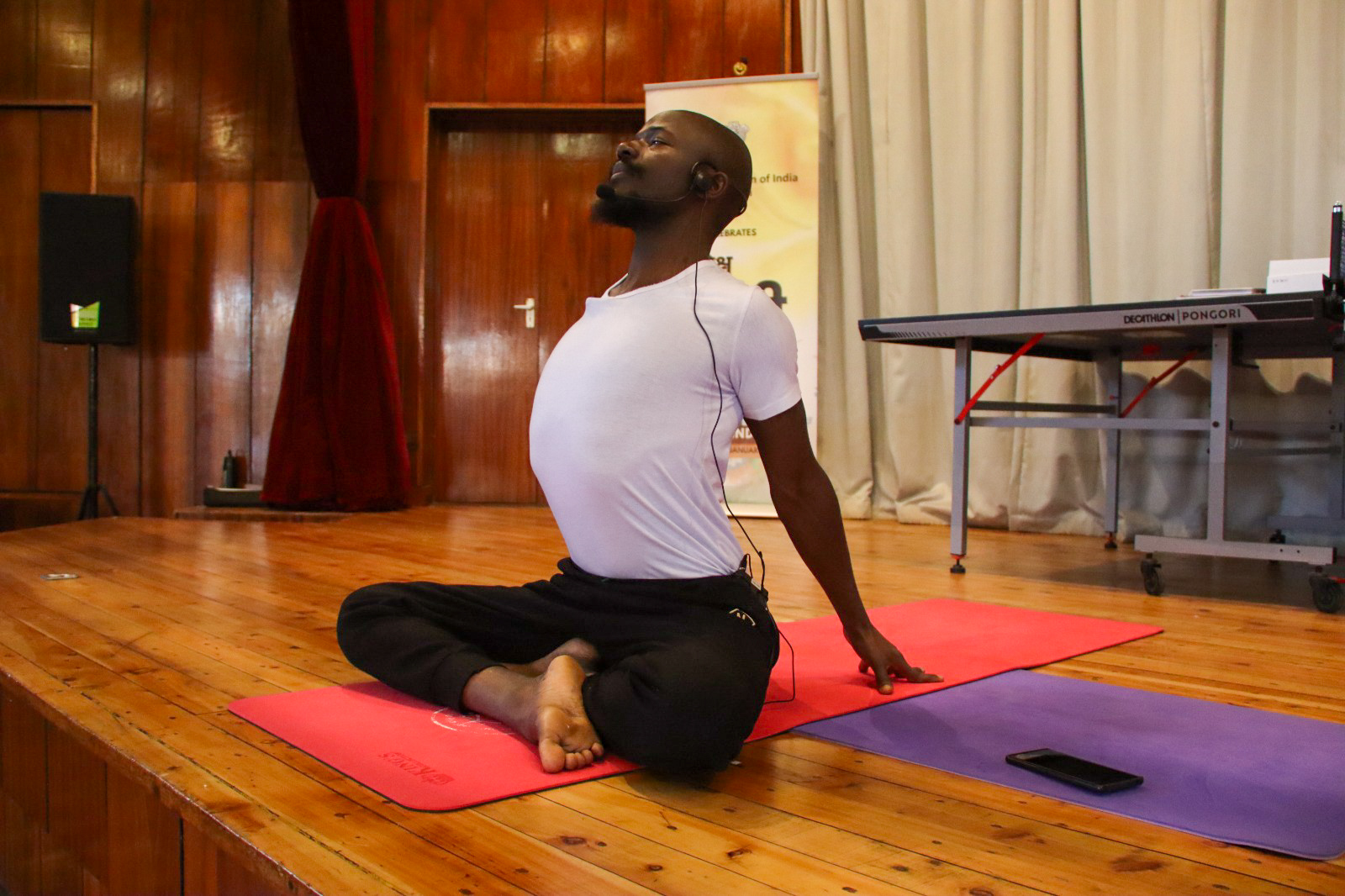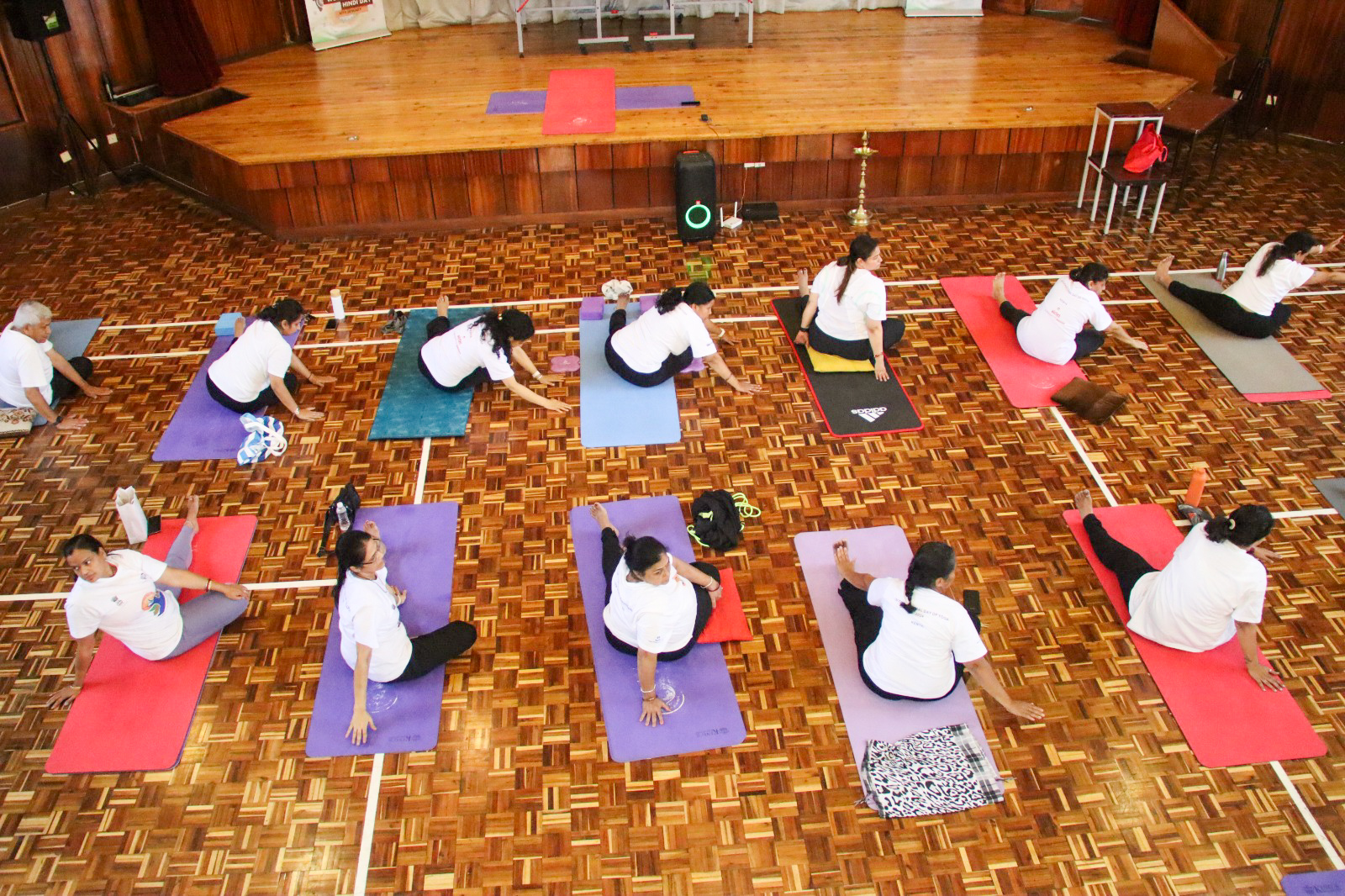
A calm ambience welcomes us into the spacious Apa Pant auditorium inside the High Commission of India Residential Complex on Wangapala Road in Parklands, Nairobi.
The floor is pristine and the yoga mats are neatly arranged in one corner of the hall, awaiting the yogis as soulful music plays in the background.
One by one, the participants — male and female, young and old — arrive. Dressed in white T-shirts and black tights, they take their places and spread out their mats.
At exactly 9.30am, the session, with 24 participants, starts. Instructor Swami Juma then calls them to attention.
“Welcome to today’s session. Allow your body and mind to settle. See yourself arriving at the beginning of this session,” he announces into a microphone.
“Feel connected to the flow, feel grounded, feel supported by the flow and allow your spine to lengthen, allow your rib cage to expand. Inhale a full breath and let go,” Swami says.
The beginnings of yoga sessions are always meant to take the participants’ minds away from the day-to-day grind to a sacred space.
In this specific session, Swami starts slowly and midway through, the participants pick up the pace. He then has them cool down with simple yoga postures before he ends the session after an hour.
“Yoga’s main essence is to bring the wandering mind back home. It is an experience. We live in a fast-paced world and our attention is being pulled in a million and one directions,” Swami says.
In the process of practising yoga, he says, physical and psychological benefits occur, including improved mental health and weight control.
Swami has been practising yoga for 23 years, and he says each session brings a different kind of relief.
“I have been practising yoga since 2003, and I started teaching it in 2011 while still in high school,” he says.
“My grandfather was a sports administrator. He is the one who introduced me to the practice.”
To meet the needs of his class members, Swami holds one-on-one discussions with them before and after each session.
“Sometimes I ask the participants for suggestions on how to improve the sessions and make them more inclusive,” he says.
HEALTH BENEFITS
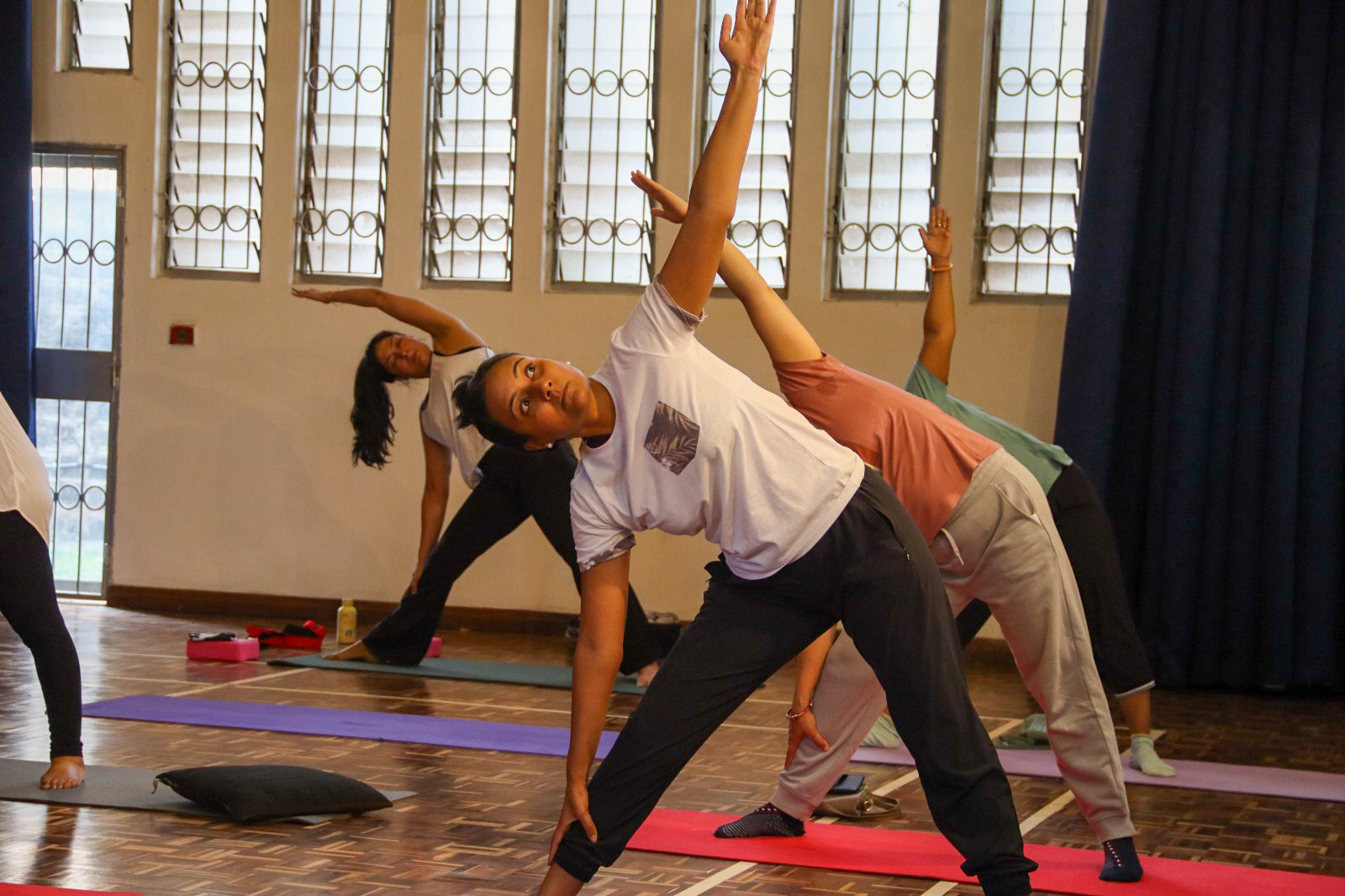
Komal Shah, a participant in this session, says she practises yoga to calm her mind.
She says it is a way of life and is very essential in this day and age.
“We have a very sedentary lifestyle, and you need to feel good and relaxed after doing yoga. That’s what I am feeling today,” Shah says.
Born and bred in Nairobi, she has been attending yoga classes for quite some time now.
She says good yoga is not just about showing up; it is about the instructor as well.
“And that is why I am very grateful for Swami for conducting a very amazing class today. He is a fantastic teacher,” she says.
INVALUABLE GIFT
Shah urges people of any age, caste, creed or colour to do yoga, which originated from ancient India more than 5,000 years ago.
“And today we are fortunate that, due to its holistic approach to health and well-being and its emphasis on striking a balance between all aspects of life, the practice has gone global, thanks to Indian Prime Minister Narendra Modi,” Shah says.
Following Modi’s efforts, the United Nations General Assembly in 2014 adopted a resolution declaring June 21 the International Day of Yoga.
Resolution 69/131 was introduced by India and co-sponsored by a record 175 member states.
“Yoga is an invaluable gift from our ancient tradition. It embodies unity of mind and body, thought and action ... a holistic approach [that] is valuable to our health and our well-being,” Modi said during the opening of the 69th session of Unga.
“Yoga is not just about exercise; it is a way to discover the sense of oneness with yourself, the world and the nature.”
The following year, the first International Day of Yoga was observed.
June 21 was chosen because it is the summer solstice — the longest day of the year in the Northern Hemisphere — and holds cultural and spiritual significance in many traditions.
In Kenya, yoga is not a very popular activity, but the practice is slowly picking thanks to efforts by the Indian High Commission.
“There was a time when yoga seemed like an impenetrable mystery in Kenya. I am happy that this is slowly changing, thanks to the Indian High Commission,” Swami says.
“The High Commission has been spreading the practice to every part of the country. We have crisscrossed counties from Nairobi all the way to Narok, and the reception has been amazing.”
There are different types of yoga, including Hatha, Vinyasa, Ashtanga, Iyengar, Bikram and Kundalini.
While Hatha is the most popular form of yoga, each type offers distinct benefits, ranging from physical workouts to deep relaxation and spiritual growth.
Yoga classes at the Indian Residential Complex are free of charge.
“All one needs to do is sign up for classes and show up,” Swami says.
LONG-TERM INITIATIVE
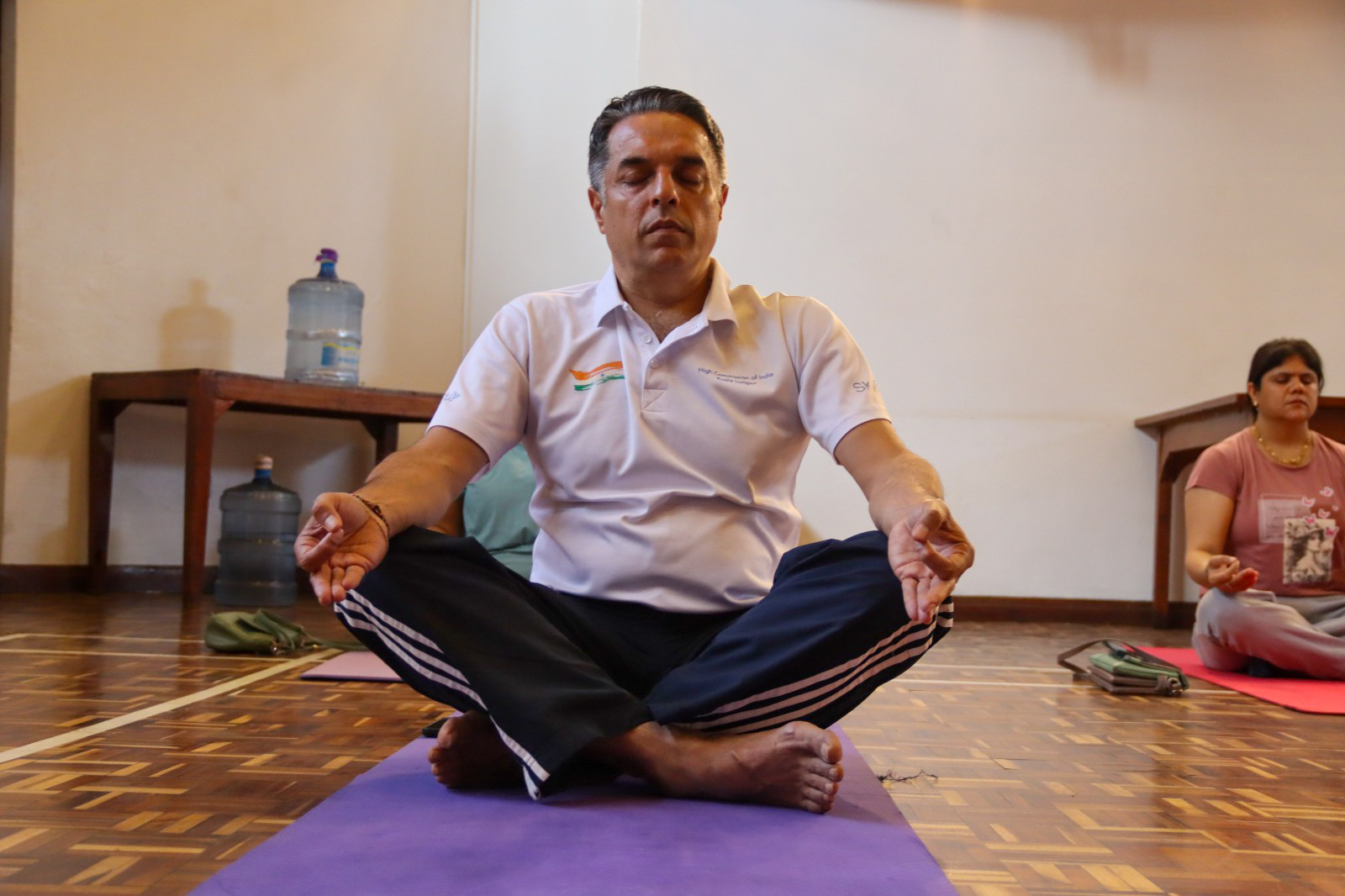
The High Commission of India has been actively promoting yoga in Kenya by conducting free yoga classes three days a week at the High Commission residential complex in Parklands, Nairobi.
The initiative gained significant momentum after the adoption of June 21 as the International Day.
NP Singgh Second Secretary for Education, Yoga and Culture at the High Commission, says they have also been holding regular yoga outreach programmes, workshops and awareness sessions in schools, universities, community centres and public institutions across the country.
He says they have reached at least 15 counties, including Nairobi, Mombasa, Kisumu, Nakuru, Uasin Gishu and Nyeri.
“The objective is to promote the physical, mental and emotional benefits of yoga and encourage people to incorporate it into their daily lives,” he says.
Through these programmes, more than 20,000 Kenyans have been introduced to yoga and trained.
Singgh says the High Commission holds multiple International Day of Yoga every June 21 across the country.
The flagship International Day of Yoga event in Nairobi attracted more than 3,000 participants practising yoga together.
Similar events have also been organised at institutions such as the United Nations Office in Nairobi and in several counties across the country.
“The reception has been extremely positive. Participation has grown steadily over the years, with people from different age groups and backgrounds joining the sessions,” Singgh says.
“Many participants report improvements in physical fitness, stress management and overall well-being after attending yoga sessions.”
Singgh says the promotion of yoga is a long-term initiative.
“We plan to continue organising regular yoga classes, workshops and outreach programmes and to expand the reach of yoga to more counties and communities across Kenya, encouraging healthier lifestyles and greater awareness of its benefits.”