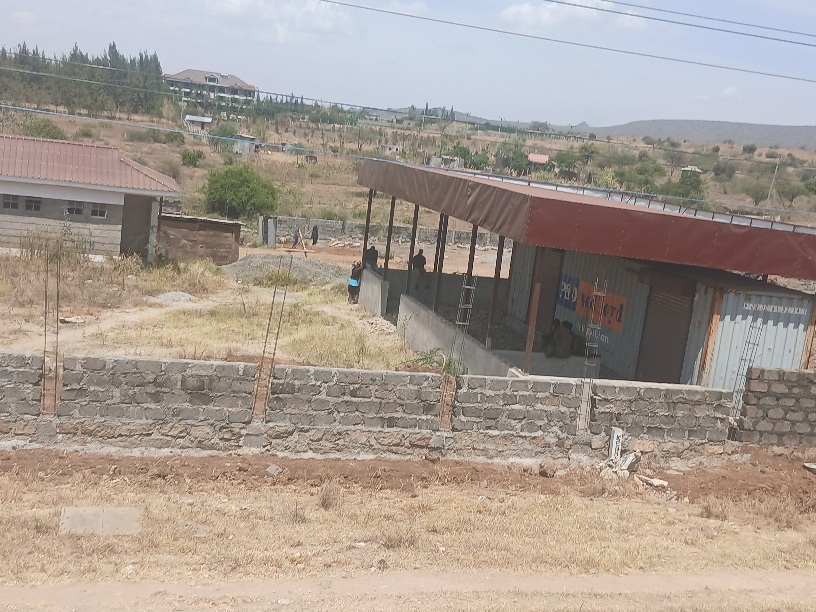
What started as a good deal, owning a parcel of land in Machakos county, has since led to complications for hundreds of buyers who may end up paying afresh or losing it.
At some point more than a decade ago, they signed up for plots in the prime and quickly developing town Athi River, holding a share certificate only as an 'ownership' document.
The unsuspecting buyers described themselves as informal occupants of the land but have since lived to tell tales that may take time to resolve.
They paid between as little as Sh30,000 and as much as Sh2 million to acquire plots measuring 40 by 80m or 50 by 100m on LR numbers 8784 and 8784/4, belonging to the East African Portland Cement Company.
According to reports, the land was previously occupied by organised groups including Syokimau-Mavoko, Kathama Welfare, Ngwatanio ya Mukamba and Lukenya West Associations.
Residents claim the groups subdivided it into plots and sold portions to buyers before the land was later reclaimed by the cement manufacturer following a court ruling and eviction order issued by the Environment and Land Court in Machakos.
EAPCC later surrendered 745 acres to KCB due to a debt default of about Sh5.4 billion, which had ballooned to Sh6 billion with interest and penalties.
Left seeking to safeguard their investments, some occupants who had purchased plots from the groups appealed to the EAPCC management not to evict them despite lacking title deeds, citing the developments they had made on the land.
This reportedly led to the ongoing land regularisation process being undertaken separately by the cement manufacturer and KCB.
The process has encountered challenges affecting both the institutions and some occupants.
Despite some progress, some occupants who spoke to the Star expressed frustration with the regularisation process, saying they might not have bought or settled on the land had they known the challenges that would arise.
They say they now face the prospect of either paying again for the plots or potentially vacating the land, depending on the outcome of the regularisation process.
STRUCTURES DEMOLISHED
Some occupants claim they were required to vacate the land and that structures on the plots they occupied were demolished, after which the land was reportedly allocated or sold to other buyers.
The occupants alleged that various parties, including local authorities and the landowners, were involved in the events that led to the loss of their plots, although both companies maintain that any actions taken are in line with their legal rights as registered owners.
Police bosses in Athi River have distanced themselves from the dispute.
"We are neither agents of KCB nor EAPCC. We are not investigating land ownership but robbery with violence," a senior police officer attached to Athi River police station told the Star.
The Star had sought a response from the police following claims by some occupants that individuals believed to be agents of the landowners were allegedly involved in evictions and disputes on the land in the presence of police officers. Police denied the allegations.
Some occupants also alleged that a man they identified as Mugo Kamau, whom they described as an agent involved in the land regularisation process on behalf of KCB, was behind the evictions.
They claimed he coordinates the activities through an office purported to belong to KCB, located on the said land.
Kamau denied the allegations and maintained that the land belongs to KCB and that occupants without ownership documents may be required to vacate as part of the regularisation process.
He acknowledged that some structures had been removed during the regularisation exercise, saying that plots not paid for by current occupants could be offered to other buyers.
The occupants said they had made payments, including the initial Sh200,000, as part of the regularisation process.
Some residents also questioned the pricing of the parcels, arguing that the cost of Sh40 million per acre was higher than what they believe to be the prevailing market rate of about Sh5 million in the area.
A spot check by the Star confirmed that several structures on the land had been demolished, although it was not immediately clear who carried out the demolitions or under what authority.
RESIDENTS' CRY
Widow Eunice Mwandia said her hotel and other commercial structures were demolished in December last year in circumstances she believes were connected to the land regularisation process.
She said the demolitions occurred despite court proceedings she had filed relating to the land dispute.
Boniface Mutinda said he had lived on the land since 2015.
He said he and other residents were arrested after holding a meeting on the land and later charged with being drunk and disorderly at the Mavoko Law Courts. He believes the arrests were related to the ongoing land dispute.
"Residents report that demolitions and arrests have occurred when plots are developed," Mutinda said, adding that some individuals were later released pending investigations by the DCI.
He further alleged that some residents were arrested during disputes over developments on the plots, claims that have not been confirmed by police.
Athi River subcounty criminal investigations officer Michael Boiyo acknowledged receiving complaints from some occupants.
He said his office was investigating several criminal complaints but not land ownership issues.
"We don’t handle land matters but criminal cases. As the DCI, we are neither KCB nor East African Portland Cement Company agents," Boiyo said.
He encouraged anyone alleging police misconduct to report the matter directly to his office.
The dispute over the land remains unresolved, with several occupants indicating they have filed or intend to file cases in court, while the institutions involved maintain that the regularisation process is being conducted in accordance with the law.
Both KCB and East African Portland Cement Company say the regularisation process is intended to address historical land ownership issues while protecting their legal property rights.
The Star could not independently verify some of the claims made by the occupants. The matter remains the subject of ongoing legal and administrative processes involving the parties concerned.