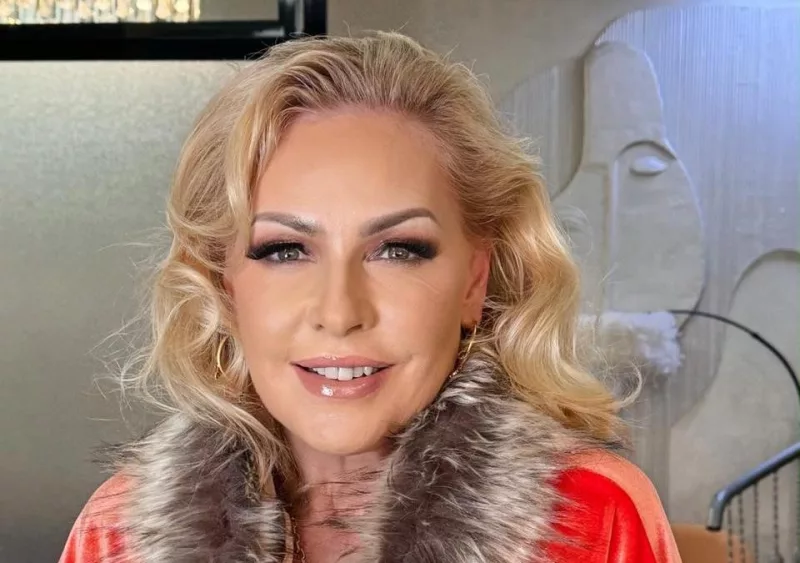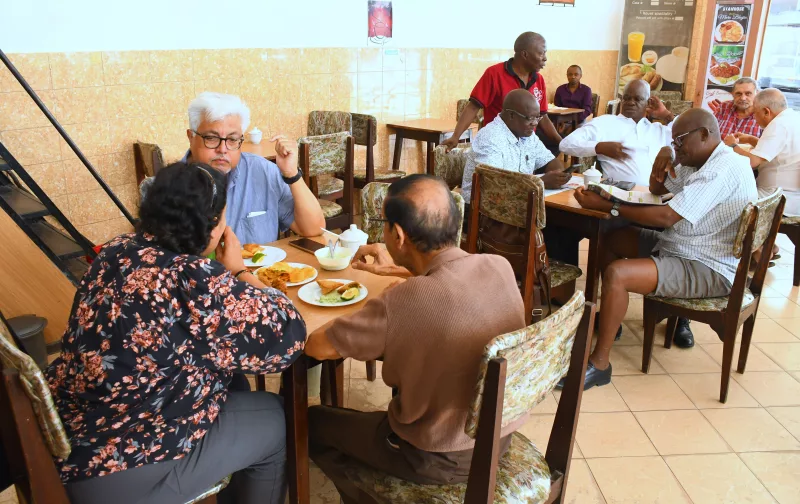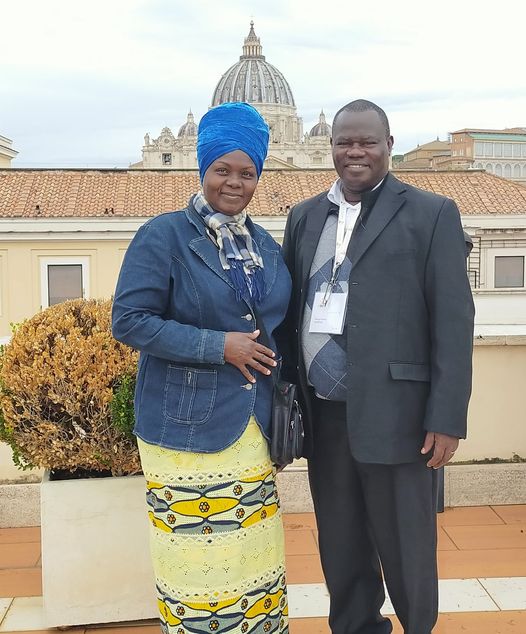
Wife Sellah and George Sunguh in the Vatican / BRIAN OTIENO
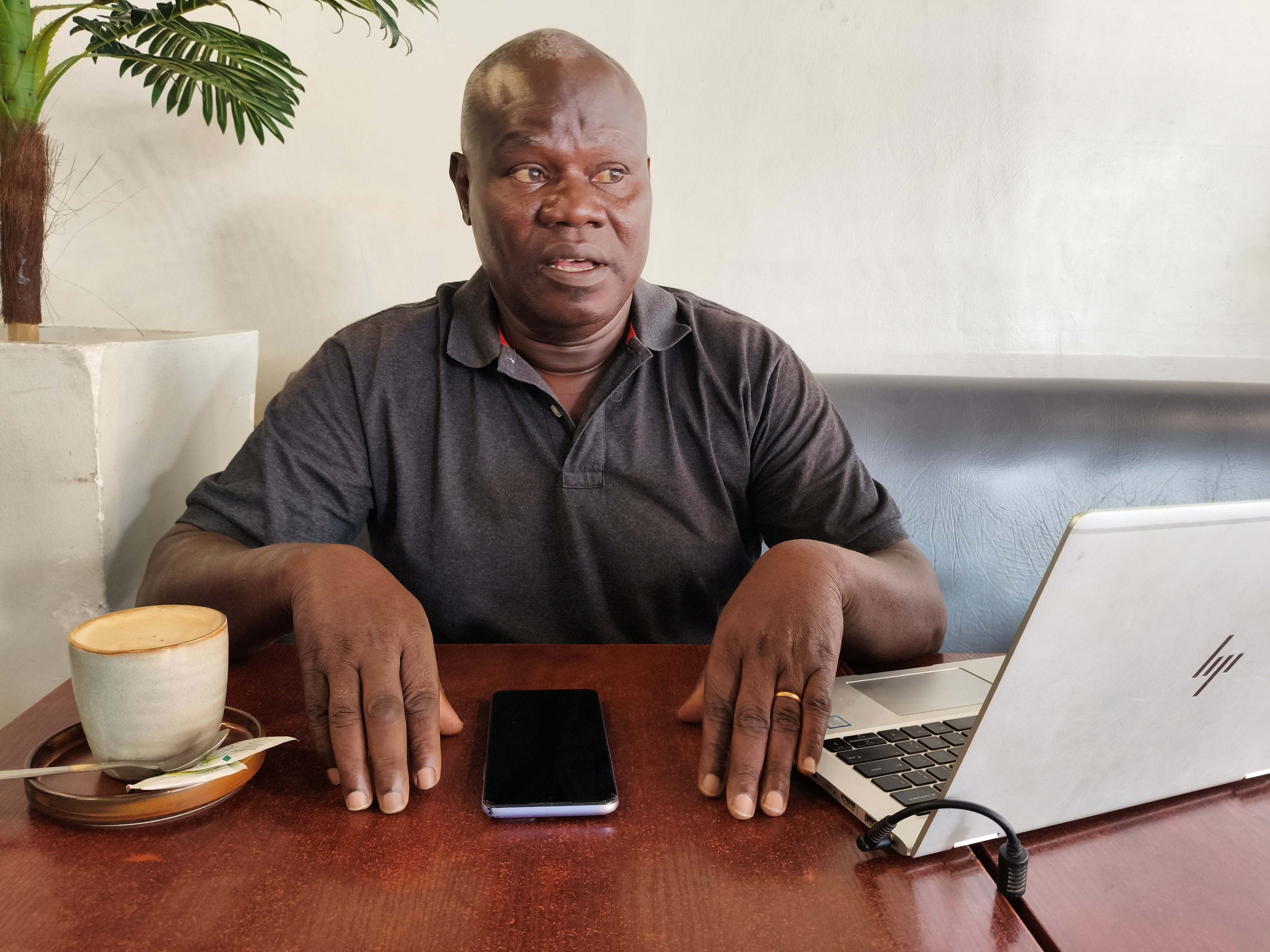 George Sungu during the interview / BRIAN OTIENO
Read Also
George Sunguh began practising journalism in Mombasa in late 1983 without any formal training.
He was driven purely by a passion he had developed in primary school.
Born in Kisumu, his father worked for the East African Railways and Harbours Corporation in Kasese, Uganda, near the border with the Democratic Republic of Congo, and the family relocated there.
“We lived in Kasese most of my childhood. I started my nursery school there inside the Railways estate bordering the Queen Elizabeth National Park," Sunguh said.
“We could be in class and see a herd of elephants roaming around. Sometimes, away from the teacher’s watch we would get out of class and start chasing the elephants."
"To us it was fun. We didn’t know we were exposing ourselves to danger until we got caned by our parents.”
The family later moved to Tororo in eastern Uganda, close to Busia county, before returning to Kenya where he began schooling at Makindu Primary in Muhuroni, Kisumu county. He proceeded to Ngere High School, also in Kisumu, completing Form 4 in 1980.
“My first job was as an accounts clerk in Kisumu because I was good in accounts and scored a distinction in school. I did Kasneb part 1 and part 2 exams and passed,” Sunguh said.
He was, however, uninspired by the clerical role at a paint manufacturing company called Plasco, where the work required him to sit all day.
“I am not a desk man. I wanted to be here and there. In 1982, I went to Nairobi looking for another job. Then August 1 happens when the military tried to oust President Daniel Moi," Sunguh said.
“We ran away from Nairobi. I had a cousin who was working for Railways in Kivati, Makueni county, between Sultan Hamud and Masimba.”
The cousin, who was the stationmaster at Kivati, encouraged him to try his luck in Mombasa.
“He put me on a train and I landed in Mombasa on May 1, 1983,” Sunguh said.
In Mombasa, he decided against pursuing clerical work.
“I had a passion in writing. I was the editor of the school magazine. In fact, our editor who inspired me into this was a gentleman called Oduor Ong’wen, the ODM executive director now,” Sunguh said.
“I was with him in high school. He was in Form 4 when I was in Form 1. He used my first article in the school magazine and that really inspired me.”
Armed with pen and paper, he attended small football pitches around Mombasa where Division Four Kenya Football Federation matches were played.
He wrote match reports and submitted them to Coast Week for publication.
“One day, Abdulrahman Sherrif, a writer at the Coast Week then, recommended me for a vacant position at the Daily Nation where sports journalist Johnnie Pewa was being recalled to Nairobi,” Sunguh said.
At Coast Week, the “salary” was the joy of seeing his byline in print.
In January 1984, he joined the Daily Nation as a sports journalist. Over time, he developed interest in other sectors, including politics and the church, writing particularly on issues concerning the Catholic Church.
A Christian wire agency, All Africa Press Service, owned by the All Africa Conference of Churches, approached him to contribute articles.
“I was a reporter but I had no training. During those years you did not necessarily need to have a certificate in journalism to join the industry,” Sunguh said.
“Many of us were recruited purely on interest of writing.”
Despite his progress, he longed for formal training. “But the resources would not allow,” Sunguh said.
A friend, Winnie Ogana, then an editor at the All Africa Press Service, informed him of possible sponsorship opportunities through the Catholic Church.
“She asked me to go to Waumini House in Westlands, Nairobi, where the headquarters of the church was, and talk to a Joseph Ngala, who was the national executive secretary for the Kenya Conference of Catholic Bishops – Commission for Social Communications,” Sunguh said.
“She asked me to explain myself and see whether they could offer me a scholarship.”
He travelled to Nairobi and met Ngala but did not immediately raise the matter, choosing first to build rapport.
“But of course, he knew me from my bylines and even congratulated me for my excellent writing. That was a plus for me,” Sunguh said.
He would visit whenever he was in Nairobi. “One day in 1987 an opportunity presented itself. I asked if the Catholic Church sponsored people for journalism training. He was surprised I had no formal training.”
Sunguh learnt that the Association of Member Episcopal Conferences in Eastern Africa had a scholarship programme offering training in Dublin, Ireland; Nyegezi, Mwanza, Tanzania; or Kitwe, Zambia.
He began processing his passport, and in 1989 secured a place at the African Literature Centre in Kitwe.
“We were required to report in Zambia for an intensive diploma course in journalism for one year. So I went. That was in 1989,” Sunguh said.
Upon returning, the International Network of Young Journalists, headquartered in Geneva, invited him to attend a Summer University course in the US and Canada.
“Part of it, we would go to St Paul’s University in Ottawa, Canada, then to Marquette University in Milwaukee, in the US. This training was very interesting. It had intensive travels,” Sunguh said.
“We would be in Indianapolis in the morning then hop into another plane to New York in the afternoon and the next day in Washington DC.”
They were 25 participants from 23 countries. The training strengthened his ties with the church, and between 2006 and 2010, he served as Parish chairperson at Kiembeni parish.
By then, he was editing African Shipping Review, a magazine on maritime affairs, gaining deep knowledge of maritime issues.
At one point, then Mombasa archbishop Boniface Lele, who oversaw the commission for refugees, migrants and seafarers at the Kenya Conference of Catholic Bishops approached him.
He asked for his help in preparing a presentation for a seafarers’ conference in Gdynia, northern Poland, focusing on piracy in the Horn of Africa.
“I had written a lot about that and so I had all the information at my fingertips,” Sunguh said.
The presentation was well received and Archbishop Lele appointed him archdiocesan coordinator of the Apostolic Ship of the Sea, Stella Maris, which supports the spiritual and social welfare of seafarers.
“My work was to go to the ships, find out if there are Catholics on board, most of whom were Philippines, and ask if we could be allowed to have mass on board,” he said.
“Because when these people are at sea, they do not get opportunities to celebrate mass.”
On one occasion, a sailor died aboard a ship sailing from the Black Sea to an English port.
“The young man was cut into two by an elevator door that had malfunctioned. This really disturbed the crew on board,” Sunguh said.
The ship owners requested a priest to purify the vessel.
“So, they called me from London and asked me to organise for a priest to purify it when it sailed to the Port of Mombasa and I got Fr Harrison Yaa to do it.”
He said the owners subsequently increased their contribution to Stella Maris in London.
His maritime work led to his recruitment by the Port Management Association for Eastern and Southern Africa, a UN agency based in Mombasa.
He later pursued a Master’s degree in Media and Communication at the University of Leicester in the UK, graduating in 2016.
Reflecting on the profession, he said journalism today differs greatly from that of the 1980s.
“Technology has evolved and made things faster. Back then you would nurse a story for about a week,” he said.
“Today, you cannot risk that, because news is not just for the journalist. Any commoner can break a story.”
He said journalism was once highly prestigious and journalists were few. “You could go to a press conference and if there are three of you, it is a full house,” he said.
“Today, if you call a press conference, you would think it is an ODM rally.”