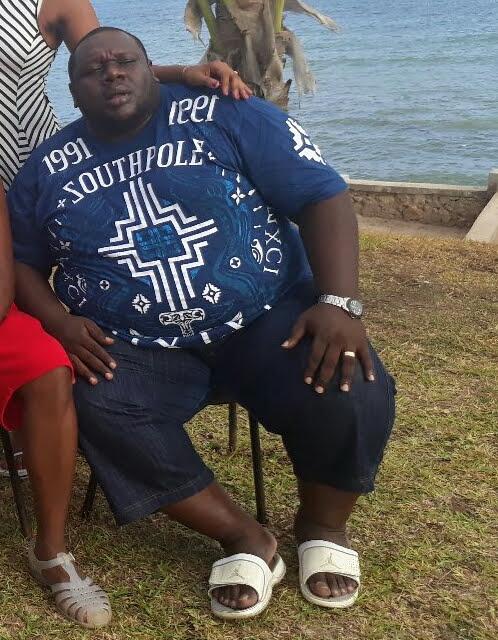
For most of his life, Stewart Heri never thought much about his weight.
Known by the nickname “Big Popper” because of his large body frame, Heri says being big had always been part of his identity since childhood.
But everything changed when he turned 36-years-old.
Heri developed wounds on both feet that refused to heal. For nearly two years, from 2015 to 2017, he went for daily dressing of the wounds.
Concerned, a close friend advised him to check his blood sugar levels. The results revealed he had Type 2 diabetes, which explained why the wounds were not healing.
Just three months later, doctors also diagnosed him with hypertension.
As the wounds worsened, doctors warned that his legs might have to be amputated.
“It hit me hard,” he says.
Looking back, Heri admits his diet had contributed to his deteriorating health.
“Garbage in, garbage out,” he says, describing his frequent consumption of junk food.
His doctor recommended bariatric surgery, a procedure used to aid weight management. Curious but cautious, Heri turned to the Internet to learn more.
“I googled to understand more about it,” he says.
In 2018, at the age of 38, Heri weighed 216kgs. Determined to reclaim his health, he traveled to India for the procedure.
The surgery cost him about Sh2 million. “I took a loan with the support of my wife because I really had to do it,” he said.
The procedure lasted only 45 minutes, but the results were dramatic.
Within just 16 days, Heri had lost between eight and 10kgs. Even more remarkable, the wounds on his feet healed within two months.
Although the surgery could have been performed in Kenya, Heri says medical insurance did not cover the procedure locally because it is often classified as cosmetic.
He credits his recovery not only to his family but also to the support from his employer.
Today, Heri weighs 93kgs, a massive drop from his former 216 kg.
Maintaining weight loss, however, required major lifestyle changes.
Living in Mombasa, where foods such as viazi karai, chapati and vitumbua are common, Heri says discipline has been key.
He now avoids wheat, sugar, alcohol and junk food. Exercise has also become part of his daily routine.
“I run 10km daily except Saturdays and Sundays. To me it has become a lifestyle,” he says.
In addition to dietary changes, Heri takes daily vitamin supplements to support his health after surgery.
Reflecting on his journey, he says; “Nimetoka katika shimo refu sana.” (I came out of a very deep pit.)
Eight years after the procedure, Heri has lost 123kgs.
“My wife would have been a widow and my children orphans if I had not taken this step,” he says.
Heri’s sister, Barbra Aaron, has also struggled with weight—an experience she describes as ironic given that she is a nutritionist.
The mother of three says her weight challenges began after giving birth to her second child in 2020, during the Covid-19 pandemic.
With limited physical activity and increased consumption of junk food during lockdowns, her weight rose to 103kgs, with a BMI between 32 and 35.
At the same time, she was battling postpartum depression, making the situation even more difficult.
Unable to attend the gym due to pandemic restrictions, Barbra began her weight-loss journey through dietary adjustments.
“I reduced junk foods and controlled my food portions,” she says.
After one and a half years, she had lost 35kgs.
She admits the journey was challenging and sought a coach for accountability.
However, after the birth of her third child in 2022, she regained some of the weight. Using the same dietary discipline, she managed to return to a healthy weight.
Today, Barbra supports other women facing similar struggles.
“I help women lose weight. They call me Nutri Mama,” she says.
According to Dr Elizabeth Onyango, Head of the Section for Non-Communicable Disease (NCD) Prevention and Control, a person is considered obese if their Body Mass Index (BMI) is 30 or above.
A BMI between 25 and 29 is classified as overweight.
The waist circumference can also be used as an indicator of obesity.
For women it is above 88 centimetres while men is above 102 centimetres.
“This means one has excessive fat deposits around the lower abdomen,” she says.
Dr Onyango cites several risk factors for obesity, including lack of exercise, sedentary lifestyles, poor diets and certain medications such as steroids.
She also warns of a rising number of childhood obesity cases, partly due to sedentary habits and increased consumption of highly processed foods and sugary drinks.
Obesity can be managed through several interventions, including bariatric procedures, which may involve surgery or injections to aid weight loss.
However, Dr Onyango emphasises that treatment depends on the underlying cause.
Regardless of the intervention, lifestyle modification remains essential.
“People should engage in between 150 and 300 minutes of moderate to vigorous exercise each week,” she says.
Doctors may also prescribe medication alongside dietary changes.
According to bariatric surgeon Dr Lance Mayabi, not everyone who is obese qualifies for surgery.
Candidates typically include; People with BMI of 40 and above, with or without other health conditions, people with BMI of 35 and above who have obesity-related diseases such as Type 2 diabetes and hypertension or heart disease.
In some cases, it includes individuals with BMI between 30 and 34.9 whose conditions have not improved despite other interventions.
Before surgery, patients undergo a comprehensive evaluation by a multidisciplinary medical team.
Dr Mayabi says patients can lose 35–50 per cent of their body weight and 60–70 per cent of excess weight after the procedure.
However, success depends heavily on adherence to dietary and lifestyle guidelines.
Patients are advised to avoid highly processed foods, sugar and alcohol.
They are also asked to start with fluids after surgery before gradually introducing small protein-rich meals and drink water at least 30 minutes after meals.
Some patients also require lifelong vitamin and mineral supplements.
Despite its benefits, bariatric surgery remains expensive. “One can spend up to Sh1 million for the surgery,” says Dr Mayabi.
He believes Kenya’s Social Health Authority (SHA) should consider covering the procedure, arguing that preventing obesity-related diseases is cheaper than treating them later.
According to the 2022 Kenya Demographic and Health Survey 11 per cent of adults in Kenya are obese. Some 17 per cent of women aged 20–49 are obese while 28 per cent of women in the same age group are overweight.
For men, four per cent are obese while 14.6 per cent are overweight.
Among children, one per cent is obese, 3.2 per cent of children aged 0–5 are overweight or obese, 1.2 per cent of adolescents aged 15–19 are obese while 6.6 per cent are overweight.
With this year’s World Obesity Day theme being “8 Billion Reasons to Act on Obesity,” the Ministry of Health says it is strengthening policies to reduce the burden of non-communicable diseases.
Dr Onyango says the NCD Strategic Plan focuses on five pillars — reducing exposure to risk factors, strengthening the health system, advocacy and awareness, and food labelling regulations.
Part of these efforts include the introduction of front-of-pack nutrition labelling, which aims to help consumers make healthier food choices.