 Hidden inefficiencies at the household level may cost the country billions annually, according to Mugure Njendu, Africa Programs Development Lead.
A typical
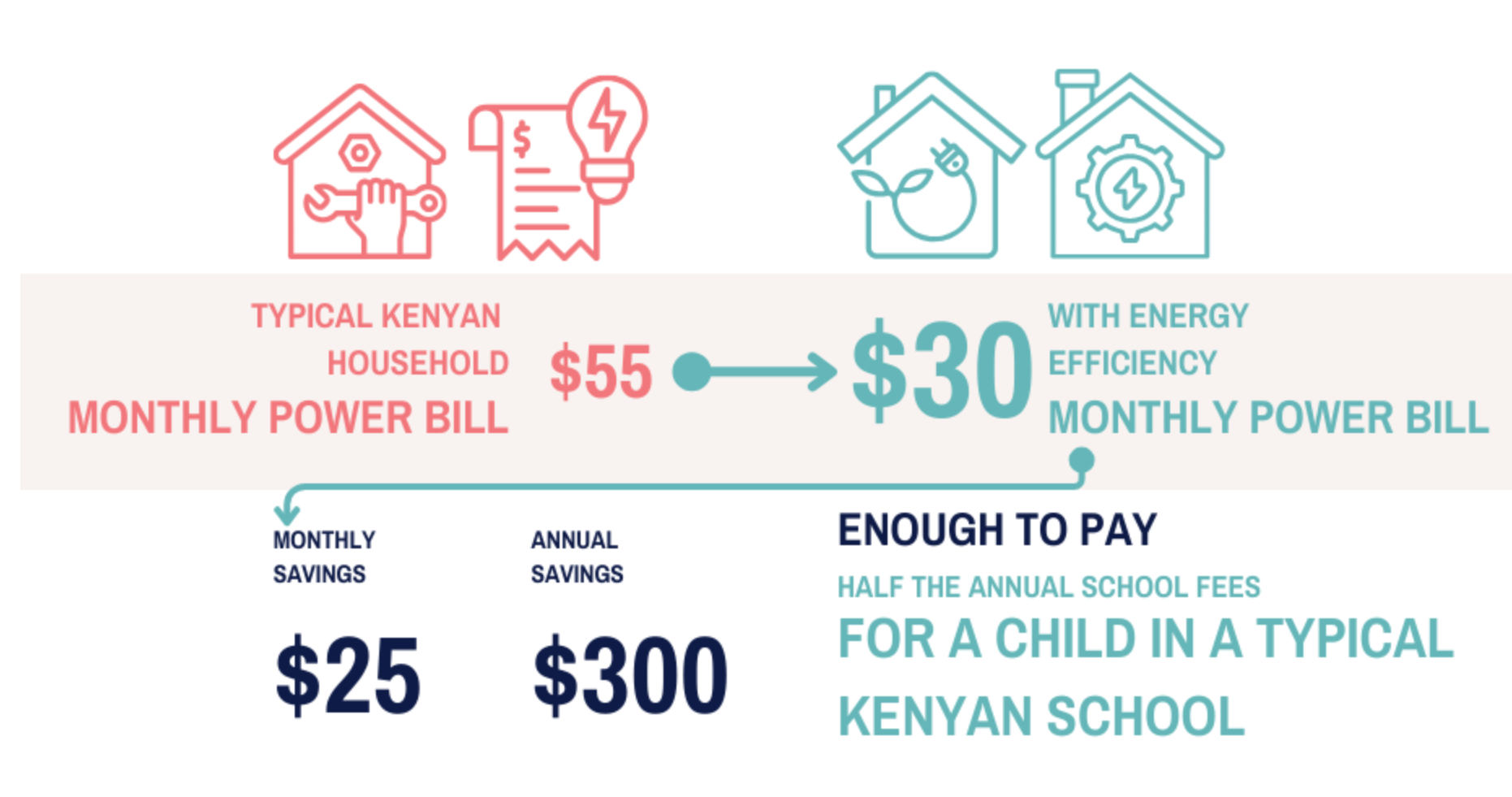
Kenyan household spends about Sh7,000 a month on power. But if the home were
energy-efficient, that bill could drop to Sh3,870 monthly—saving about Sh3,225
every month and a significant Sh38,700 a year, enough to pay half the annual
school fees for a child in a typical Kenyan school.
These hidden inefficiencies at the household level may cost the country billions annually, according to Mugure Njendu, Africa Programs Development Lead.
“Rethinking the design of buildings to be energy‑efficient could make a big difference for both households and the nation,” Njendu said.
Despite substantial government investment in power generation and plans to add 1,500 MW of green energy to the national grid by 2034, much of the country’s building stock remains inefficient.
These buildings are quietly driving up energy demand, straining infrastructure, and locking households, businesses, utility companies, and the government into higher costs and greater emissions for decades to come.
“These losses are rarely visible in a single budget line. They emerge as higher energy bills, increased fuel imports, costly retrofits, and infrastructure investments that could have been avoided.”
“Amid rapid urbanisation and rising fiscal pressures, inefficient buildings are no longer tenable and present a liability to the country’s economic productivity, energy security, and long-term public expenditure,” Njendu said.
The building and construction sector generates an estimated 32 per cent of Kenya’s carbon emissions. This occurs in a sector where 80 per cent of construction activity is undertaken informally, with little regard for regulatory compliance and occupant health and safety.
Inefficient buildings disregard passive design strategies such as proper building orientation and shading, said Mumbua Musyimi, Project Manager, Kenya.
“The result is higher energy use, rising water and utility bills, faster wear and tear, poor thermal and environmental comfort, and heavy maintenance needs — all of which push up lifecycle costs,” Musyimi said.
“When buildings don’t manage heat, airflow, and natural daylight properly, they end up depending on mechanical systems just to function. Energy then becomes a recurring and growing operating expense.”
“Outdated plumbing, leaking infrastructure, water-intensive fixtures, and weak stormwater and wastewater design drive up water and utility costs. These pressures strain already stretched systems, and the higher costs are usually passed on to the people living and working in the buildings.”
Over time, poor design choices accelerate wear and tear on mechanical and electrical systems. Overworked equipment breaks down more frequently, requires constant repair or replacement, and shortens building lifespans.
What initially appears as a cheaper approach to construction ultimately results in significantly higher lifecycle costs in operation and maintenance. The occupants also become vulnerable to heat and discomfort, which they have no choice but to manage with inefficient cooling strategies.
Urban Growth, Locked-In Inefficiency and the Coordination Gap
With urbanization at approximately 4.4 per cent per annum, Kenya’s demand for housing, commercial spaces, and public buildings is rising.⁴ The country faces a housing deficit of over two million units, leading to large-scale public and private construction, including the Affordable Housing Programme.
Many new buildings reproduce inefficiencies found in the existing stock, said Njendu.
“Design decisions on orientation, materials, ventilation, and housing density often favour speed and upfront cost over long-term performance. Once these buildings are constructed, those inefficiencies are effectively locked in. Retrofitting for energy or water efficiency later is far more expensive than getting it right during construction,” Njendu said.
As inefficient buildings multiply across growing cities, overall energy demand rises, adds Ms Musyimi.
“This drives the need for more power generation, grid upgrades, and greater reliance on fuel imports,” Musyimi said.
“Poor thermal and environmental performance creates unhealthy indoor conditions. Occupants then depend on fans, air conditioners, heaters, and dehumidifiers, pushing up electricity use and placing extra strain on building electrical systems.”
Inefficient buildings also cost more to maintain. Add-on and standalone appliances are used to compensate for design shortcomings, increasing maintenance frequency and spare-part costs.”
“Over time, operating and maintenance costs surpass those of efficient buildings. Life-cycle cost analyses consistently show higher costs across construction, operation, maintenance, and decommissioning — costs that are ultimately borne by owners, tenants, and the wider economy.”
Regulations exist but weak implementation remains a challenge.⁵ The National Building Code 2024, performance standards, and the Energy (Solar Water Heating) Regulations of 2012 are in place, but compliance remains limited. Responsibilities are fragmented across national and county agencies, incentives are weak, and technical capacity gaps persist, allowing inefficient construction to continue.
Impacts beyond energy bills
The impacts of inefficient buildings extend beyond energy bills. Poor-performing buildings depreciate in value faster, increase default risks on mortgages, fail energy audits, and are costly to retrofit to meet emerging regulations. Similarly, non-compliance can limit access to financing, insurance, and leasing opportunities, especially in today’s era of green construction.
Inefficient buildings strain public infrastructure and undermine the achievement of climate goals outlined in national and international frameworks, including the Paris Agreement, Global ABC’s Building Breakthrough Agenda, Vision 2030, Africa Agenda 2063, the New Urban Agenda, and Nationally-Determined Contribution (NDC) commitments.
The Kenya Decarbonization Roadmap envisions a pathway towards a net-zero climate-resilient future, proposing a mitigated NDC-aligned scenario of 8.8 million tCO2 emissions by 2030. This will be achieved through the implementation of key sector recommendations targeted at New Buildings, Existing Buildings, Building Materials and Construction Supply Chain, Spatial and Urban Development, Energy Efficiency and Enabling Factors. GBPN together with Kenyan partners, led the development of the Roadmap in a collaborative approach with key stakeholders from government, industry, academia, and civil society to shape the country’s first comprehensive roadmap for decarbonizing buildings and construction
The Architectural Association, a key partner in the roadmap development, has also developed Kenya’s Healthy Homes Guidelines and Checklist (HHGC) that proposes 15 principles that promote the health and well-being of building occupants. The HHGC prioritises natural ventilation, natural lighting, and installation of energy-efficient fixes, amongst others.
Once implemented, the provisions of the Kenya National Building and Construction Decarbonization Roadmap can reduce emissions by nearly 60% by 2040 in addition to increased health and comfort for occupants. The Roadmap will be launched in late-Feb in Nairobi. The next step is implementation, and GBPN is working on building a coalition to address the critical finance gap in implementing the Roadmap. This initiative will transform technical mitigation targets into bankable opportunities, mobilizing public, private, and philanthropic capital.
Addressing building inefficiency through implementation of passive design strategies, regulatory compliance, coordinated enforcement, and targeted incentives offers one of the most cost-effective pathways to managing energy demand, reducing public expenditure, and improving urban livability. While the cost of inaction is already visible and rising quietly, building by building, the benefits of action represent a set of equally quiet opportunities to share a more sustainable built environment.
______________________