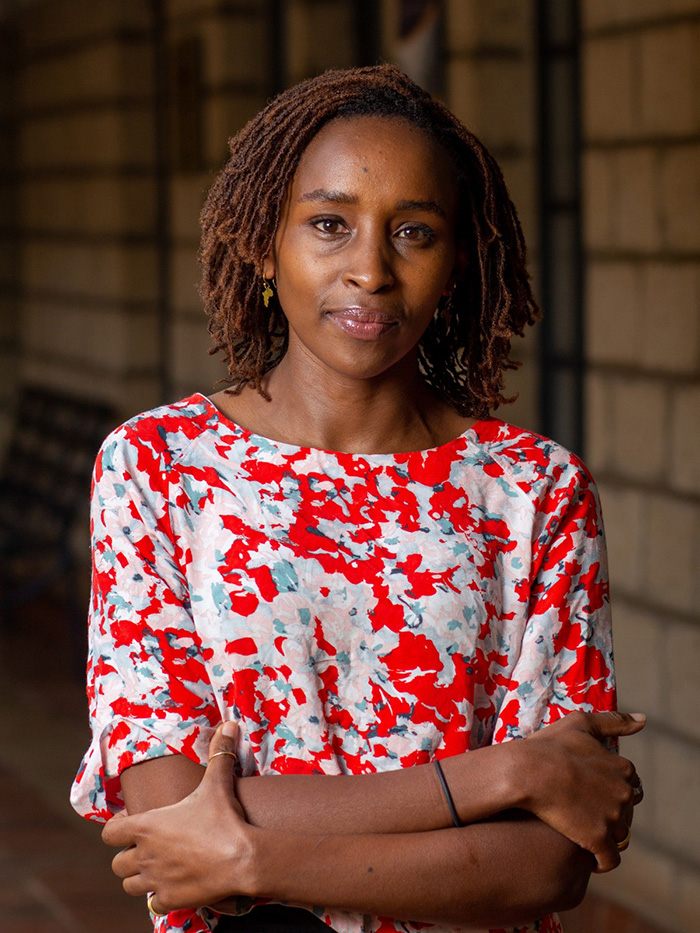
Eunice Njeri Mathu still remembers her shock when she saw sex workers outside nightclubs in Kilifi rushing to vehicles seeking to be picked for the night.
Eunice was 20-years-old at the time and was on vacation in in the North Coast.
She was a student visiting from the United Kingdom. She was shocked to learn that there were so many young women who were lured into the sex trade, majority of them from poor families. Most of them were either unable to complete their education, especially in high school, because their parents could not afford to pay fees.
“It was a very easy lure, and it hit me how rife it was in the area. From the outset, I could see that there was a very big crisis on the Coast of Kenya. I remember being struck by how unfair this was, and the realization that this was the only alternative for very young, incredibly talented, and beautiful women, but it was also their easiest way to earn an income,"Eunice says.
"I could not put a name to it, but I knew I did not like it, and it was horrible to witness an outright injustice.”
She went back to the UK to complete her studies but did not forget what she had witnessed. She researched about it and realised there were several tags to the trade; sex work, sex tourism, child sex tourism, and human trafficking.
The more research she did, the more her passion for empowering those women grew.
She then enrolled for master’s in international development, focusing on gender studies, still in the UK.
This allowed her to come back home and to the Coast where she would carry out her thesis work on sex tourism with a special focus on human trafficking.
Eunice sat down with the women, including those who have been working in the industry since they were young. She discovered that many had been lured into the trade with the promise of a job along the Kenyan coast.
“I remember interacting with a young woman who started sex work as a 13-year-old girl. At the time of our interaction, she was around 25 years old. She had been promised a job before relocating from Kakamega only to find herself in sex work. What kept ringing in my mind was that no woman should be forced to choose sex work because of poverty,” Eunice said.
Years later, the dream and vision to make the world a safer place birthed Rejesha, a movement which provides a safe space for women in sex work.
The aim is to ensure that they experience love without judgment, are seen, known, respected, and heard. Most importantly, they should feel worthy and valued.
Rejesha also empowers women seeking a pathway to safer, sustainable, more meaningful and dignified work opportunities.
Eunice started by observing the women, where she would go to the city and sit at Java, Standard Street and have coffee, or read a book, while witnessing what goes on around those places.
She would interact freely with security guards around and even shared with them her dreams to help the women.
The guards provided a lot of insight into how the sex workers were discriminated, despised, rained on and how they felt sorry for them.
“Eventually, one of them expressed how much he loved the idea and decided to call two of the ladies to talk to them directly. I was frightened as I did not know how it would go," she recalls.
Many thoughts ran through her mind before she gathered enough courage to share her vision of having a safe space for them.
"We ended up having conversations on a lot of things. It was a nice interaction, and I really felt well-received,” Eunice says.
It was in those conversations that one of the women revealed she had not eaten anything on the day, as she had left the only cash she had for her children back at home.
She was waiting for her first job of the night so that she could get cash to buy a meal.
It was from this that Eunice decided to offer meals every time they went on outreach.
Twice a month, the Rejesha team conducts a cookout in the evening, where they get to serve a home cooked meal, accompanied by hot and cold drinks.
That provides an opportunity to create meaningful relations and make the women feel loved. It gives them a break from the streets.
Rejesha has reached over 600 unique women through the program. It is estimated that 40 000 women are in sex trade in Nairobi.
Rejesha's second approach is trauma-informed therapy, where they run a six-to eight-week program with psychologists. The move is aimed at reduce the effect of trauma. Most sex workers have endured a lot of traumatising experiences since childhood, ranging from sexual abuse, rape, gang rape, and, in some cases, being thrown out of moving vehicles.
Eunice says 86 per cent of women in sex work have experienced a form of abuse.
“I remember in 2022 when a woman called and was hiding in a room downtown, having been beaten so badly and when I went to see her, I could not even recognise her. Rejesha aims to create a very safe space for women to heal from such so as to rebuild their sense of self-worth, self-esteem and identity,” Eunice says.
She says their job is not just to rescue but to empower because it is the lack of opportunities that leads women to sex trade.
The women are involved in empowerment forums where experts are invited to train them in different topics, including financial
literacy and empowerment, Money Market Funds (MMF), parenting, health and
nutrition, drug and substance abuse and business.
Rejesha intends to scale up within Nairobi by moving into Westlands, Kilimani, Hurligham, Kayole, Kawangware, Dandora which are hotspots.
Several women are now out of sex work, in full-time
employment and are pursuing lives of purpose and dignity.
With the help of different partners, women have been able to receive further vocational training in baking, tailoring, beadwork, interior design, beauty and cosmetology.
“The Rejesha Project believes that it is important to encourage a woman to pursue a career that is close to their heart and passion rather than one that is prescribed to them,” Eunice says.
One woman whose story and journey is truly beautiful and remarkable is a lady called *Joy (not her real name).
Joy joined the group therapy program and later on the job skills training through which Rejesha learnt that she is interested in catering and baking.
She later joined a baking class and was outstanding because of her dedication and desire to learn and better herself.
After the training, Rejesha Project connected her to a partner, where she was offered a three-month paid internship program.
Again, her heart for the skill and her dedication shone through. She is now a full-time employee there and a strong member of the team.
When Rejesha Project had a fundraiser, Joy offered to bring a cake. She now gets many to supply cakes for different celebrations.
“Seeing them pick themselves up from a point of brokenness to become very important members of society is very encouraging. And that is how we change the world, one lady at a time,” Eunice says.