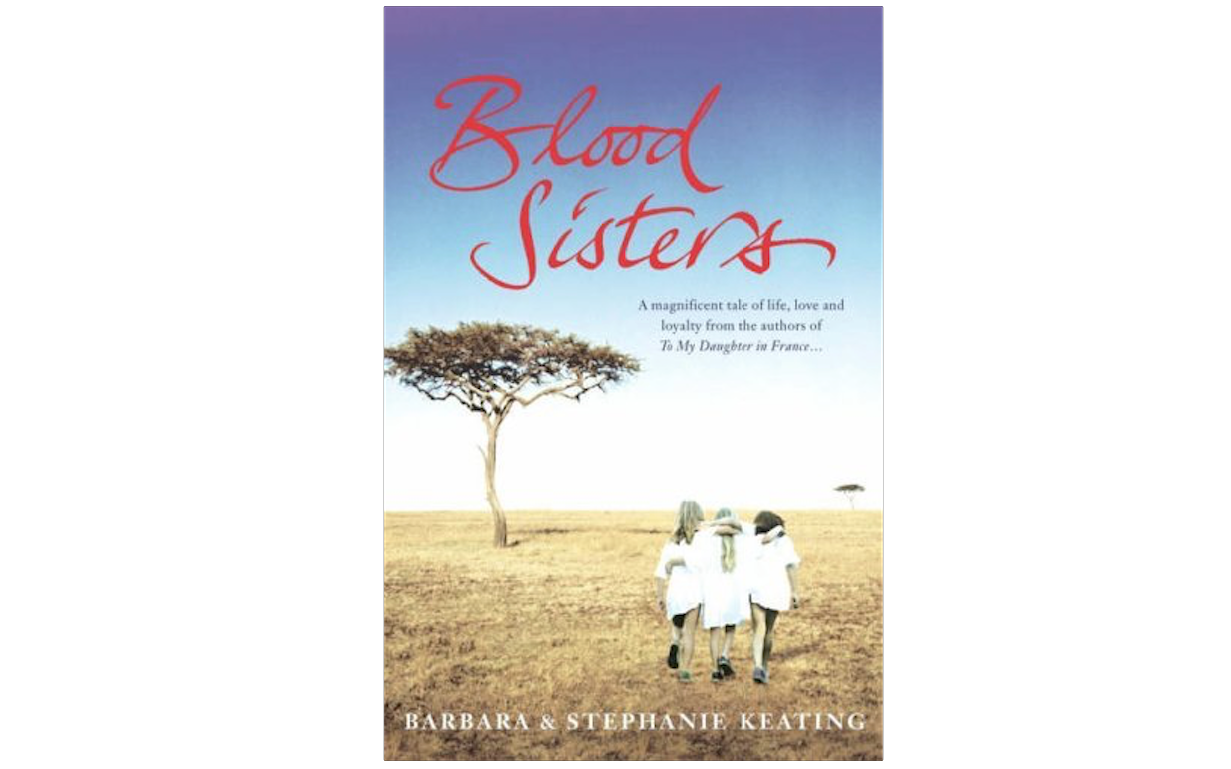
From the very first pages of Blood Sisters by Barbara Keating, you’re thrust into the lush, dusty Highlands of Kenya in the 1950s, where three very different girls — Sarah Mackay (Irish), Hanna Van der Beer (Afrikaner) and Camilla Broughton-Smith (British) — swear an unbreakable pact of sisterhood.
Yet as the world shifts around them — colonial tremors, Mau Mau rebellion, the birth-pangs of an independent Kenya — their childhood alliance is tested, twisted and nearly destroyed.
The story begins in 1950s Kenya, a land shimmering with heat and political tension. The Mau Mau uprising simmers in the distance, and beneath its surface runs a quiet current of privilege and guilt.
Sarah, the daughter of Irish missionaries, is introspective and searching. Hanna, the pragmatic Afrikaner farm girl, is rooted to the land. Camilla, the spirited British settler’s daughter, craves glamour and freedom. Together, they are inseparable, their sisterhood a refuge in a world soon to split apart.
Keating’s prose is lush, cinematic and often heartbreakingly precise. She paints Kenya not merely as a backdrop but as a living, breathing character: beautiful, unpredictable and wounded. “When she reached the house, the sun had turned the morning air into a shimmering mirage of heat and dust devils,” she writes. “Hannah wished the rains had not finished so early. The land was already parched, stubbled with broken stalks of bleached grass.”
The landscape bleeds into the characters’ lives, its heat and dryness a mirror of their own conflicts — the longing for belonging, the ache of loss, the inevitability of change.
As the girls grow up, the narrative stretches from colonial farms to London’s fashionable chaos, from isolated homesteads to bustling Nairobi streets. Sarah’s return to Kenya years later is particularly poignant; she is both stranger and native, pulled between the country’s rebirth and the ghosts of her past. The tension between past and present, between home and exile, gives the novel its magnetic pull.
Keating excels at threading the personal with the political. The end of empire is not just a historical event here, it’s a shattering of identity. Through the eyes of the three friends, we witness the disintegration of certainty. Hanna struggles to preserve her family’s farm as the land changes ownership and meaning. Camilla ascends the glittering ladder of 1960s London society, yet her heart remains tethered to the soil she left behind. Sarah becomes the uneasy witness to both women’s unravelling.
Their youthful promise — that they will remain “blood sisters” no matter what — reverberates across the novel. As one passage recalls, “The three girls made their promise in the chapel under the soaring acacias, each offering her hand and heart to the other until land and wind and time could tear them apart.” It’s a vow that becomes prophecy. The land, the wind and time all do their work, and what survives is as fragile as it is fierce.
Keating’s writing style elevates what could be a sprawling saga into something more intimate and vivid. She layers sweeping historical events (Kenya’s transition, the tangled legacies of settlers and natives) with a finely drawn sense of place and character: the smell of tea in the household, the tension between old colonial comforts and new African realities, the internal rhythms of each girl feeling torn between loyalty and ambition.
Her use of sensory detail is particularly strong: the dust and heat, the thunder of discontent in colonial society, the bitter after-taste of betrayals. The narrative flows smoothly despite the broad canvas, never losing sight of emotional stakes even as it inhabits decades and continents.
The emotional pulse of the novel lies in watching how the trio’s bond gradually frays — love rivalling friendship, cultural allegiance challenging personal loyalty, the heroine’s ‘return’ to Africa pitching her between roots and alienation. One moment you’re in the vivid sunrise over the savannah, the next you’re in a London flat far from home, wondering if those girls can remember that oath made under Kenyan skies.
That said, the novel occasionally succumbs to melodrama. With more than 600 pages, many characters and sub-plots, the pacing sometimes slows under the weight of detail, and some turns feel engineered for maximum emotional punch rather than organic narrative flow. For readers who prefer leaner storytelling, the sheer breadth may feel heavy.
However, if you relish sagas of friendship, memory and colonial-to-postcolonial Africa, this will grip you. Therefore, buckle up for a journey from sun-blasted highlands to London catwalks, from the innocent bond of three girls to the divided worlds they must navigate. And ask yourself: When the earth beneath you shifts, can a sisterhood forged in childhood survive the tremors?