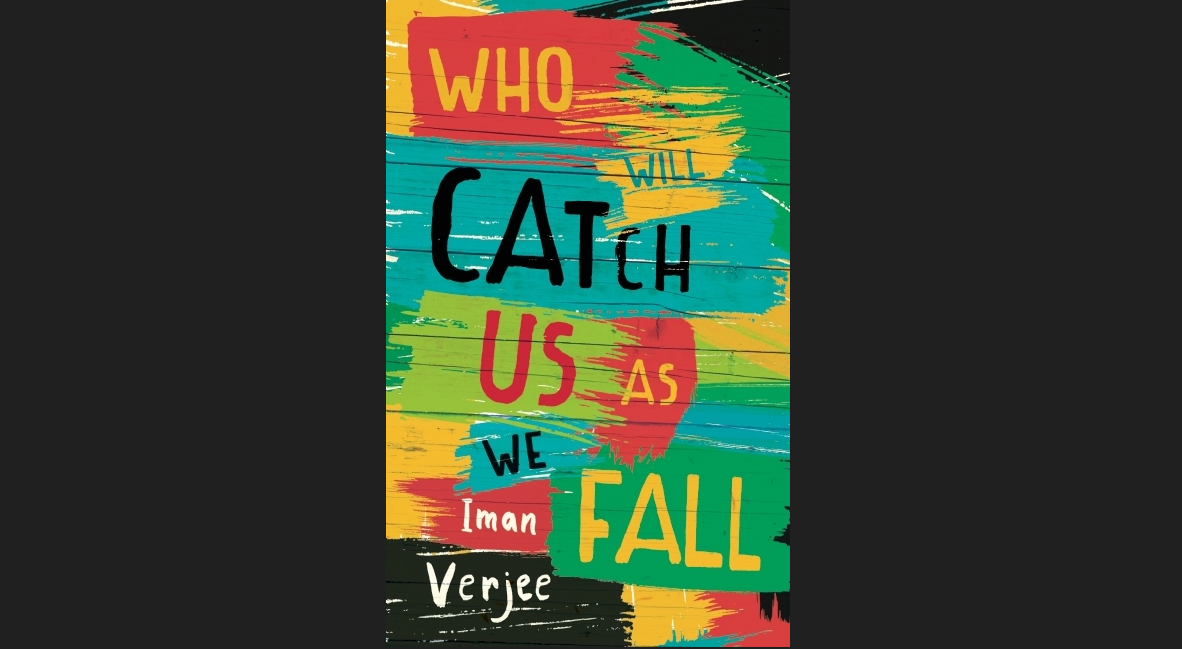
In Who Will Catch Us as We Fall, Iman Verjee delivers a heart-achingly honest portrait of a city and a people in flux. A Nairobi where race, class, memory and trauma linger beneath the surface like a hidden fault line, ready to crack as soon as someone applies pressure.
This novel seethes with tension and longing, weaving together the lives of characters bound by history yet divided by social walls.
At the centre is Leena Kohli, who returns home after three years in London only to find that while her family house looks the same, the world beyond it has shifted. Her brother Jai has thrown himself into activism. Her parents cling tightly to their Indian-Kenyan identity. And outside, the fragile balance between communities feels as though it’s beginning to fray.
Leena’s world intersects with that of Michael, the son of the family’s maid, once her childhood companion and now a young man forced to navigate a Kenya where opportunity is scarce but hope remains stubborn.
Running parallel to their story is Jeffery, a policeman whose early idealism erodes under the crushing weight of corruption, moral compromise and survival.
The novel moves across more than a decade, slipping between childhood memories, political unrest, familiar comforts and gut-wrenching awakenings. Verjee captures the constant push and pull of belonging, from the ache of loving a country that may not fully accept you to the heartbreak of feeling both at home and displaced.
In one moment emblematic of the book’s emotional power, a character admits, “There are some things we have to move on from; otherwise, we will waste away from wanting them so badly.” It’s a line that lays bare the quiet but corrosive longing that haunts so many of the characters.
Elsewhere, when hope tries to assert itself against despair, another character insists, “Because this country is beautiful and full of life… And who will fight for it, if not us?” That defiant belief in a future worth saving runs beneath the novel’s surface, even as Verjee forces readers to reckon with the discouraging realities of inequality, racism and political rot.
Verjee’s writing style deepens the experience. Her prose is vivid without being showy, raw without collapsing into melodrama. She paints Nairobi with intense specificity: the scent of spices drifting from an Indian Kenyan kitchen, the sharp crack of a cricket ball in the heat, the chaotic hum of the city, where hope and danger coexist uneasily. The city becomes a character itself, mutable and magnetic.
Her greatest strength is her ability to expose the emotional lives of her characters with unflinching honesty. No one is perfect, no one irredeemable; instead, she crafts people who are human in their contradictions, shaped by the society around them, yet striving to break free from it.
The novel’s shifting timeline and multiple perspectives give it a layered complexity. Each storyline is threaded with urgency, from Leena’s quiet confusion to Michael’s yearning to Jai’s fire and Jeffery’s moral erosion. By the time these threads collide, the emotional weight is immense. You feel the consequences of secrets withheld, dreams deferred and identities torn between heritage and homeland.
Still, the novel is not without its flaws. Its ambition, while admirable, can lead to moments where the narrative feels unwieldy. With so many characters, social issues and political tensions woven together, the pacing occasionally suffers. Some early sections move slowly, relying on familiar tropes: the privileged Indian family, the working class African friend, the disillusioned cop.
A few character arcs don’t receive equal attention, and certain subplots end up feeling underdeveloped. The emotional heaviness, combined with the density of themes, may overwhelm readers looking for a more streamlined character-driven story.
Still, Verjee is not interested in easy answers or polished resolutions. She holds up a mirror to Kenya’s complex social fabric and to the tangled nature of home, identity and loyalty. Her characters stumble, fall and keep reaching, even when the ground beneath them feels unstable.
In the end, Who Will Catch Us as We Fall is a novel that stays with you. It is beautiful in its honesty, painful in its clarity and powerful in its refusal to look away from discomfort. It’s a story about a country fighting for its soul, and the people who risk everything to claim their place in it.