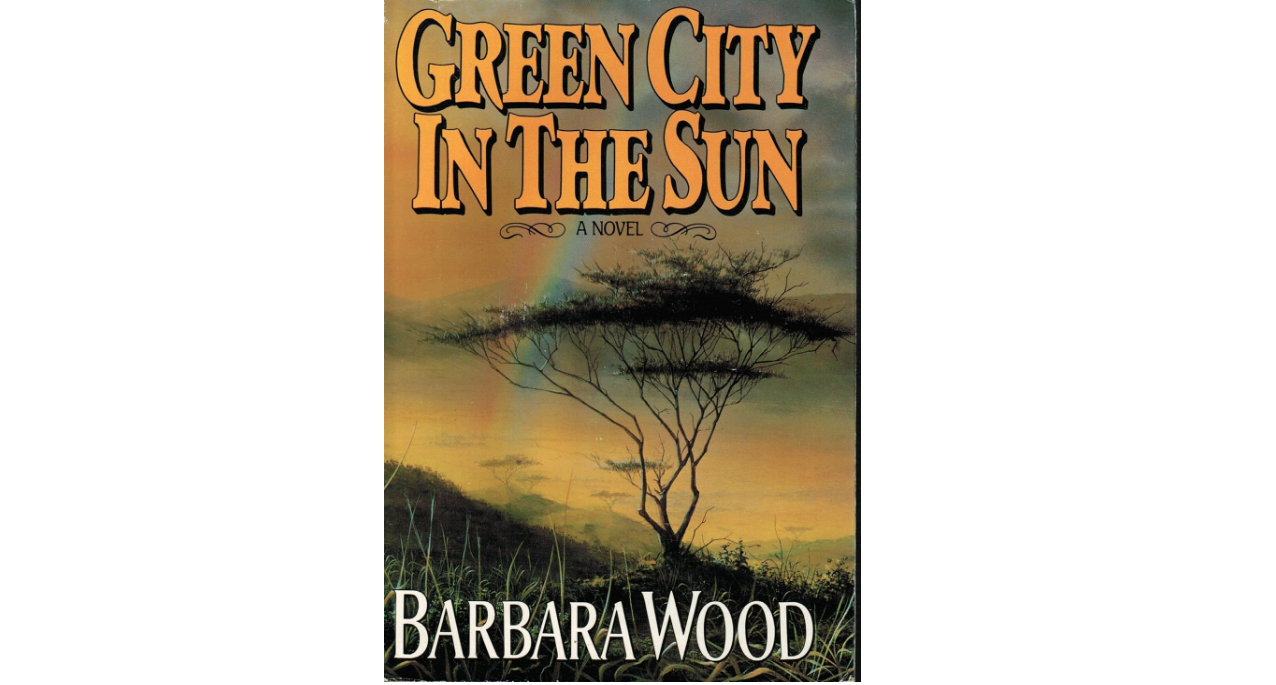
Barbara Wood’s Green City in the Sun unfurls like a broad savannah sky: vast, scorched, radiant with possibility, and heavy with the weight of history.
It is a sweeping, generational epic rooted in Kenya during the era of British colonial rule and the tumultuous road to independence. What makes it instantly compelling is not just its scale but its emotional depth: two families, bound by the land they share and divided by the worlds they come from, spend decades shaping and dismantling each other’s fates under the relentless East African sun.
At its core, the novel follows the British Trevertons and the Kikuyu Moriyos, two families drawn together by circumstance and pulled apart by cultural tension, ambition, love and betrayal. The Trevertons arrive in Kenya carrying dreams of prosperity and reinvention. Their patriarch, Arthur, sees the land as a promise, a place where a man can carve out success with his own hands. His family becomes deeply entangled in Kenya’s landscape, its people and its shifting political terrain.
Meanwhile, the Moriyo family stands rooted in generational tradition, with an ancestral understanding of the land that goes beyond ownership. Their story is marked by both loyalty and the friction that comes with change as younger generations feel the pull of modernity and opportunity.
The heart of the novel beats in the space where these families’ lives intersect. They share triumphs, tragedies, quiet alliances and deep fractures. Across decades, marriages form, secrets bloom and long-standing resentments simmer beneath the surface. Wood plants the seeds of conflict early with the piercing line: “The land remembers what people choose to forget.” It’s a whisper of warning, a reminder that history is never fully buried. And in Green City in the Sun, the past is always turning its face toward the present.
The plot stretches across years and continents, covering political upheavals, personal transformations and the shifting tides of colonial and post-colonial identity. There are weddings that collapse into heartbreak, farms built from nothing and nearly destroyed, forbidden romances that shape both families’ futures, and generational wounds that refuse to fully close.
The story’s emotional architecture rests heavily on its characters, who are flawed, determined, hopeful, frightened. Each carries their own ghosts, desires and deceptions. Through them, Wood paints a vivid picture of how love and loyalty can become both the lifeblood and downfall of a family legacy.
Wood’s ability to evoke Kenya is one of her most intoxicating strengths. She doesn’t merely describe the setting; she immerses you in it. You feel the crunch of dry grass beneath your feet, smell the sharp sweetness of eucalyptus, hear distant singing echo across the hills at dusk. Her detailed sensory work gives the novel an almost cinematic quality, one that sweeps you across decades. The environment becomes more than a backdrop; it becomes a character, alive and unpredictable.
Despite the novel’s sweeping scale, Wood maintains an intimate emotional focus. Her characters are not simply vehicles for historical drama; they are fully realised individuals navigating moral dilemmas, cultural conflict and the costs of their own choices.
Some try desperately to hold on to tradition, while others chase transformation, even as it risks severing the roots that tether them to their past. It is this emotional tension between holding on and letting go that keeps the narrative pulsing with life. In one of the book’s quiet but resonant moments, Wood writes: “Hope is a stubborn thing; it grows even in the hardest soil.” The line captures the resilience that runs through the story’s core.
However, as compelling as the novel is, one significant flaw persists: its pacing frequently drags. Wood’s devotion to detailed description, normally a strength, often swells to the point of slowing the plot’s momentum. Certain chapters linger too long in atmosphere, cultural exposition or internal monologue, causing the narrative to stall at moments that should surge forward.
The result is a story whose emotional and historical richness is sometimes overshadowed by its density. Readers who thrive on swift pacing may feel bogged down, waiting for the narrative to pull its feet free from the mud of overextended detail.
Even so, Green City in the Sun remains a powerful, textured novel that offers a striking portrait of Kenya in transition and the families who attempt to shape their destinies within it. Wood’s evocative ability to blend personal drama with political and cultural upheaval, and her talent for crafting characters who feel carved from real lives, all combine to create a narrative that stays with you long after you close the book.
If you’re drawn to epic family sagas that pulse with atmosphere, tension and heart, this one will pull you right into its heat, where hope grows stubbornly, secrets smoulder and the sun never entirely sets on the past.