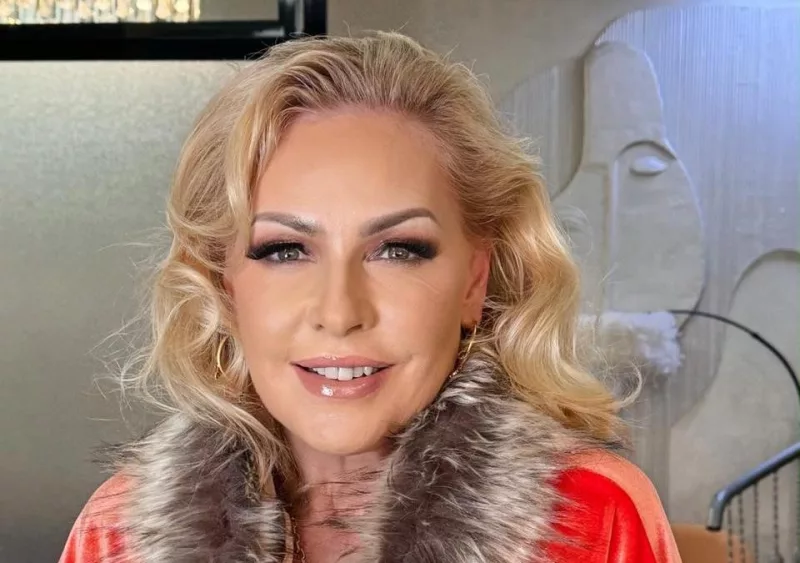
Growing up in a single-parent home, 26-year-old Rehema Chivatsi was forced to assume adult responsibilities prematurely.
She had to assume motherly responsibilities for her four siblings, while her elder brother stepped into the paternal role.
While in Class 6, Chivatsi's mother, tired of living in poverty, decided to go to the Middle East to work as a domestic employee. The mother's fish business was not doing well.
“My father left us after separating from my mum because of poverty and when my mother left for the Middle East, we were left under the care of my grandmother, who was too old and too weak to take care of us,” she says.
Staying in Barani, Kisauni constituency, their mud house could not withstand the rains and the walls collapsed several times, exposing them to harsh weather conditions.
Chivatsi and her elder brother had to wake up earlier than the rest, prepare their siblings for school before picking guavas to sell at Kisauni Primary School.
They fed the family using the money they made from guava sales.
“Sometimes we went without meals for even two days. One day my younger brother fainted in school because of hunger. Teachers asked their colleagues and pupils to contribute money for us. This hurt me to the core,” she says.
From the Middle East, her mother started sending home some money, which they used to repair the house but at some point, her employer started mistreating her, forcing her to flee.
“We stayed for almost a year without communication with her. We did not know whether she was alive or dead. She stopped sending money home too,” Chivatsi says.
At Class 7, she also started selling sunflower seeds in school. And because, hawking was illegal, she had to always be the first in class and the last one to remove traces of the seeds.
"I had to sweep the whole class to ensure the sunflower seeds skins are not seen lest I be discovered,” she says.
Chivatsi did not do well in her KCPE in 2012, earning a mere 210 marks out of 500.
She had to look for odd jobs and found one with one of her grandmother’s patients. Her grandmother was a traditional midwife.
One of the women she helped deliver asked Chivatsi to take care of her baby for three months.
She was paid Sh2,500 a month, which she saved to take herself to secondary school.
“The whole of the first term in 2013 saw me at home. I only joined secondary school in term two,” she says.
She joined Swalihina High in Kisauni after convincing her father to pay part of her fees.
At Form 3, long after her grandmother died, school fees challenges increased and she had to think outside the box.
Being a good cook, she started cooking chapatis and beans, which she packed in polythene bags and sold to pupils.
She would wake up at 2 am to prepare the meals before preparing her siblings for school.
Her chapatis were so tasty and cheaper that by 10 am, all of them were usually sold out.
When the mama pimas, who were selling chapatis to the students, realised students were not eating their chapatis anymore, they launched investigations.
"When they found out I was selling chapatis, they reported me to the principal, and I was suspended for a month,” Chivatsi says.
After high school, her mother, who had by now secured a job at another place in the Middle East, sent home a freezer, which Chivatsi used to start a water business.
“I would collect water bottles, wash them with hot water and put in tap water and then kept them in the freezer. I would later sell the bottled water at Stage ya Basi at Lights for Sh10 a bottle,” Chivatsi says.
Because she was the only person doing the business in 2018, it thrived and earned her Sh1,000 in profit in a single day.
Because Islamic doctrines bar the sale of food or water during Ramadhan, Chivatsi had to stop. But when she came back, everybody had ventured into the business.
In 2019, an opportunity came when Wema Centre identified her and offered to take her to college where she studied hospitality, tailoring and computer studies.
Then came Covid and all had to stop. At home she started frying potatoes and wheat porridge.
But when Covid subsided she returned to college after which she ventured fully into her fried potato and wheat porridge business.
She was exposed to a business management training which was conducted by a CSO, after which she and two other girls teamed up to form a company, Samremmy Foods and Event Management.
What began as a survival tactic evolved into a deeper passion for entrepreneurship.
Through training and grants by Master Card Foundation, Chivatsi expanded her company, transitioning from informal street vending to running a registered company.
“My entrepreneurial journey has been supported by MasterCard Foundation through the Jiinue Growth Programme, enabling me to expand in terms of product and service offering,” she says.
Her journey reflects both the untapped potential and the urgent need to empower more women striving to transform their lives and communities through entrepreneurship.
“At first we were so green we did not know many things. We were told the government hives grants but did not know how to get those grants and loans,” she says.
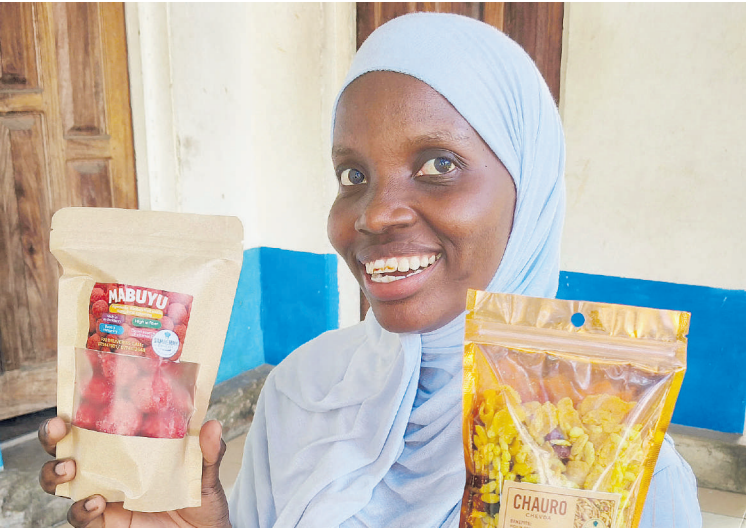
Now the company sells snacks such as chevda, mabuyu, tambi and others and packages them professionally.
She has dreams of one day owning her own group of companies.