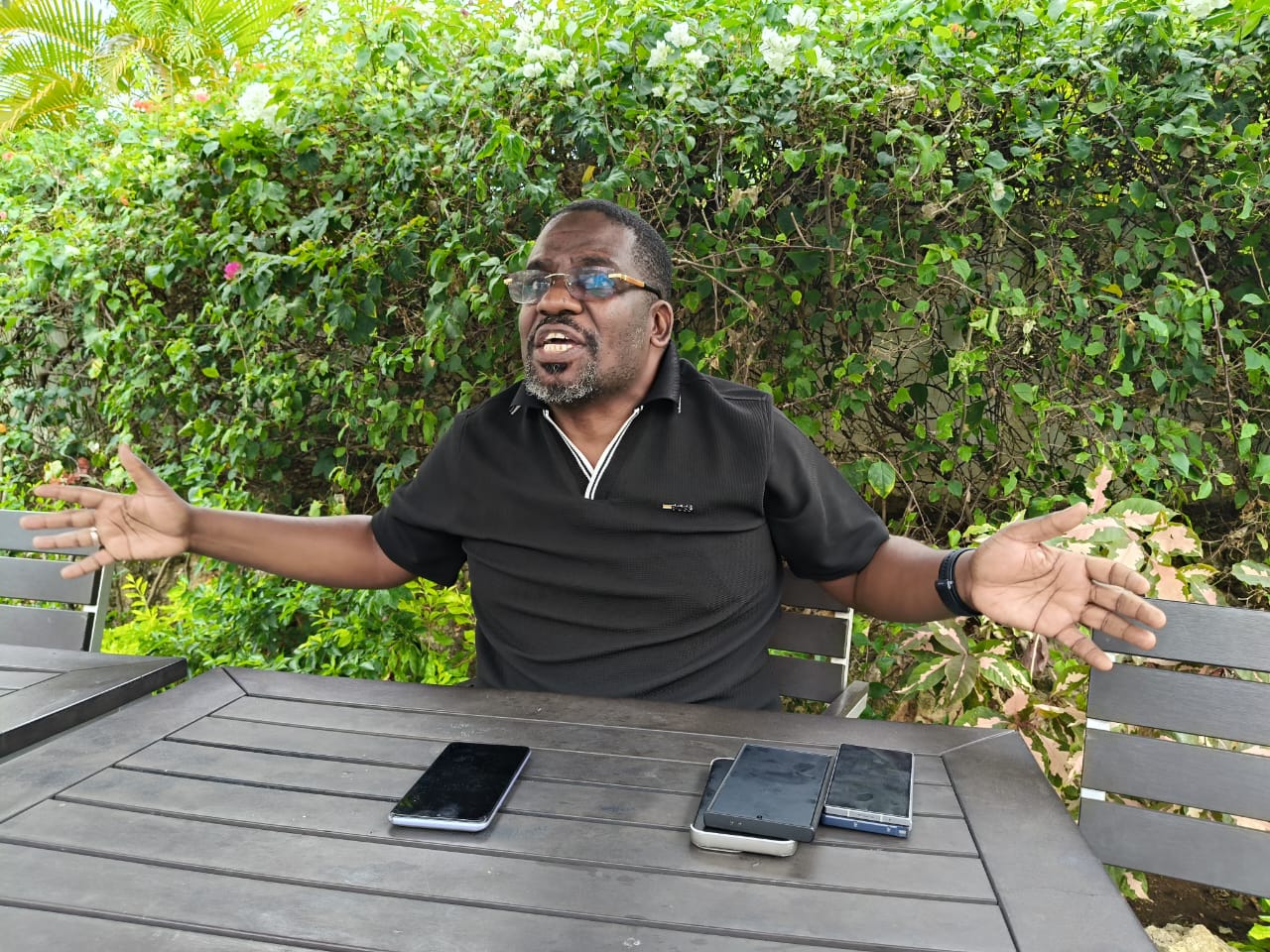
From begging for coins in the streets of Mombasa to dining with dignitaries, Mbarak Bashatir’s journey is a testament to resilience, faith and the power of persistence.
Born and raised in Bondeni in the larger Kisauni constituency, now part of Mvita, Bashatir was the third of four siblings. Life was tough.
Raised by his grandmother and mother in a cramped one-room house, he remembers nights sleeping on a traditional sufi bed, often waking up with bits of the mattress stuck to his hair. Water was scarce and so was food.
On good days, the entire household would share one medium-sized fish for supper.
At Serani Primary School, he was often mocked for his torn uniform and unkempt appearance.
But even then, Bashatir was street-smart. He charmed his Indian classmates with jokes just to earn a coin for cassava or ice during lunch. After school, he would roam the Markiti market, begging for fruits or money to take home for dinner.
On Fridays, he’d take a bus to Mwandoni to help his foster father, Khamis Mwinyi, sell vegetables. “I had the charm. Customers loved me. I made good sales,” he recalls.
By Standard 6, he was sneaking out of school to work at the Old Port, shelling cashew nuts for export at 80 cents a day. No one knew he was working.
When his younger brother fell ill, and the hospital bill was Sh300, Bashatir shocked his mother by covering it with his secret savings.
"She was furious and proud at the same time," he recalls.
From that point, his mother treated him as a man, trusting him with more responsibilities at home.
After completing high school in 1985, Bashatir was flown to Dubai to reunite with his father, who had remarried. Life with a stepmother proved difficult, so he returned to Kenya and started hustling.
His first job was as a ticketing officer at Garex Kenya Ltd in Mombasa. Impressed by his performance, the company transferred him to Nairobi. But after getting married and fathering his first child, he was abruptly laid off.
Back in Mombasa, he and his wife opened a small eatery, "Clean Heart", and later a butchery called "Queen Latifah" in Mwandoni. As money trickled in, Bashatir’s hunger for growth led him to diversify — opening a video library, a salon and later venturing into the matatu business.
“There’s no business I haven’t tried,” he says with a laugh.
His many ventures even sparked bizarre rumours. Some accused him of being a witch doctor. But Bashatir wears his past with pride—having helped his grandmother with traditional healing, he sees no shame in it. “We helped people heal. I have no regrets.”
Later, he launched a recruitment agency that sent more than 100 youth from Mombasa and Malindi to the Middle East, mostly to work in Dubai’s Fairmont Hotel.
But when visa issues arose, some couldn’t travel. Bashatir refunded their money, but false accusations spread.
“That was one of the hardest moments of my life,” he says. “You can insult me, but don’t falsely accuse me.”
In 2007, he narrowly escaped a murder attempt—a consequence, he believes, of his vocal campaign against drug dealers in Mombasa. Gunmen sprayed his Tudor home with bullets. Around the same time, his friend, fellow anti-drug crusader Sebo, was shot in the stomach. Bashatir rushed him to Jocham Hospital. Fearing for his family’s safety, he fled to Tanzania.
In 2013, Bashatir was enlisted into a special team of anti-drug activists and security officers in Mombasa. Though some claimed he was a police reservist, he says he was just a determined citizen committed to saving the youth from drugs. “Drug abuse was at its peak. We had to act.”
He worked closely with the now-disbanded Flying Squad, led by Gideon Nyale Munga, and recalls a sharp decline in drug activity during that time.
However, his stay in Tanzania hit a legal snag — the country prohibits dual citizenship. Unwilling to renounce his Kenyan roots, Bashatir packed up and returned home.
Back in Mombasa, he hustled again — this time as a broker in Polana. “I’ve washed cars. I was even a tout,” he says.
Eventually, he founded a general supplies and construction company that performed well, allowing him to open a second branch in Tanzania with a local partner. They’ve since built several roads there.
His struggles inspire him to help others. He launched a passport assistance initiative to support those seeking work abroad. “I’ve lived in a house without a toilet. We used to relieve ourselves in the bush. That past fuels my desire to uplift others.”
A passionate football fan, Bashatir supports Tanzania’s Simba SC, a connection that earned him influential friends who encouraged him to join the board of Kenya Police FC, a top-flight KPL club.
Now, he’s setting his sights on politics, declaring his intention to run for the Kisauni parliamentary seat. “I have the heart for the people of Kisauni,” he says.
From the dusty streets of Bondeni to the boardrooms of football clubs and construction firms, Mbarak Bashatir’s journey is proof that no circumstance is permanent — only your will to change it.