National Treasury CS John Mbadi.
Kenya has marked a major milestone in the fight against climate change, with over 500 climate resilience subprojects completed and an additional 558 currently underway, benefiting more than one million Kenyans across the country.
These achievements are part of the Financing Locally-Led Climate Action (FLLoCA) Programme—an ambitious, community-driven climate initiative jointly supported by the government and international development partners.
By working closely with county governments, civil society and development partners, the programme is pioneering a new model of climate finance—one that places communities at the centre of both the problem and the solution.
The FLLoCA programme is reshaping how climate financing is done in Kenya by placing local communities at the heart of climate adaptation and resilience-building efforts.
To date, the programme has helped create over 57,000 jobs, prioritising youth, women and marginalised groups, while simultaneously supporting sustainable development and environmental restoration.
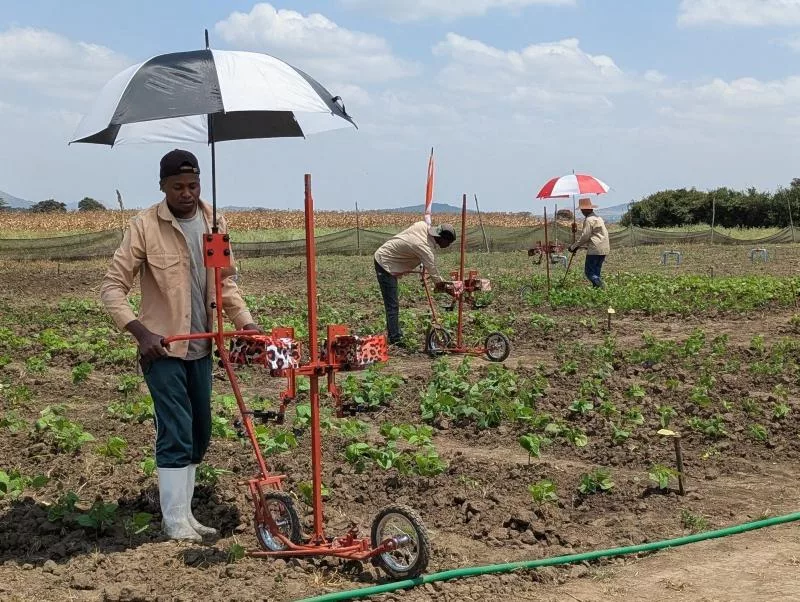
FLLoCA’s commitment to climate-smart agriculture has already restored 27,640 hectares of degraded land, while technical training has equipped farmers with knowledge and tools to adapt to changing weather patterns.
Of the 2,245 first-cycle pipeline sub-projects, 51 per cent are focused on the water sector, 28 per cent on environmental restoration, 13 per cent on climate-resilient agriculture, and eight per cent cover sectors like renewable energy and infrastructure.
Real-world impact: Water, food and hope in Kaiti
In Kenya’s most vulnerable regions, FLLoCA is deploying geospatial monitoring tools and early warning systems to reduce climate risk. These technologies are helping communities prepare for and respond to droughts, floods and other climate hazards that threaten livelihoods and lives.
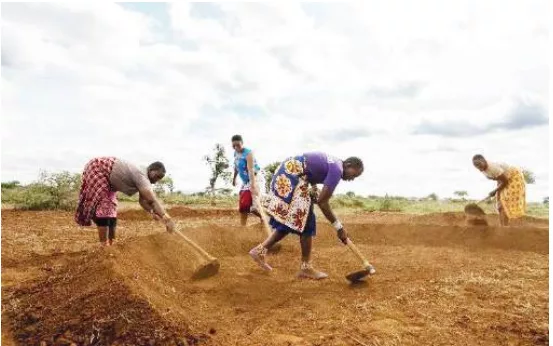
One of the clearest examples of FLLoCA’s transformative impact is unfolding in Ilima, Kaiti subcounty in Makueni, where a Sh16 million irrigation project is helping farmers turn dry land into productive farmland.
Thanks to the initiative, over 8,700 residents now have access to irrigation water, supporting thriving fields of sukuma wiki, spinach and onions. The harvests not only meet local food needs but also generate income as surplus produce is sold at nearby markets.
What was once a water-scarce region is now experiencing renewed agricultural activity, greater food security and economic revitalisation.
Global support fuels local action
FLLoCA is co-financed by the World Bank and the governments of Germany, Sweden, Denmark and the Netherlands. This broad partnership has mobilised more than Sh30 billion to help Kenya respond to the growing urgency of climate threats through a bottom-up, locally led model of climate financing.
The grants allow counties to activate their County Climate Change Action Plans, fund community-prioritised projects and strengthen local institutions. The programme has now reached 1,137 wards (78.4%) of its 1,450-ward national target—an unprecedented coverage in the history of Kenya’s climate action planning.
“Each ward reached is another community empowered to write its own climate resilience story,” noted a statement from the National Treasury.
Counties empowered through performance-based climate grants
On July 21, the Exchequer disbursed Sh6.97 billion to 42 counties through the second tranche of the County Climate Resilience Investment grants under the FLLoCA programme. These funds will enable counties to implement priority climate projects that directly respond to their unique vulnerabilities—such as erratic rainfall, water scarcity and land degradation.
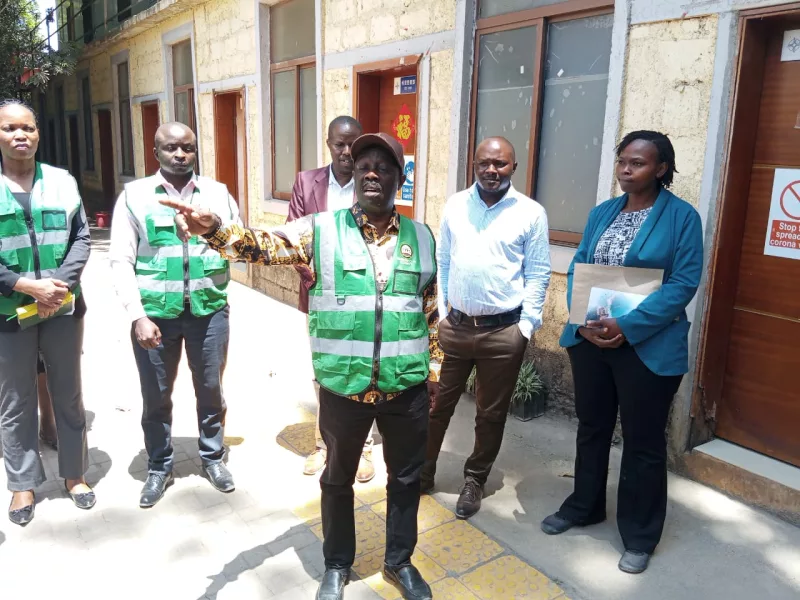
Speaking during the disbursement, Treasury CS John Mbadi reiterated the government’s commitment to climate adaptation through local leadership.
“By channelling resources directly to the local level, we are strengthening institutional capacity, accelerating adaptation efforts and ensuring that climate action delivers tangible benefits to communities most at risk,” Mbadi said.
The CCRI grants are performance-based, awarded only to counties that meet strict Minimum Performance Conditions (MPCs) outlined in the FLLoCA Grants Manual.
The 42 counties that qualified for this round underwent the second Annual Performance Assessment (APA)—a rigorous evaluation of planning, financial readiness and participatory engagement.
PS Chris Kiptoo praised the APA process for promoting transparency and accountability.
“The assessment ensures grant allocations are grounded in local ownership and preparedness. It builds on participatory climate risk assessments that put the voices of communities at the centre of planning,” Kiptoo said.
Building long-term resilience and institutional strength
Beyond physical infrastructure, FLLoCA is investing in governance systems and institutional resilience. All 47 counties have enacted County Climate Change Fund Acts, unlocking Sh7.94 billion in locally allocated funds to support community-led investments in water, agriculture and environmental restoration.
The programme also supports county steering committees, county climate change units and ward climate change planning committees. These bodies play a critical role in ensuring inclusivity, local engagement and long-term sustainability.
Looking ahead: Over 1,000 new projects coming
With 1,061 additional sub-projects moving into implementation under the CCRI Grants, FLLoCA is poised to expand its reach and deepen its impact.
As the programme matures, its emphasis on community ownership, financial accountability, and climate justice is being hailed as a model for the region—and beyond.
In a world where climate change often feels overwhelming, FLLoCA is proof that bold, locally led solutions can deliver jobs, food, water and hope—while building a greener, more resilient future for generations to come.