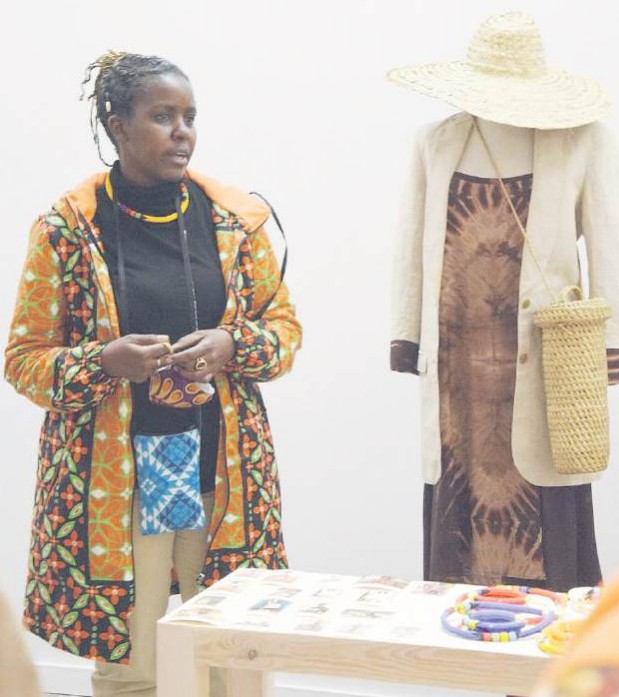
Ever since she was a little girl, Wacu Kihara has felt deeply connected to nature and fashion.
Growing up with a father who was Kenya’s first African forester based at Kamae Forest in Kiambu county, Kihara inherited a deep respect for the environment.
She recalls his distress when people cut down trees, damaging the environment.
So ingrained was her father’s love for nature that when he died, Kihara and young people from the Model United Nations organised the first clean-up in Naivasha in his memory.
The event got a lot of support, including sponsorship for metal waste bins, including from CfC Bank, now Stanbic and La Belle Inn in Naivasha town.
Environmental consciousness is part of her DNA, her style and what has become her fashion brand, Khangadelic.
“I’ve always had a passion for fashion and a love for the environment,” Kihara says.
By the age of 11, she was determined to become a fashion designer. Her dream was simple: to create fashion celebrating the rich colours and heritage of Kenya’s Coast.
But what started as a love letter to khangas (also called lesos) and creativity has become a movement tackling plastic waste, empowering youth and turning trash into treasure.
Her designs are based on the iconic khanga – a staple of Kenyan culture – a fabric known for its vivid prints and Swahili proverbs.
She crafts them into contemporary wearables such as reversible bucket hats, reversible aprons, linen shirts with khanga accents and home decor products.
She also produces beaded leather accessories such as belts, sandals and even dog collars.
The brand name Khangadelic is a fusion of khanga and the psychedelic vibrant colour combination movement of the 1970s.
“I was drawn to those funky color combinations: lime green and orange, vibrant prints – and I saw how it echoed our own local aesthetic,” Kihara told the Star.
But her vision for Khangadelic goes far beyond fashion. When exhibiting at NY NOW 2016 in New York, with 17 other Kenyan designers, she was struck by how businesses weren’t just selling products but also focusing on social impact through the UN Global Sustainable Development Goals (SDGs).
The show was sponsored by the Kenya Export Promotion and Branding Agency (then the EPC Export Promotion Council). That’s when she was inspired to align Khangadelic with goals such as Life on Land, Life Below Water, Responsible Consumption and Production, Sustainable Cities and Communities and Partnerships for the Sustainable Development Goals.
She had moved to Mombasa and became acutely aware of the pollution on beaches, especially discarded plastics, such as water bottles, slippers and other plastic waste.
One experience stuck with her: “I would see a guy who collected trash from the vendors on the Island side of the Likoni Ferry in a wheelbarrow and he was given access by guards to dump waste on the beach,” she says.
“The crowds would part like the Biblical Red Sea to give him access. It broke my heart.”
In search of a solution, Kihara connected with Minazini Beach Management Unit in Shelly Beach, which organised weekly clean-ups.
The collected plastics, however, were burned or buried, which damaged the environment. That’s when she got a contact at Ocean Sole, a social enterprise recycling discarded flip-flops, some washed ashore from as far as Tanzania and Mozambique.
The contact came through her membership in the International Coastal Clean Up committee, which organises an annual beach clean-up on World Oceans Day, every June 8, all along the Kenyan coastline from Vanga to Tanga.
This partnership created an incentive for residents. They would collect and sort slippers, which Ocean Sole would buy.
“The community realised there was wealth in waste,” Kihara says.
Soon, the clean-ups expanded to include PET water bottles, glass bottles and, through a generous donor, Kihara was able to sponsor the initiative over three years – providing 100 sacks, rakes, hoes and spades to help with the clean-up activities and jumbo sacks to store the recyclables, pending sale to the recyclers Eventually, when she moved back to Naivasha, Kihara took the initiative with her.
She approached a friend for space near Naivasha Sports Club as a holding centre for recyclables.
Kihara has trained the two local youth, who run the holding centre and the collection centre, in waste segregation, highlighting differences between recyclable metals such as aluminum and scrap.
She has partnered with Buffalo Mall, which provided space for metal bins and gained sponsorship from the Naivasha Business Community, which includes the Kijabe Forest Trust, Ruaraka Duck Limited and Ubuntu Life.
She and her colleagues recently got two new sponsors, Chipukizi Primary and Preschool and Kilimandege Lakeside Airbnb. As bins filled up, recyclers were contacted for pick up and her son, Ife, began running the mall collection centre.
“At first, they weren’t too keen, but when they saw the impact, they got involved,” Kihara recalls.
A few years ago, they collected more than 8,000 tonnes of waste over three years, including green glass bottles, which fetched only Sh1 per kilo. Still, Kihara insists, “It’s not about the money. It’s about keeping waste out of landfills and our environment clean.”
Her efforts are creating a snowball effect. From the beach management unit in Mombasa to young people in Naivasha, more communities are starting their own cleanup and recycling initiatives.
Recently, someone reached out, inspired to replicate her model among lodges in the Masai Mara.
“All I do is my bit and I hope it can mentor others,” Kihara says.
At the heart of Khangadelic is a circular economy. Every piece of fabric is used. Every product is packaged in a reusable khanga bag – no plastic involved.
It’s Kihara’s way of saying thank you to clients and reducing waste.
“These bags are now used for gifting and as shopping bags, often becoming keepsakes themselves.”
Customers love the reusable bags. Some place orders to gift friends and package Christmas gifts. They come in different sizes; small for jewellery, belts and dog collars; medium for sandals, kikois and oven mittens; and large for clothing and reversible aprons.
Kihara also sells Kenyan tea and coffee, envisioning her eBay store as a Kenyan cultural marketplace.
Her dream is to get stores in the US to stock Khangadelic products and is working on launching her Shopify and Etsy Stores in time for summer.
While funding and awareness for recycling remain challenges, Kihara’s biggest reward is the recognition and support from communities and customers.