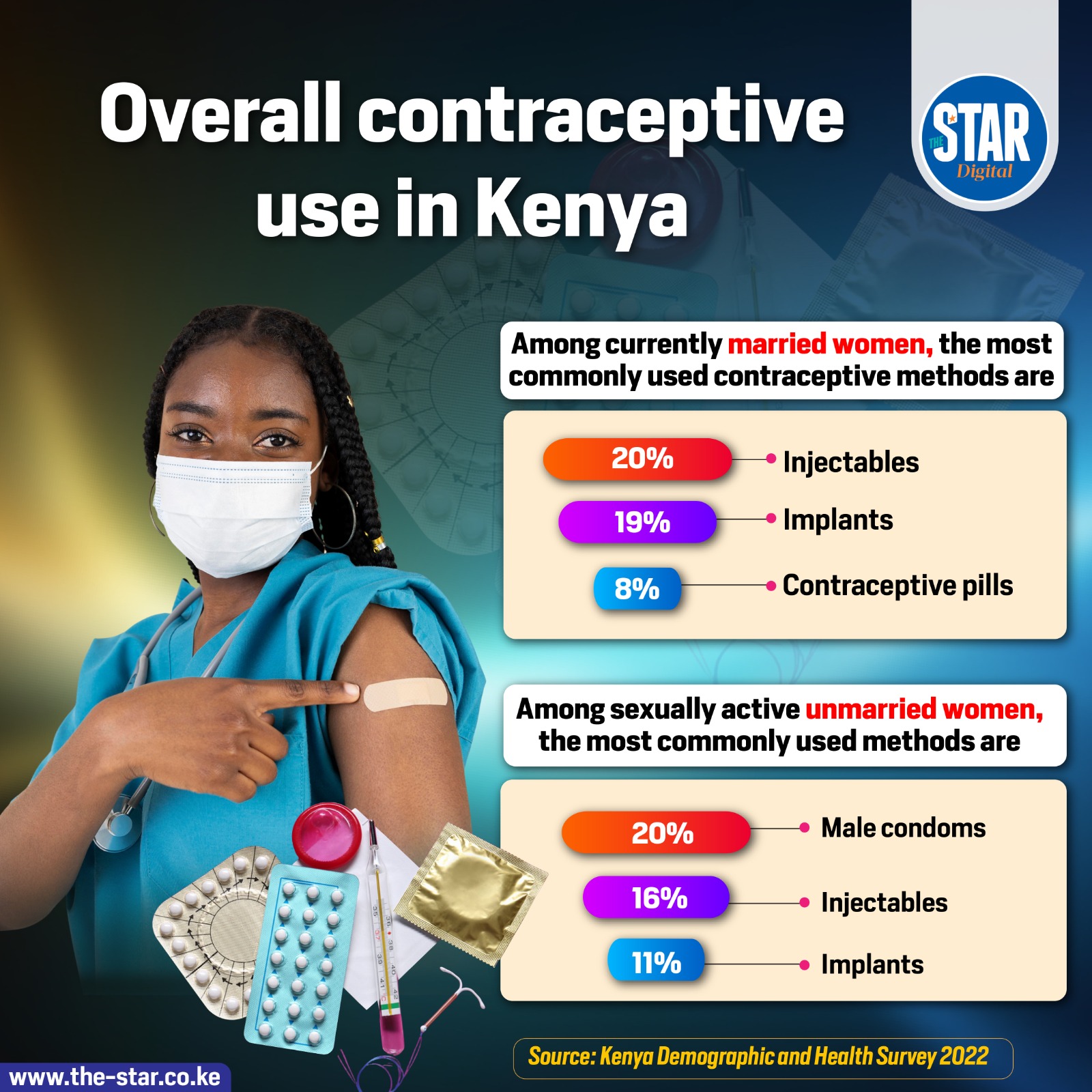
Contraceptive use in Kenya reflects differing preferences between married and unmarried women, shaped by access, awareness, and lifestyle factors.
Among married women, long-term methods dominate, with injectables leading at 20 per cent, closely followed by implants at 19 per cent.
Contraceptive pills trail at 8 per cent, indicating a shift toward more convenient, longer-lasting options.
For sexually active unmarried women, male condoms are the most commonly used method at 20 per cent, highlighting their dual role in preventing both pregnancy and sexually transmitted infections.
Injectables (16 per cent) and implants (11 per cent) also feature prominently, showing growing acceptance of modern methods.
Overall, the data points to increased uptake of reliable contraceptives, though gaps remain in access and education.
Expanding reproductive health services, especially for young and rural populations, could further improve usage patterns and help reduce unintended pregnancies across the country.