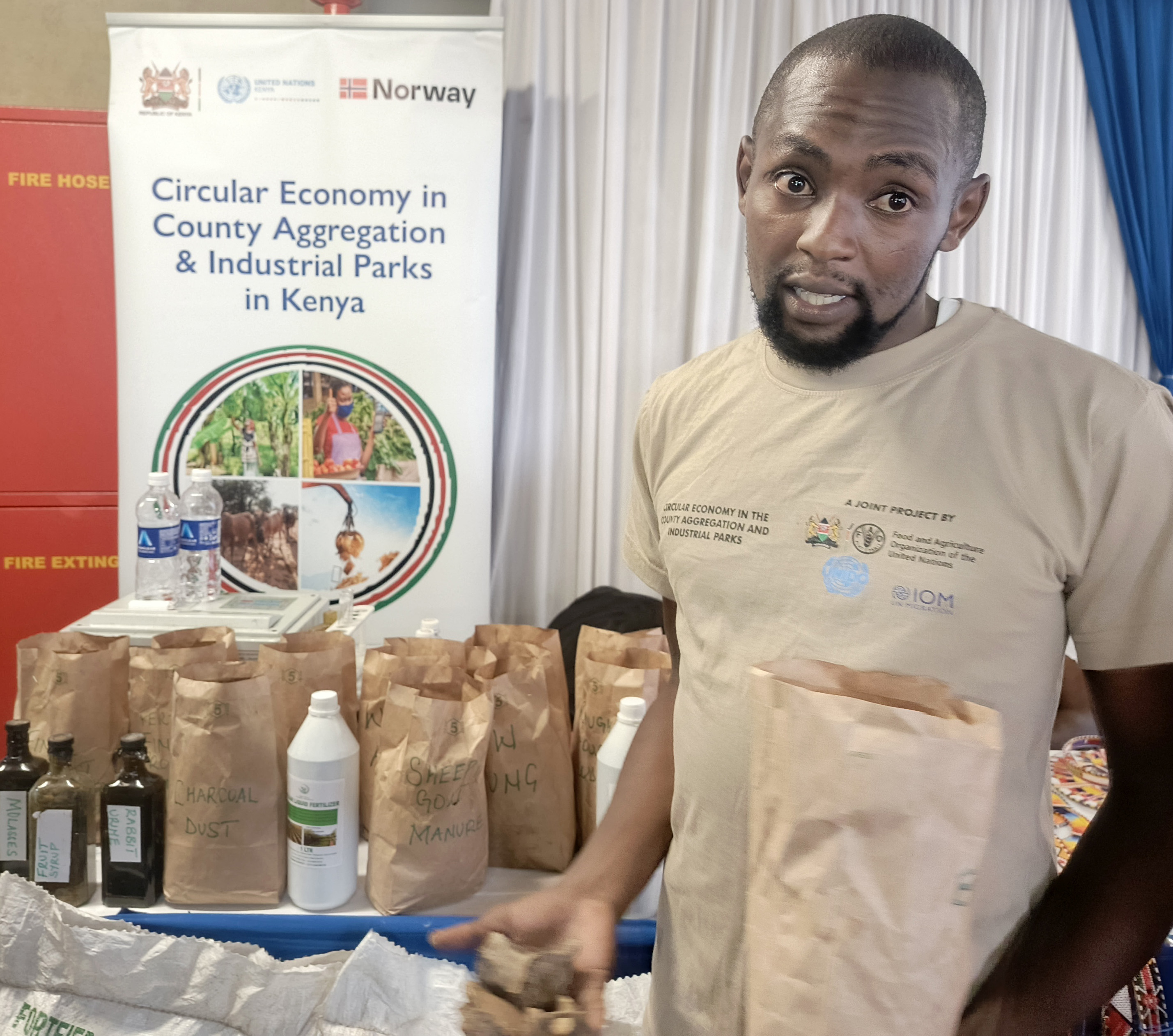
Did you know that the bones you throw away after enjoying your meat are a rich source of calcium for your soil? Well, now you know.
One local innovator is transforming this overlooked waste into valuable organic fertiliser and helping farmers reclaim their soil health in the process.
Meet Paul Mburu, lead agronomist at AgriFlora Organic Solutions, based in Nyahururu.
At AgriFlora, Mburu and his team manufacture 100 per cent organic fertiliser using animal and plant waste, with bones as their primary calcium source.
“Bones are rich in calcium, a key nutrient that mobilises others like nitrogen and phosphorus while helping regulate soil pH,” Mburu explains. “Unlike synthetic sources, bones are a natural and abundant by-product that is often thrown away.”
AgriFlora sources bones from pastoral communities in Laikipia’s Rumuruti and Samburu’s Maralal areas. Once collected, the bones are transported to their facility for processing.
“First, we incinerate the bones to remove the enamel, then crush them into a fine powder to make the calcium more bioavailable to plants,” he says.
But it’s not just bones. AgriFlora’s organic blend also includes sheep manure for nitrogen, wood ash for pH balance, slaughterhouse sludge rich in ammonia and composted manure from trained community members.
“The result isn’t just fertiliser, it’s a soil conditioner,” Mburu notes. “Our soils have become too acidic and dependent on synthetic fertilisers. We’re not just improving crop yields, we’re restoring soil health.”
Mburu warns that years of chemical fertiliser use and pesticide application have disrupted the soil ecosystem, contributing to long-term damage.
“We’re seeing more lifestyle diseases like cancer and diabetes, conditions that were rare decades ago. There's a direct link between what we put into our soil and what ends up on our plates.”
With a background in Agricultural Economics and Resource Management from Moi University and a diploma in Soil Science from Beita University in Israel, Mburu is on a mission to promote safer, healthier food through organic farming.
So far, the market response has been promising. A 25kg bag of AgriFlora fertiliser sells at Sh1,500, and a 50kg bag goes for Sh3,000, roughly half the cost of a synthetic DAP fertiliser bag, which can cost up to Sh6,000.
“When you consider the long-term benefits to soil health, there’s no comparison,” he says.
To support farmers further, AgriFlora offers soil testing at Sh2,000 per sample and creates custom fertiliser blends tailored to specific soil needs. They also buy raw materials like manure and bones from the community at Sh5 per kilogramme, supporting local livelihoods while cleaning up the environment.
However, Mburu says they face challenges, including a bureaucratic and costly certification process and unfair competition from subsidised chemical fertilisers.
“Renewing licenses is frustrating. If certification could be streamlined, and if the government prioritised local organic producers, we would see real change,” he adds.
Looking ahead, AgriFlora aims to expand into a major organic fertiliser supplier across Kenya and East Africa within the next decade.
“We have abundant raw materials and a trained network of empowered women and pastoralists. We're ready to scale,” says Mburu.
“Organic farming isn’t just viable, it’s essential. It’s better for the soil, the environment and our health.”
Caroline Kosgei, an agribusiness advisor with the Food and Agriculture Organization of the United Nations has been at the forefront of the Circular Economy in County Aggregation & Industrial Parks in Kenya. The project seeks to turn waste into valuable resources.
The initiative is funded by the Government of Norway, in partnership with the International Organization for Migration and United Nations Industrial Development Organization.
“The circular economy is about eliminating waste and pollution, keeping materials in use and regenerating ecosystems,” Kosgei explains.
In Laikipia, materials once considered useless including cattle teeth, hooves, horns, and slaughterhouse blood, are now repurposed into ornaments and organic fertiliser.
“We’re moving away from the ‘take-make-waste’ model toward a truly circular economy,” she says. “Communities are proving that waste can generate economic, social and environmental value.”
Women, especially in pastoralist communities, are key players. In Laikipia, Maasai women are being integrated into the beef value chain.
In Nyamira, vegetable farming is being used to create sustainable ecosystems.
“These grassroots efforts may seem small, but they are positioning Kenya as a leader in the green transition,” says Kosgei. “The impacts on jobs, the environment and livelihoods are already visible.”
The pilot phase of the project, launched on June 12, 2024, is set to conclude by December 31, 2025. The next step is scaling up.
“This is a catalytic initiative,” Kosgei says. “It has ripple effects across job creation, environmental sustainability and even export potential.”