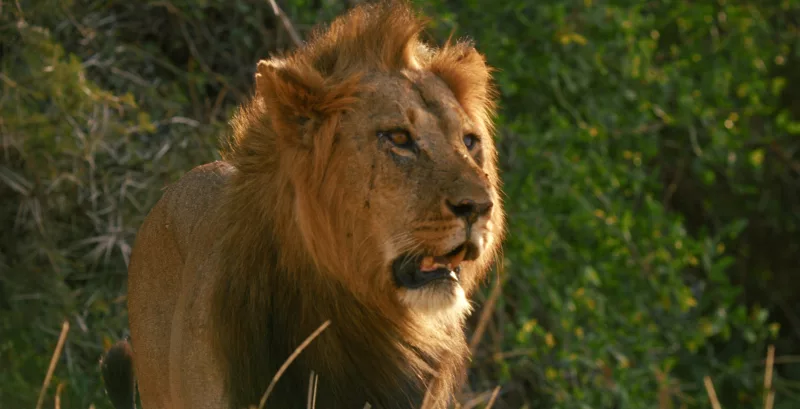
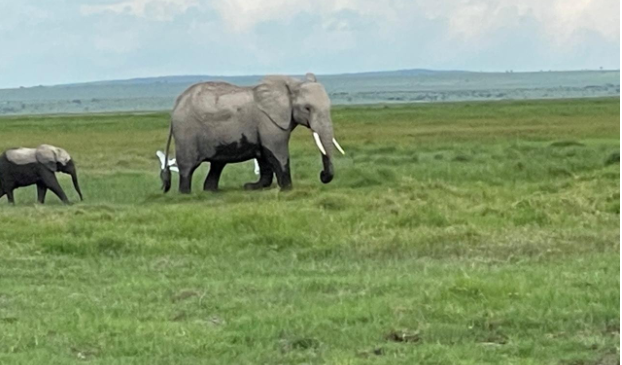
 An elephant and her calf at Amboseli National Park./HANDOUT
The government is in the process of developing a modern facility to secure genetic resources following a spike in wildlife species illegal trade.
Wildlife PS Silvia Museiya said the country is also in the process of establishing the gene bank.
“We are looking at what we have and what can be protected in the new law,” Museiya said.
The PS made the remarks even as the country experiences a spike in illegal trade in wildlife species.
On May 7, four people were each ordered by court to pay a fine of Sh1 million or serve 12 months in prison after being found with garden ants with an estimated street value of Sh1.2 million.
Lornoy David and Seppe Lodewijckx, Vietnamese citizen Duh Hung and Dennis Ng’ang’a, a Kenyan, were convicted and sentenced at the JKIA courts for violating the Wildlife Conservation and Management Act.
The accused were arrested on April 23 this year after attempting to traffic 5,000 live garden ants.
The wildlife biobank will be hosted at the Wildlife Research and Training Institute (WRTI) in Naivasha.
The facility will store biological samples and related health information.
Biobanks can contain blood, tissue, tumour cells and DNA.
The repository will help support research in genetics, disease control and medical advancements.
Museiya said the Wildlife Conservation and Management Act, 2013, will be reviewed to reflect the emerging issues.
The PS noted the country might be losing a number of genetic resources to cosmetics and medicines manufacturers.
Kenya is party to a number of international treaties and conventions.
Such treaties and conventions include the Nagoya Protocol on Access to Genetic Resources and the Fair and Equitable Sharing of Benefits Arising from their Utilisation to the Convention on Biological Diversity.
The protocol was adopted in Nagoya, Japan, on October 29, 2010, and remains a landmark agreement in the international governance of biodiversity.
Kenya is also a party to the Convention on International Trade in Endangered Species of Wild Fauna and Flora (CITES).
CITES' ensures international trade in specimens of wild animals and plants does not threaten the survival of the species.
Museiya lauded multi-agency teams for busting criminals at Kenya’s border points, adding that the illegal trade in wildlife was taking a dangerous trajectory.
Rhino horns, elephant tusks and the smuggling of pangolins have always been the reported forms.
WRTI director Dr Patrick Omondi says the country does not have a biobank for wildlife.
“There is one for livestock, for human beings, but we do not have one for wildlife. We developed a concept and we are at the mobilisation stage to construct the facility in Naivasha,” Omondi said.
The director said WRTI already has designs and they are waiting for resources.
“It's going to cost almost half a billion. That is the construction and equipping of the first gene bank for the wildlife in the country.”
The bank will store all the genetic materials.
Omondi said Kenya has had to rely on other countries in its latest bid to save the northern white rhino from going extinct.
Scientists have been harvesting eggs from the two remaining species before transporting them elsewhere.
An international consortium of scientists and conservationists called BioRescue, led by Leibniz-IZW, has been harvesting immature egg cells (oocytes) from the two females and artificially inseminating them using frozen sperm from deceased males to create viable northern white rhino embryos.
Omondi said the bank will be a flagship project by the Ministry of Tourism and Wildlife.
The International Union for Conservation of Nature (IUCN) says biobanking is the preservation of biological materials, such as cryopreserving cells, gametes, and tissues.
By freezing viable materials secures future access to genetic diversity and simultaneously aggregate a vast library of biological information available to generations of future scientists.
Access to cryobanked cells and other banked biomaterials has been crucial to studies of ecology, evolution, genomics and the health of wildlife, fostering an unprecedented understanding of life on earth.
IUCN says these materials also serve as the foundation for a pivotal new set of conservation options — including cloning, as well as the many more technological advances that can be anticipated — that afford them the opportunity to safeguard genetic capital, support population sustainability and reduce extinction risk.
Beyond wildlife conservation, IUCN says, the benefits of biobanking also extend to people around the world.
“Biobanks support the well-being of wildlife, ecosystems and humans; these collections are thus an integral component of the One Health approach and contributors to several of the United Nations’ Sustainable Development Goals, as well as to the targets of the Convention on Biological Diversity.”
Banked collections serve as an assurance in protecting species and by extension, protecting the roles of these species in their environments and the balance of our ecosystems — something that directly affects human health.
But further, biobanks are a repository of high-quality samples, which can be collected on a broad scale, that are an invaluable resource in matters of public health.
For example, studying these samples helps in understanding the mechanisms of disease, providing an avenue for accelerated diagnostics and treatment discovery.
These collections could therefore be key in halting the spread of zoonotic diseases and preventing pandemics.
There is a growing recognition of the urgency of biobanking.
In addition to the One Plan approach, international treaties and resolutions recognise biobanking as a critical component of biodiversity conservation.