
PUBLIC relations practitioners want governments, businesses and communication professionals to embrace accountability, transparency and responsible use of artificial intelligence, amid growing threats from misinformation and declining public confidence in institutions.
Kenya's public relations industry is stepping up calls for tighter professional standards, ethical accountability and regulation of communication practice as the spread of misinformation, deepfakes and politically motivated propaganda threatens public trust and the credibility of institutions.
The industry is also pushing for a shift from public relations being used as a tool for corporate image management and government publicity to a more accountable profession that places truth, public interest and transparency at the centre of its work.
The concerns took centre stage at the 13th World Public Relations Forum in Abuja, Nigeria, where practitioners from more than 126 countries adopted the Abuja Declaration on Responsible Communication.
They have set out 12 principles to guide the profession in an era increasingly shaped by artificial intelligence, digital platforms and information manipulation.
The declaration, adopted on November 22, calls for the professionalisation and regulation of public relations, enforceable ethical codes, transparency in communication and sanctions against practitioners who deliberately spread falsehoods for political, commercial or personal gain.
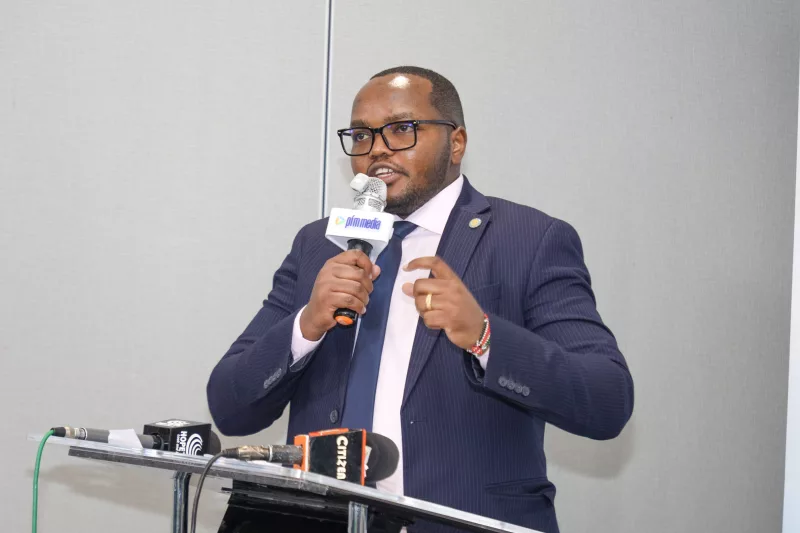
Public Relations Society of Kenya (PRSK) president Arik Karani, who is also president, African Public Relations Association, said the profession must recognise its growing responsibility in protecting the integrity of information and rebuilding public confidence.
“The declaration seeks to redefine the role of communication professionals beyond serving the interests of employers and clients. Their responsibility must extend to society, particularly where private interests conflict with the public good,” Karani said.
He warns that communication has become a powerful instrument that can either unite or divide societies, build trust or destroy it, and advance peace or fuel conflict.
The document also rejects the use of public relations as propaganda, spin or manipulation, insisting that responsible communication is a democratic, development and peace imperative.
Among its recommendations is the recognition of responsible communication as the 18th Sustainable Development Goal, alongside calls for governments to protect freedom of expression, media freedom and access to information.
It also urges businesses to communicate honestly with consumers, investors and employees, while media organisations and digital platforms are challenged to prioritise truth over virality and accountability over engagement.
The declaration comes amid growing concerns about the ability of digital platforms to amplify false information faster than institutions can verify and correct it.
Artificial intelligence has further complicated the information environment, with deepfake videos, voice impersonation and fabricated digital content increasingly capable of misleading audiences and damaging reputations.
Kenya's Information, Communications and the Digital Economy CS William Kabogo said public confidence was fundamental to effective governance, security and economic development.
Kabogo said weak public trust creates an environment in which rumours thrive, grievances deepen and investment slows.
"Where citizens trust public institutions, they take part in public decisions, cooperate with security agencies and give government the confidence it needs to deliver. Where that trust is weak, rumour fills the gap, grievances harden and investment slows," he said.
He said Kenya had taken steps to strengthen government communication through the adoption of a National Communication Policy in August 2026.
The policy requires ministries, departments and agencies to provide timely, accurate and consistent information, communicate before public concerns escalate and establish channels through which citizens can seek clarification and give feedback.
Major government projects are also required to incorporate communication strategies from the planning stage to identify and address public concerns.
The Abuja Declaration places particular emphasis on the responsible use of artificial intelligence, requiring human oversight, disclosure of AI-generated content and rejection of deepfakes, manipulation and algorithmic bias.
It also calls for communication professionals to protect personal data and human dignity as technology transforms how information is produced and distributed.
The declaration was endorsed by Karani, Dr Ike Neliaku, president of the Nigerian Institute of Public Relations and chairman of the APRA Council, and Professor Justin Green, president and chief executive of the Global Alliance for Public Relations and Communication Management.
Beyond regulation and technology, the declaration challenges practitioners to make public interest the primary consideration in their work, warning against becoming instruments of political or commercial manipulation.
It calls for disclosure of funding, sources, interests and conflicts of interest, alongside prompt correction of errors and protection of whistleblowers.
The framework also addresses emerging concerns around greenwashing, urging businesses and their communication advisers to make honest and verifiable environmental, social and governance claims.
It further calls for greater participation of women, young people and students in the profession, as well as inclusive communication that recognises indigenous languages, cultural diversity and marginalised communities.
The declaration urges universities and other educational institutions to embed communication ethics, media literacy and artificial intelligence literacy in their curricula.