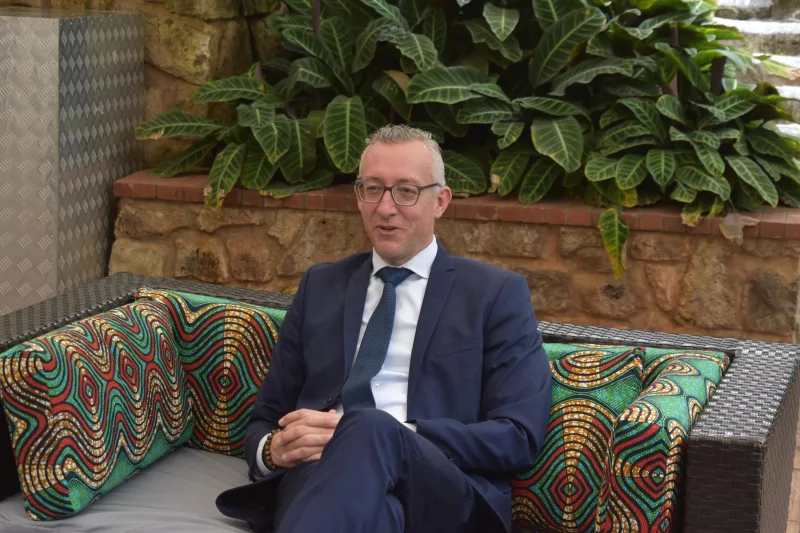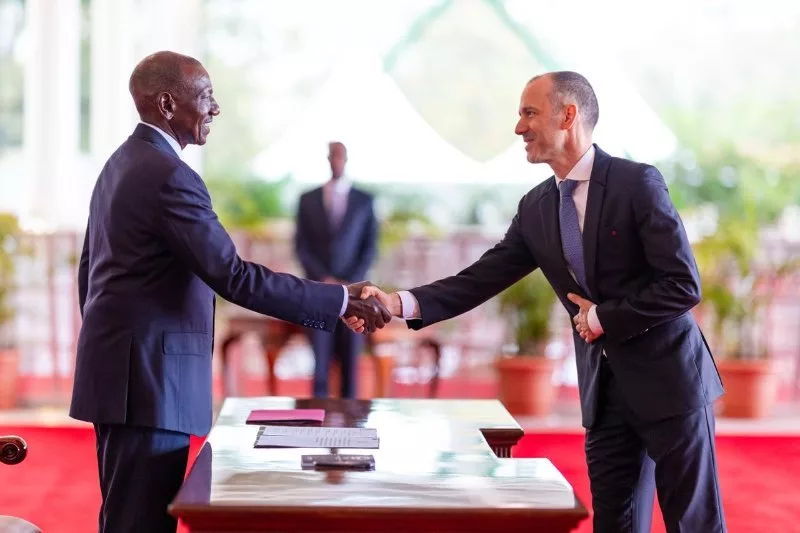
Tom Neijens first arrived in Kenya as a university student 25 years ago. He did on-the-ground research in Baringo county so he could write a thesis on an ongoing irrigation project in Northern Kenya.
Now back as the Belgian Ambassador, as he prepares to preside over his country’s Kings Day celebration, he sat down to talk with the Star about his long journey that has recently brought him back here, and what makes the Kenya-Belgium relationship so special.
Given that you are still relatively new to Kenya, maybe you could start by telling us something about yourself.
Absolutely. Here are a few things I’d like the Kenyan public to know about me.
My academic background is in tropical agriculture and biosystem engineering. My thesis subject in 2001 was the Perkerra Irrigation Scheme and possible ways of improving its efficiency.
That’s how I spent a couple of months in Baringo county at the time. It was my first encounter with Kenya and Africa.
Between 2001 and today, I’ve worked in Mexico, Rwanda, the US, Ethiopia, Switzerland and Belgium. In Belgium, I have recently been the Diplomatic Adviser to the Prime Minister and previously the Deputy Chief of Staff of the Minister for International Cooperation. I hope these experiences will guide me well in Kenya.
I’m happily married and we have two wonderful daughters. My wife is delighted to be in Kenya as well. Her work focuses on global agrobiodiversity, food system resilience and sustainable diets. I love reading (to open my mind) and running (to clear my mind).
Like most European embassies, the Belgian Embassy will have a variety of areas in which they are active or have interests: Which areas do you propose to focus on?
We have over 700 Belgians registered in the country and more than 15,000 Belgian tourists yearly. This high number of Belgians is a clear sign that more and more Belgian businessmen have discovered Kenya.
A priority we share with Kenya’s government is ensuring that our businesses thrive, create jobs in a sustainable manner and that trade between our two countries increases and diversifies.
The Belgian Embassy compound in Nairobi was converted to a net-zero compound three years ago. This makes it the first net-zero Belgian Embassy in the world and in Nairobi. I want this embassy to build further on this legacy and turn the compound into a meeting point for Kenyan youth and professionals passionate about sustainable development and circular economy.
As an embassy we want to connect to Kenya’s youth and help offer chances through education, scholarships and sports.
The only European royal family most Kenyans know about is the British Royal Family. But Belgium also has its own royal family. Given that you are about to celebrate the annual ‘Kings’ Day’, please tell us something about your royal family.
A story that will resonate with my Kenyan friends is that the future Queen of Belgium, Crown Princess Elisabeth, has a special connection to Kenya. One would think that her first official visit abroad would have been to friendly neighbouring Kingdoms. But no, in 2019, Princess Elisabeth, the future Queen of Belgium, made her first official mission abroad in Kenya, accompanying her mother, Queen Mathilde, on a Unicef visit. They visited Kakuma Refugee Camp, schools and projects supporting vulnerable children and girls.
The Queen of Belgium visited Kenya some years ago, as a Goodwill Ambassador for Unicef. Is there any chance that the King will also visit Kenya one day?
I would love to think so. Africa has been a recurring focus of King Philippe’s international engagement. The King is very much into sports, so maybe we can expect King Philippe to attend the World Athletics Championships in Nairobi in 2029.
By the way, Belgium has lots of experience in organising mass sporting events. So apart from Belgian athletes coming to Nairobi in 2029, I also expect a lot of Belgian experts teaming up with Kenyans to ensure World Athletics will be coming home with gusto. We’ll ensure there will be a Belgian House, with Belgian beer and fries. And why not, with the Belgian King?
Our current national focus is more on inviting more and bigger investments, than in seeking more aid or taking more loans. Belgium has for many years also been more focused on increasing trade with Kenya than in giving development aid. How much progress would you say has been made due to this shift of focus?
You are right. A lot of Belgium’s classic development assistance has traditionally been going to fragile countries. Kenya has a resilient economy, with many brilliant and well-educated young people. International aid is diminishing and it will continue to diminish in countries such as Kenya. Consider it a compliment.
Therefore, in Kenya, we have pursued new approaches, centred more on education, entrepreneurship and investment. The Belgian Public Investment Company ‘Bio Invest’ has invested more than Sh14 billion into the Kenyan economy. Other Belgian impact investors, small and large, are also active in Kenya.
To attract even more Belgian and European companies to invest in Kenya, we regularly discuss with the government how to further improve the business climate.
Is there any notable example of the Belgium-Kenya development partnership that you would like to draw attention to?
We don’t attract Kenyan students in the same numbers as countries such as the US or the UK, but Belgium hosts some of Europe's leading universities, which have long-standing partnerships with Kenyan institutions, such as the University of Nairobi, Jaramogi Oginga Odinga University of Science and Technology and the Technical University of Mombasa. Many of our Master’s are taught in English, so you don’t need to be fluent in Dutch, French or German — our three national languages.
Over several decades, thanks to these partnerships, hundreds of Kenyan officials have studied in Belgium through Belgian government scholarships, EU programmes and university partnerships. Wherever I visit, I bump into Kenyans who have studied in Belgium (and sometimes married a Belgian).
As you begin your tour of duty in Kenya, do you have any message for the Kenyan people?
We live in very uncertain and dangerous times. The rules-based international order is severely undermined. For middle powers such as Kenya and Belgium, this is a wake-up call, a call to action even. Having been the battle ground of all major powers in Europe for centuries, we Belgians don’t want to live in a world in which might is right, in which the strong do what they can and the weak suffer what they must.
This has convinced me that Europe and Africa — and I’m conscious of our unbalanced past relations — face many similar challenges in the 21st century. There is only one answer: We will be stronger if we work together. One broomstick breaks easily; a bundle is hard to break. I’m not asking anybody to choose sides. I’m saying we need to work together.
At a purely personal level, is there anything you hope to achieve or participate in during your term of service in Nairobi?
Oh yes, many things. I want to climb Mount Kenya. I want to visit Marigat and look for some of the guys who played in our football team in 2001. I want to run in Iten, the home of champions. I want to go camping with the family as much as possible. I want to improve my Kiswahili. And last but not least, I want to get to know the Kenyans. I want to cry together, I want to laugh together. Hopefully mainly the latter.