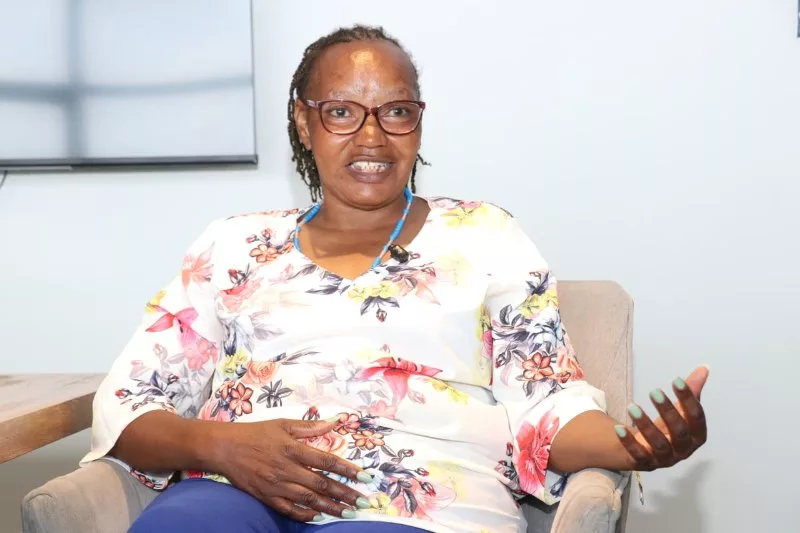
For Loice Wambui, a resident of Kahawa, the night of April 26, 2026, remains a haunting memory she wishes she could forget.
The evening had started like any other in their household. Then, out of nowhere, her sister-in-law, Vivian Muthoni, went into labour.
Although they knew her due date was approaching, they had not expected the baby that evening.
With the contractions intensifying and Vivian needing urgent medical attention, Wambui, who was the only one at home, did not know what to do.
She turned to the ride-hailing app Bolt, hoping to get her sister-in-law to a hospital in Kiambu. But her attempts to secure a ride were unsuccessful.
Three drivers cancelled the requests, some citing the distance and the late hour.
“I told them I had a patient and wanted to take her to a hospital in Kiambu because she was in labour pains. They ended up cancelling, saying the distance was quite far and it was too late,” Wambui recounted.
Wambui said that situation was particularly worrying because Vivian was expecting her second child, barely a year after her first delivery.
She explained that the wound from the previous birth had not fully healed and was starting to open up as the pain intensified.
With Vivian’s condition worsening and no transport available, Wambui was unsure what to do next.
“I almost lost hope. I did not know what to do, who to save or who to help. Is it the mother or the child?” she recalled.
As she tried to figure out her next move, Wambui noticed a face with a SOS button on the Bolt app.
She could not recall whether she had accessed it by mistake or whether it had appeared on its own. But she eventually pressed it.
Almost immediately, her phone rang.
To her surprise, the call was from an emergency response team working with Bolt. They wanted to establish the nature of the emergency and where she was in that lead to using the emergency feature.
Wambui explained that her sister-in-law was in labour and needed urgent medical attention.
The team assured her that help was on the way and kept in touch as they coordinated the response.
She was told an ambulance would arrive in about 11 minutes, Wambui confirmed that it arrived within the time told.
She explained that when it arrived, the medics came out with a stretcher and carefully placed Vivian on it before examining her.
Vivian had dilated, but not sufficiently to deliver. Given her condition, the medics recommended a hospital where surgery could be performed if necessary.
Inside the ambulance, the medical team inserted an intravenous line as they continued assessing Vivian’s condition.
Wambui said the medics also began calling nearby health facilities to establish whether doctors were available to attend to her.
Eventually, she said a hospital in Ruiru confirmed that a doctor was available.
Wambui said the ambulance crew was already on the move as they made the calls. Once the hospital in Ruiru confirmed it could receive Vivian, the crew proceeded there.
She said the medics drove carefully, choosing a route without bumps and rough patches that could worsen Vivian’s pain.
“I know that road. It has bumps, but they chose another route that did not have bumps. I could hear them having small conversations with my sister-in-law to keep her awake,” Wambui recalled.
At the hospital in Ruiru, Wambui said the medics helped with the admission process before Vivian was taken to theatre.
She said the rescue.co team left after ensuring Vivian had been received at the hospital.
“They did not ask for any money. They did not charge me for the trip,” she said.
Hours later, Wambui said a doctor came out and confirmed that Vivian had delivered successfully and that both mother and baby were healthy and safe.
“I felt relieved and happy because it was at last good news. My heart had been counting until I received the message that it was successful and that the baby was healthy and safe,” she said.
Wambui said she did not incur additional charges for accessing the SOS feature.
“If I had not pressed that button, I do not know what would have happened to the two of them,” she said.
Another mother, another race against time
Wambui’s experience was not an isolated incident. In another part of Nairobi, Ruth Njeri was also grappling with labour pains and uncertainty over how to get medical assistance.
Njeri had been experiencing abdominal pain and backache. She had earlier sought medical attention at a hospital in Komarock before returning home, but as the pains continued, she needed help getting back to the facility.
While using the Bolt app, she noticed the SOS feature and pressed it out of curiosity.
An emergency response team called to establish what was happening. Njeri confirmed that she was pregnant and in labour and needed medical assistance.
She was assured that an ambulance would be dispatched.
Similar to Wambui’s experience, the response team maintained communication as they arranged for help, keeping her informed until the ambulance arrived.
She could not recall exactly how long she waited, but she remembers the relief of seeing the medics arrive.
They checked her blood pressure and asked which hospital she wanted to be taken to. Njeri requested the hospital in Komarock, where she had sought medical attention earlier.
The team took her there and she said they helped her with the necessary paperwork and arrangements before she received medical care.
Njeri later confirmed that she delivered successfully.
“I really appreciate those people. I do not know what would have happened because I was stranded with no options,” she said.
She said she did not have to pay for the ambulance, first aid or transport to hospital, with Bolt catering for the expenses.

When a rider becomes part of the response
While Wambui and Njeri were trying to get medical assistance from home, Meshack Opal found himself in a different situation, a passenger going into labour during a motorcycle ride.
Opal, a Bolt rider since 2021, had picked up a customer at a hospital in Dandora. She was travelling to a Level 5 hospital in Kariobangi North.
When he arrived at the hospital in Dandora to pick her up, he wondered why she had not requested a Bolt car instead, given her condition.
The passenger explained that she could not afford a car and had no other option.
Opal said he decided to help her get to her destination despite being sure that the decision was impulse.
The journey proved difficult because of the road conditions. Opal said the passenger repeatedly asked him to slow down as they navigated bumps and potholes.
“The road had bumps and potholes, and the passenger repeatedly asked me to slow down. I felt she was uncomfortable and so she told me to slow down. At some point, she asked me to stop so that she could rest,” Opal recounted.
Realising that his passenger was in pain, Opal remembered the SOS feature he had learnt about during his Bolt training. He sought the passenger’s consent to request an ambulance to take her to hospital, where she could receive medical attention.
After she agreed, Opal went to the Bolt app and pressed the SOS button.
Almost immediately, he received a call from the emergency response team. He explained that he was carrying a pregnant passenger who was experiencing pain and needed assistance.
As with Wambui and Njeri, the team asked questions to establish the nature of the emergency and the passenger’s condition. They also requested to speak directly to her.
Opal said he had to verify that the passenger was indeed the customer on the active Bolt ride before the emergency team could proceed.
“I had to verify that we were on an online ride and that she was the client. They could not just assume she was the client and take her away,” he said.
Opal said it arrived in about five minutes and handed the passenger to them.
The medics then took her to hospital, while Opal continued with his work.
Later that evening, he received a message from the rescue.co team informing him that his customer had delivered successfully and that both she and the baby were in good condition.
Opal recalled reassuring the passenger that the ambulance and medical assistance would be provided at no cost.
“I told her I still wanted to help her. I want to get you a Bolt ambulance. They will send me an ambulance but you won’t pay,” he recalled telling her.
Opal said either the driver or the passenger can activate the SOS feature during an active trip, allowing the person who notices an emergency to seek help.
Emergencies during a ride
A passenger or driver can encounter a medical or security emergency while a Bolt trip is underway. A road crash, sudden illness, robbery or assault can turn an ordinary journey into a situation requiring immediate assistance.
As app-based ride-hailing became part of Kenya’s transport system, these risks raised an important question: what happens when an emergency occurs during a trip and the person affected does not know whom to contact or how to get help quickly?
In a medical emergency, every minute can matter. A passenger who suddenly goes into labour or suffers a serious health complication may need urgent hospital attention.
Yet the driver is not operating an ambulance and cannot activate a siren to clear traffic. Even when the nearest hospital is known, congestion or the need for specialised medical care can complicate the journey.
Drivers also face security risks while carrying passengers. A person who books a ride may turn out to be a threat, leaving the driver needing immediate intervention. Passengers, too, may experience robbery, assault or other security incidents during a trip.
Bolt’s senior general manager Dimmy Kanyankole, said the company identified the need to make emergency assistance accessible without requiring users to leave the app and search for emergency contacts or numbers.
“The gap was we needed our users to be able to not have to go outside the app, especially during an emergency, to get assistance,” Kanyankole said.
He said the feature was introduced in 2018 to serve both passengers and drivers, recognising that either party could need help during an active trip.
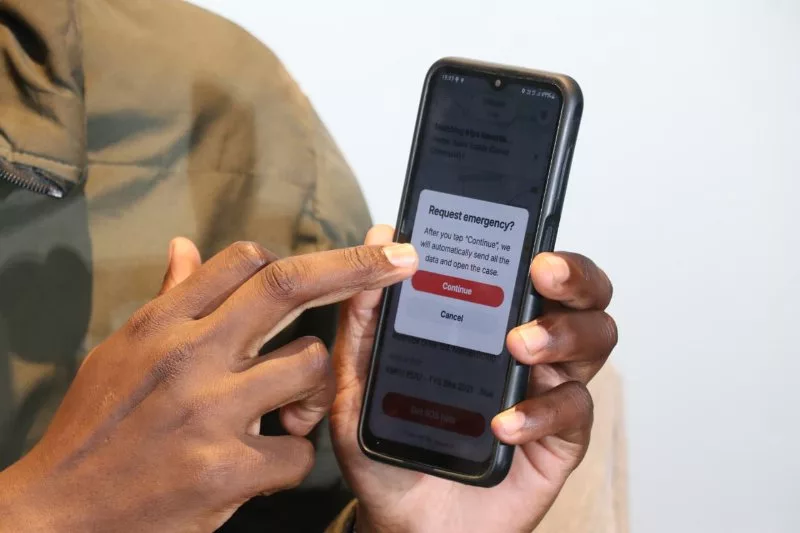
What is the SOS button?
Bolt’s Emergency Assist, commonly referred to as the SOS button, is an in-app feature found in the safety toolkit on both the passenger and driver applications. It allows either party to request immediate assistance during a trip.
Kanyankole explained that in Kenya, Bolt partnered with rescue.co, a private emergency response provider contracted to handle medical and security incidents involving its users.
Once a user activates the SOS button, their name, telephone number and location are shared with rescue.co through an application programming interface (API) integration.
The provider's dispatch centre then calls the user to establish what has happened and assess the kind of assistance required.
Kanyankole said the response team aims to call within 60 seconds of an alert being raised, with the average call response time remaining below 51 seconds throughout the year.
The trained personnel establish whether the incident requires medical or security intervention before dispatching assistance. Depending on the situation, they may send several nearby response units to ensure that whichever team arrives first can begin helping.
Kanyankole said the average time taken for a dispatched unit to reach the scene was about 12 minutes.
“For medical emergencies, the response may include a fully equipped ambulance, first aid at the scene and transfer to hospital,” he said.
“rescue.co also coordinates hospital referrals where a patient requires a facility with particular medical services or where the first hospital contacted has no available bed.”
Users do not pay to activate the SOS button or receive the emergency assistance arranged through the feature.
Kanyankole said Bolt covers the costs of medical dispatches, including first aid at the scene and ambulance transfers to hospital.
“All our users have to do is just press the button and be available to speak to rescue.co,” he said.
Kanyankole said its main objective with the feature was to create a safer platform for both passengers and drivers.
“A safer platform is good for everyone,” he said, adding that users who feel safe are more likely to continue using the service.
He described the investment as part of Bolt’s commitment to safety rather than a service from which users should expect to make payments.
“Every life saved is definitely worth it,” he said.
Kanyankole also credited drivers with helping passengers access emergency assistance, saying some had activated the SOS feature on behalf of customers experiencing medical emergencies.