
Cyber Week Africa 2026 concluded on Friday with a strong call for enhanced collaboration, capacity building and information sharing among African stakeholders to strengthen cybersecurity in the face of emerging threats driven by Artificial Intelligence (AI).
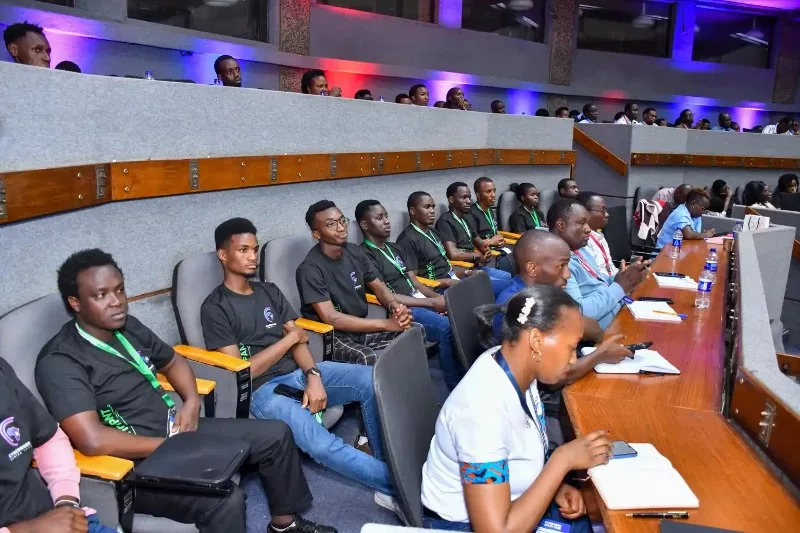
The event brought together more than 1,200 participants from 20 countries, representing government, the private sector, academia, non-governmental organisations and start-ups to explore the challenges and opportunities presented by AI in protecting critical information infrastructure, networks and digital trust.
Held under the theme of cybersecurity in the Age of AI, the annual event was led by the Ministry of Information, Communications and the Digital Economy, in partnership with the Kenya School of Government, the Ministry of Interior and National Administration, the National Cybersecurity Agency and the University of Nairobi, among other partners.
Discussions focused on the growing sophistication of cyber threats, the protection of critical infrastructure and the need to equip organisations and individuals with the skills, policies and technologies required to navigate an increasingly AI-driven digital environment.

Speakers also highlighted the potential of AI to strengthen cybersecurity through improved threat detection, prevention and response, provided that appropriate safeguards and policies are put in place.
The event was officially opened by Principal Secretary for Broadcasting and Telecommunications Stephen Isaboke, National Cybersecurity Agency Chair Dr Martin Koyabe and representatives of the Kenya School of Government, alongside European Union Ambassador to Kenya Andreas Peschke and other diplomatic representatives.
During the opening ceremony, Ambassador Peschke congratulated 19 newly certified Kenyan SIM3 cyber auditors, recognising their contribution to strengthening the country's cybersecurity capabilities.
Meanwhile, Tahar Benattia of Expertise France presented awards to winners of the event's hackathon, which was supported by Expertise France and the European Union.
In the lead-up to the conference, cybersecurity awareness sessions were conducted in 21 institutions of higher education across Kenya, extending the event's impact beyond the main gathering and promoting cyber awareness among young people.
Huawei Kenya, one of the event's major sponsors, also underscored the importance of developing cybersecurity skills while ensuring that secure products and solutions are available to support the country's digital transformation.
Speaking at the event, Huawei Kenya Country Cybersecurity and Privacy Officer Kaine Zhang highlighted the need to build the capacity of technology users and strengthen the security of digital systems through reliable products and solutions.
Huawei's contribution also included support for a network training programme for government ICT officers. At the closing ceremony, 21 government ICT officers received certificates after completing the programme.
Huawei Sub-Saharan Africa Regional Cybersecurity Expert Lu Hao also addressed participants on building a next-generation autonomous intelligent security operations system.
He emphasised the importance of integrating security solutions across different systems to provide comprehensive visibility of digital environments, enabling organisations to prevent, detect and respond to cyber threats more effectively.
The conference concluded with a declaration outlining several actions that participating organisations committed to pursuing, particularly around strengthening cooperation and sharing cybersecurity information.
In his closing remarks, Koyabe called for greater trust among stakeholders, noting that effective information sharing was essential to building a resilient cybersecurity ecosystem.
He also stressed that digital sovereignty should not be interpreted as digital isolation, arguing that countries must retain control over their digital environments while remaining open to strategic partnerships and international cooperation.
Koyabe further called for stronger collaboration between regulators and industry players, including sector-specific regulators in industries such as finance, where cyber incidents can have far-reaching economic and social consequences.
Cyber Week Africa 2026 is among the first major industry events to take place in Kenya since the establishment of the National Cybersecurity Agency, marking an important moment in the country's efforts to strengthen its national cybersecurity framework.
The event was officially closed by Principal Administrative Secretary for Interior Jacob Narengo, who represented Interior Principal Secretary Dr Raymond Omollo.
In his closing address, Narengo underscored the importance of proactive cybersecurity preparedness as African countries accelerate their adoption of AI and digital technologies.
“Given preparation, AI multiplies resiliency; but given neglect, it multiplies exposure. For Africa, expanding our digital ecosystem without hardening its defences means building our future on sand,” Narengo said.