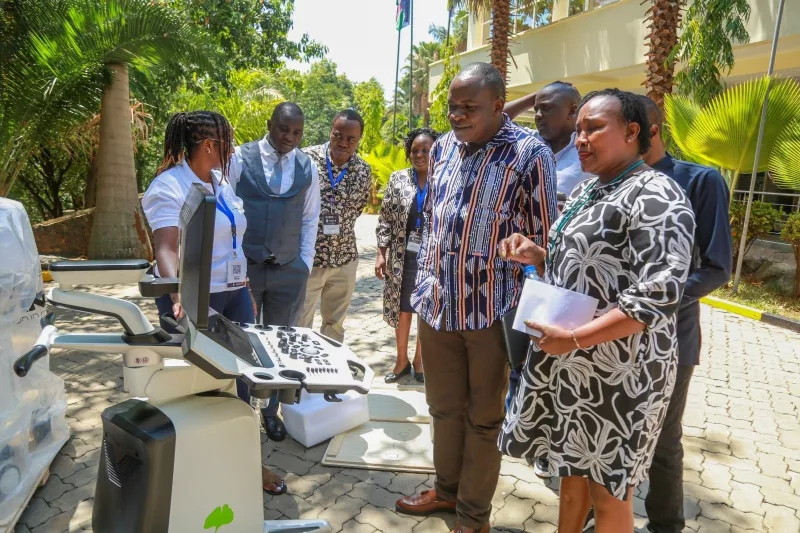
Jaramogi Oginga Odinga Teaching and Referral Hospital (JOOTRH) is set to adopt emerging technologies in radiography, including artificial intelligence (AI), as it strengthens its capacity to deliver specialised healthcare services following its elevation to a Level 6A facility.
The hospital’s acting chief executive officer, Dr Joshua Okise, said the adoption of modern imaging technologies would improve disease detection, enhance clinical decision-making and make healthcare services more efficient and accessible.
“We are in support of adopting new technologies in healthcare because it improves patient outcomes, lowers costs, and makes medical services easier to access,” said Okise.
He explained that AI and machine learning tools can analyse medical images and laboratory results with high precision, helping healthcare professionals detect diseases earlier and make informed treatment decisions.
JOOTRH has also digitised its records and operations in a shift from paper-based documentation to integrated digital systems designed to improve coordination among healthcare professionals.
“Digitising our records will give doctors and nurses instant access to a patient’s complete medical history, lab results, allergies, and past treatments. This prevents dangerous drug interactions, missed allergies, and duplicate tests,” he said.
The hospital has been elevated to a Level 6A facility and a Level C5 parastatal state corporation under the national government, a development that comes with expanded responsibilities in specialised treatment, teaching and referral services.
Speaking during the closing ceremony of the 11th Biennial Radiographers Scientific Conference 2026 at the Grand Royal Swiss Hotel in Kisumu last month, Okise said technological advancement must translate into meaningful changes in healthcare delivery rather than merely the acquisition of equipment.
The three-day conference, organised by the Society of Radiographers Kenya, was held under the theme “Transforming Radiography and Imaging: Reimagining and Redefining the Practice for Excellence.”
Okise said JOOTRH had embraced digital imaging systems, electronic medical records, laboratory and radiology integration, and telemedicine to support clinical decision-making and continuity of care.
He added that the planned installation of a Picture Archiving and Communication System (PACS) would further improve efficiency by allowing medical images to be stored, retrieved and shared digitally.
The system, which handles images such as X-rays, CT scans and MRI scans, is expected to reduce delays in accessing diagnostic results and support faster clinical decisions.
The CEO called for sustained investment in skilled healthcare professionals to match the rapid changes in radiography and growing workforce demands.
He emphasised the need for specialist training, continuous professional development, AI competencies, radiation safety and quality management to ensure that new technologies are used safely and effectively.
Society of Radiographers Kenya President Jevas Kenyanya backed the push for greater adoption of emerging technologies, research, education and multidisciplinary collaboration in the sector.