 Information, Communications and the Digital Economy Cabinet Secretary William Kabogo s
Information, Communications and the Digital Economy Cabinet Secretary William Kabogo has called for stronger cybersecurity measures to protect Kenyans from emerging digital threats as the country accelerates the adoption of artificial intelligence (AI).
Kabogo warned that although AI presents opportunities to improve service delivery, enhance business efficiency and strengthen cyber threat detection, it also exposes individuals, businesses and government institutions to increasingly sophisticated forms of cybercrime.
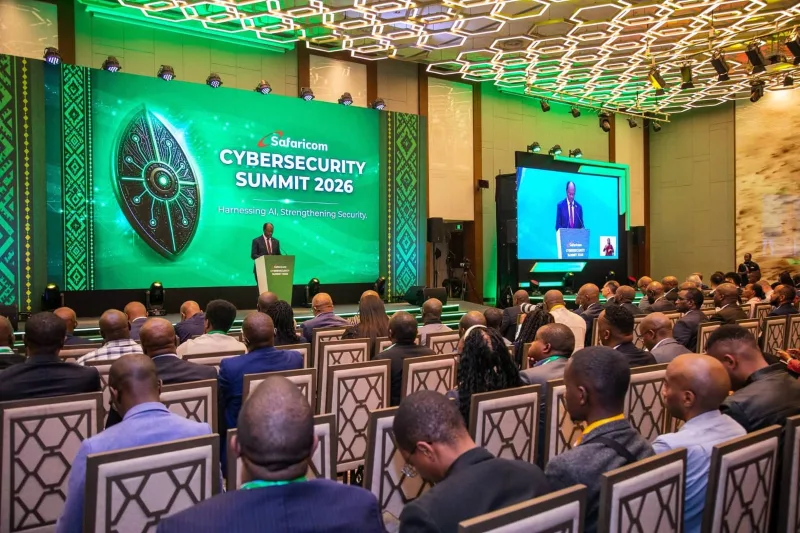
Speaking during the Safaricom Cyber Security Summit 2026, where he served as the chief guest, the CS said Kenya must match its digital transformation ambitions with robust security measures to protect citizens, businesses and critical infrastructure.
The summit was held under the theme “Harnessing AI, Strengthening Security” and brought together stakeholders from the technology and telecommunications sectors to discuss how innovation can be advanced without compromising digital security.
Kabogo identified AI-powered fraud, phishing attacks, identity impersonation and manipulated digital content as emerging threats requiring coordinated action from the government, businesses and technology providers.
He said responsible AI adoption must be guided by strong governance, accountability, human oversight and effective data protection frameworks to ensure that technological advancement does not compromise the safety and privacy of citizens.
“As Kenya accelerates its digital transformation, we must ensure that innovation is matched with strong cybersecurity measures that protect our citizens, businesses, institutions and critical digital infrastructure,” Kabogo said.
The CS said the Ministry of ICT and the Digital Economy remained committed to strengthening Kenya's cybersecurity ecosystem through effective policies, implementation of the national cybersecurity strategy and collaboration with industry stakeholders.
He emphasised that government agencies, private companies, regulators, academic institutions and citizens must work together to anticipate emerging threats, strengthen cyber resilience and ensure that security systems keep pace with technological changes.
Kabogo also called for greater attention to child online safety, citing cyberbullying, online exploitation and AI-generated harmful content among the risks requiring intervention from the government, technology companies, parents and other stakeholders.
He said digital trust must remain central to Kenya's technology agenda to ensure that AI contributes to economic growth while protecting users from online abuse and exploitation.
Safaricom PLC Chief Executive Officer Peter Ndegwa said public trust would be a decisive factor in determining how successfully African countries adopt and benefit from artificial intelligence.
In his keynote address at the summit, Ndegwa argued that Africa's AI ambitions should not be measured solely by technological sophistication but also by the confidence users have in the systems and institutions deploying the technology.
“Africa's AI future will not be decided by who has the biggest model. It will be decided by who earns the most trust,” Ndegwa said.
He cited the adoption of mobile money by Kenyans nearly two decades ago as an example of how trust can support the uptake of transformative technology.
Ndegwa said Safaricom was using AI-powered models to identify potentially fraudulent transaction patterns, while its Managed Security Operations Centre helps organisations monitor threats and respond to them in real time.
He said customer protection needed to be incorporated into the development and deployment of technology rather than treated as an afterthought.
“Customer protection isn't added at the end… it's designed into how we build,” he said.
Ndegwa challenged leaders to identify specific organisational problems that AI could solve while outlining measures to strengthen trust as they adopt the technology.