Prime Cabinet Secretary Musalia Mudavadi has called for stronger accountability and more representative international institutions, saying public trust depends on institutions demonstrating integrity, fairness and tangible results.
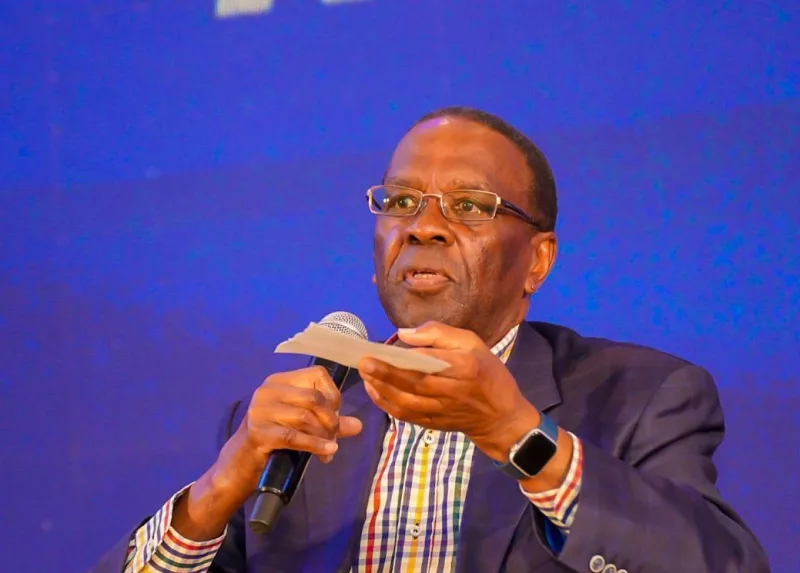
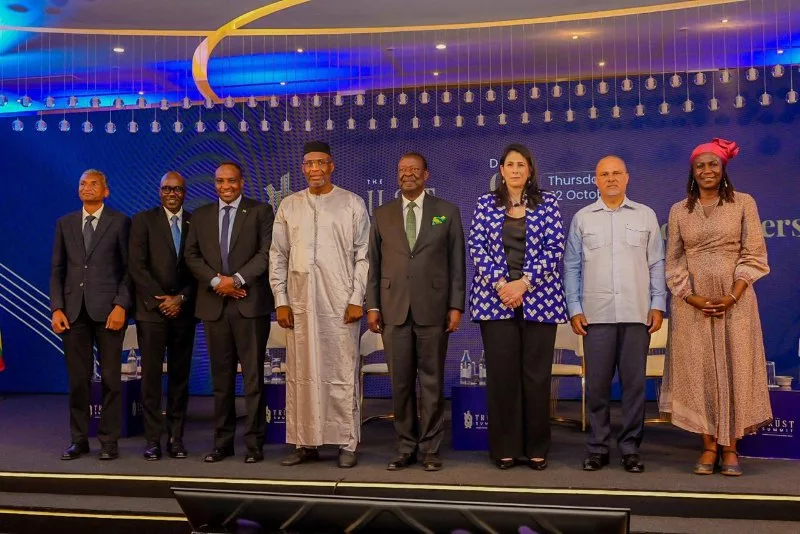
Speaking on the second day of the Global Trust Summit in Nairobi on Thursday, Mudavadi warned that declining public confidence threatened the foundations of institutions, economic prosperity and a shared future.
“When a society loses the trust of its people, it risks losing the very foundation upon which its institutions, prosperity and common future depend,” he said.
Mudavadi cautioned against treating public confidence in political leaders as a substitute for accountability, citing an Afrobarometer working paper based on survey data from 37 African countries.
The study found that greater trust in presidents and ruling parties was associated with weaker public support for accountability mechanisms, including parliamentary oversight, media scrutiny and citizens’ ability to hold governments to account.
He said trust and accountability should reinforce each other, with institutions earning confidence through their conduct while remaining transparent and open to scrutiny.
“The strongest institutions are not those that ask people to trust them blindly, but those that inspire confidence through their conduct while remaining transparent, answerable and open to scrutiny,” Mudavadi said.
He also raised concerns about declining public confidence in science. Citing the Wellcome Global Monitor 2026, he said the proportion of people who believed most people in their country benefited from science fell from 42 per cent in 2018 to 37 per cent in 2025.
Mudavadi said scientific credibility depended not only on evidence but also on fairness, accessible healthcare, openness about uncertainty and the ability of institutions to demonstrate how scientific advances improve people's lives.
He further described trust as an economic asset that lowers barriers to business and cooperation, saying contracts and legal safeguards could not entirely replace integrity and a reputation for keeping one's word.
“Trust is also economic infrastructure,” he said, adding that societies risk prioritising transactions and profits over ethical conduct when the results matter more than the means through which they are achieved.
Mudavadi also called for greater African representation in international institutions, particularly the United Nations Security Council.
He said Africa's lack of a permanent seat on the council raised questions about legitimacy and argued that the continent should participate directly in decisions affecting its security and future.
Mudavadi urged the summit to move beyond declarations and establish a practical framework for rebuilding trust, including clear commitments, a coalition responsible for implementation and a mechanism for tracking delivery.
“It is my wish that Nairobi be remembered not simply as the place where the world discussed trust, but as the place where we strengthened our resolve to become more trustworthy,” he said.
The regional dimension of the trust debate was highlighted by Tanzania's Deputy Minister for Foreign Affairs and East African Cooperation, James Millya, who outlined progress and challenges in removing non-tariff barriers between Kenya and Tanzania.
Millya said the two countries had identified 68 trade barriers, of which 54 had been resolved, leaving 14 outstanding.
Despite their shared customs union and common market, he said traders continued to face risks including repeated inspections, delays and unexpected charges at border points.
“The last fourteen are where trust is won or lost,” he said.
Millya cited bilateral agreements signed in May 2026, including common standards intended to prevent goods that had already been certified from undergoing repeat inspections at Namanga and Holili.
The agreements also provide for a 30-day window for settling disputes and quarterly reporting on implementation, he said.
According to Millya, Tanzania had also removed its Industrial Development Levy on a range of Kenyan goods.
He attributed the progress to sustained engagement between the two governments, technical cooperation through the Joint Trade Committee and Joint Permanent Commission, and feedback from the private sector.
However, he said bilateral trade had declined from approximately US$950 million in 2024 to US$860 million in 2025, while traders with complaints still lacked a clear channel for resolving their concerns.
Millya said the two countries needed to ensure agreements translated into faster clearance of goods, fewer repeat inspections and timely resolution of complaints.
He said Tanzania would designate a focal point to follow up trade complaints with Kenya within the agreed 30-day period and propose regular consultations with traders, truckers, women and young traders operating at Namanga and Holili.
In his remarks, Principal Secretary for Foreign Affairs Korir Sing'Oei said trust was essential to institutional reliability, social cohesion and international cooperation.
“Where trust is present, institutions are more effective, public confidence grows, agreements hold, and cooperation endures,” he said.
“Where trust is lost, the social contract upon which societies depend disintegrates.”
He called for transparency, inclusive decision-making, accountability for results and consistency between words and actions in addressing domestic, regional and global challenges.
The Global Trust Summit is taking place in Nairobi from October 21 to 23, bringing together public-sector leaders and other stakeholders to examine how trust can strengthen governance, resilient societies, inclusive economies and international cooperation.