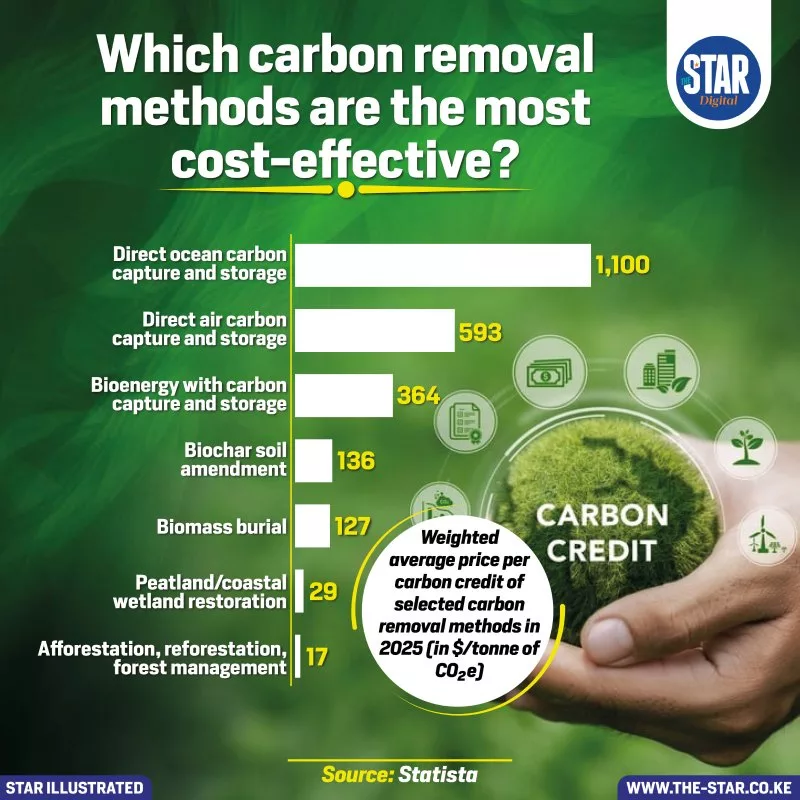
Afforestation, reforestation and forest management are among the most cost-effective carbon removal methods, with an average price of $17 per tonne of carbon dioxide equivalent (CO₂e) in 2025, according to Statista data.
The figures show a significant difference in the cost of removing carbon from the atmosphere, with nature-based approaches costing substantially less than some technology-driven methods.
Peatland and coastal wetland restoration recorded an average price of $29 per tonne of CO₂e, while biomass burial cost $127 per tonne.
Biochar soil amendment had an average price of $136 per tonne, followed by bioenergy with carbon capture and storage at $364 per tonne.
Direct air carbon capture and storage was considerably more expensive, averaging $593 per tonne of CO₂e.
Direct ocean carbon capture and storage was the costliest method among those compared, with a weighted average price of $1,100 per tonne in 2025.
The figures highlight the wide cost gap between different approaches to carbon removal, ranging from forest management and ecosystem restoration to engineered technologies designed to capture and store carbon.
Carbon removal methods aim to take carbon dioxide out of the atmosphere and store it, helping to address greenhouse gas emissions that contribute to climate change.
Afforestation involves establishing forests in areas that were not previously forested, while reforestation restores tree cover in areas where forests have been lost. Forest management can also support carbon storage by maintaining and improving existing forests.
Other approaches rely on different processes. Biochar involves converting biomass into a carbon-rich material that can be added to soil, while biomass burial seeks to store carbon by burying organic material. Carbon capture and storage technologies aim to capture carbon dioxide and prevent it from returning to the atmosphere.
Although the data compares average prices, cost alone does not establish the overall effectiveness of each method. Carbon storage durability, environmental impacts, scalability and the amount of carbon removed are also important considerations when assessing their contribution to climate goals.
The Statista figures provide a snapshot of the weighted average prices of selected carbon removal methods in 2025, illustrating the differences in their reported costs.