A parliamentary investigation has exposed major inadequacies in Early Childhood Development Education (ECDE) centres and vocational training institutions across counties.
This has raised concerns about the quality of education offered to thousands of learners.
In a probe conducted in selected counties, the Senate Education Committee uncovered severe teacher shortages, overcrowded classrooms and inadequate learning materials.
The committee also identified dilapidated infrastructure and funding gaps that threaten the future of early childhood education and technical training.
In addition, the panel established that thousands of children remain outside formal pre-primary education despite constitutional and legal provisions requiring access to basic education.
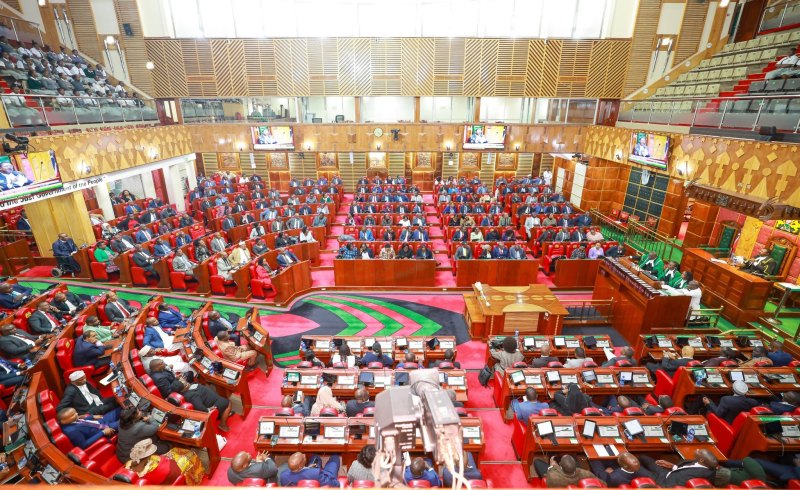
The committee, chaired by nominated Senator Betty Montet, examined the implementation of ECDE and vocational education policies in Mombasa, Kilifi and Kwale counties.
In Kwale, senators established that the county faces a shortage of 1,502 ECDE teachers, leaving existing tutors overwhelmed by the growing number of learners.
"The teacher-to-pupil ratio stands at 1:55. The county's own assessment is that effective teaching and learning requires 2,419 teachers, leaving a deficit of 1,502," the committee report states.
This is more than double the nationally recommended teacher-pupil ratio of 1:25.
The committee established that approximately 150 ECDE centres in Kwale have no county-employed teachers, forcing parents and school management boards to hire tutors to sustain learning.
Some teachers employed by parents receive extremely low remuneration, raising concerns about their welfare and the sustainability of the arrangement.
The county requires approximately Sh1.36 billion annually to address the staffing deficit.
"The committee recommends that the County Government of Kwale develop and submit a costed and phased plan for addressing the structural ECDE teacher deficit of 1,502 posts," the report states.
The senators also established that approximately 3,800 children of pre-primary school-going age remain out of school in Kwale, despite the county achieving an enrolment rate of about 93 per cent.
In Mombasa, the committee uncovered another worrying trend, with an estimated 7,051 children potentially missing out on formal ECDE.
According to the report, the Kenya National Bureau of Statistics projected that Mombasa would have 60,570 children aged four to five in 2025.
However, combined enrolment in public and private institutions stood at approximately 53,519, leaving a significant gap.
"The low level of public provision places considerable reliance on private providers to meet ECDE demand," the committee observed.
The senators established that private institutions dominate early childhood education in Mombasa, enrolling nearly five times as many learners as public centres.
The county has 336 classroom teachers serving 9,384 learners, translating to an average teacher-pupil ratio of 1:28.
However, the committee found significant disparities between institutions, with some centres recording ratios as high as 1:49.
The senators also raised concerns about employment conditions after establishing that 132 of Mombasa's 342 ECDE teachers are employed on three-year contracts.
"The use of fixed-term contracts for a core teaching function raises questions about workforce continuity," the report states.
The committee wants the county to allocate funds in the 2027-28 financial year to absorb the affected teachers on permanent and pensionable terms.
In Kilifi, the committee uncovered serious deficiencies in infrastructure and learning materials, with some ECDE centres recording textbook-to-learner ratios of 1:99.
A performance audit established that learning materials reached only half of the county's schools.
"The committee observed significant infrastructure deficits in public ECDE centres, including inadequate sanitation facilities, overcrowded classrooms, insufficient learner furniture and poor structural conditions," the report states.
The committee further established that ECDE teachers in Kilifi had not received promotions since 2021, despite the development of a scheme of service.
Quality assurance was another major concern, with senators finding that the county lacked a functional system to monitor compliance with education standards.
The problems also extend to vocational training centres, where inadequate equipment, staffing shortages and financial constraints are undermining practical skills development.
In Kwale, the county reported a shortage of 85 vocational instructors, while training institutions in Kilifi were found to lack adequate equipment and modern workshops.
"The committee observed that many Vocational Training Centres were inadequately equipped, limiting their capacity to support practical skills development," the Kilifi report states.
Senators further established that high tuition fees discourage young people from enrolling in vocational training institutions.
In Kilifi, the committee faulted the allocation of a disproportionately large share of the education budget to bursaries at the expense of infrastructure, teacher development and training equipment.
INSTANT ANALYSIS
The Senate probe exposes a troubling gap between constitutional guarantees of basic education and the realities facing county-run institutions. Teacher shortages, dilapidated classrooms and inadequate learning materials threaten foundational learning, while high vocational training costs undermine efforts to equip young people with practical skills.
Counties must move beyond enrolment statistics and bursaries to prioritise staffing, infrastructure and equipment. Without targeted funding and stronger oversight, educational inequalities will deepen.