Kenya is facing renewed pressure to translate constitutional guarantees and regional human rights rulings into tangible protections for indigenous communities.
Amid persistent concerns over the rights of the Ogiek and Endorois peoples, the African Commission on Human and Peoples’ Rights has raised concerns over the gap between legal protections for indigenous communities and their implementation.
Citing the experiences of the two Kenyan communities as examples of the challenges facing marginalised groups, African Commission on Human and Peoples’ Rights Commissioner Dr Litha Musyimi-Ogana said they continued to face barriers to accessing decision-making processes, public services and remedies, even where legal and policy frameworks provided for their protection.
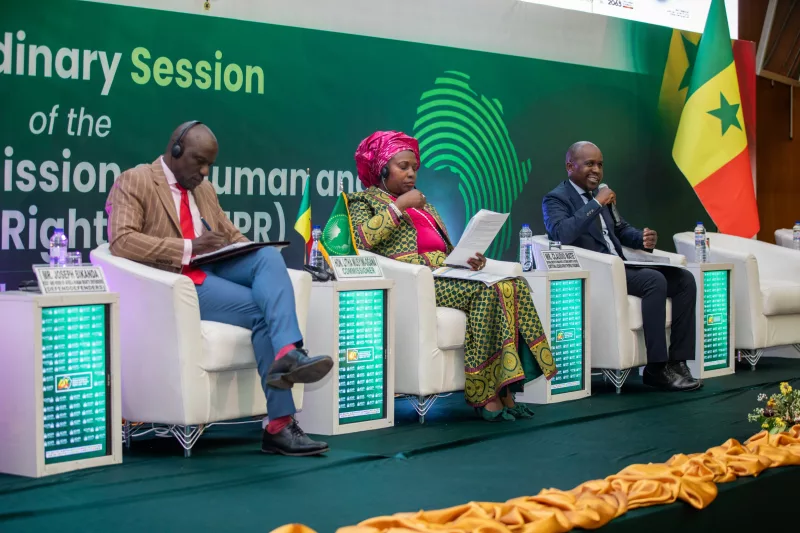
Musyimi-Ogana, who is also the chairperson of the Working Group on Indigenous Populations/Communities and Minorities in Africa, was presenting her activity report on indigenous peoples and minorities during the Commission’s 89th Ordinary Session in Dakar, Senegal.
“Another major challenge we found is the gap between formal guarantees and their implementation.
“Even when constitutional, legislative or policy frameworks provide for equality, participation or protection of cultural and community rights, affected communities continue to experience barriers in accessing decision-making processes, public services and even remedies for decisions that have been taken in their favour,” she said.
Musyimi-Ogana cited the Ogiek and Endorois communities as examples of indigenous peoples whose rights remain a concern despite decisions recognising their claims.
This has renewed scrutiny of Kenya’s record in implementing regional human rights decisions, particularly those concerning ancestral land, cultural identity, community participation and access to natural resources.
In May 2017, the African Court on Human and Peoples’ Rights ruled that Kenya had violated several rights of the Ogiek, an indigenous community whose ancestral home is in the Mau Forest complex.
The violations included rights relating to land, property, natural resources, culture and development.
In June 2022, the court issued a reparations judgment directing Kenya to compensate the community and take measures to secure its land rights, including identifying, demarcating and granting title to its ancestral territory.
The court ordered compensation of Sh57.85 million for material losses and Sh100 million for moral prejudice.
It also directed the government to take measures to recognise and protect the Ogiek’s cultural identity and ensure their effective consultation on projects affecting their ancestral land.
However, in a decision delivered on December 4, 2025, the court found that Kenya had not fully complied with its earlier judgments and ordered the government to take immediate steps to implement the outstanding measures.
The court specifically noted that the compensation ordered for the community had not been paid and directed Kenya to pay the full amounts.
It also reiterated the need to address outstanding obligations concerning ancestral land and recognise the Ogiek as an indigenous people.
The decision reinforced concerns that years of legal proceedings had not resulted in the full implementation of the remedies ordered for the community.
The Endorois community from Baringo has also pursued recognition of its ancestral land rights and access to natural resources around Lake Bogoria in Baringo county.
In 2009, the African Commission ruled in favour of the Endorois in a landmark case arising from their removal from ancestral land to facilitate the creation of a game reserve.
The commission found violations of several rights under the African Charter on Human and Peoples’ Rights and recommended measures including recognition of the community’s ownership rights over its ancestral territory, restitution of its land, compensation and access to Lake Bogoria.
The decision was widely regarded as an important recognition of indigenous peoples’ collective land rights and their entitlement to benefit from natural resources in their traditional territories.
However, implementation of the decision has remained a longstanding concern, with questions over land restitution, compensation and the community’s participation in the management of resources central to its claims.
In her recommendations, Musyimi-Ogana urged member states to strengthen constitutional, legislative, policy and administrative measures to protect indigenous communities and ensure their participation in decisions affecting their lives.
She also announced plans for an indigenous peoples’ map of Africa to help identify where these communities live across the continent and improve understanding of their circumstances.
Musyimi-Ogana said governments should allow and facilitate indigenous communities to participate actively in decisions concerning conservation, extractive activities, climate measures and other issues affecting them.
The 2010 Constitution provides a framework for protecting marginalised communities, including provisions on equality, cultural rights, land rights and the protection of minorities and marginalised groups.