Higher education can significantly boost earning potential, although the financial returns vary widely across countries.
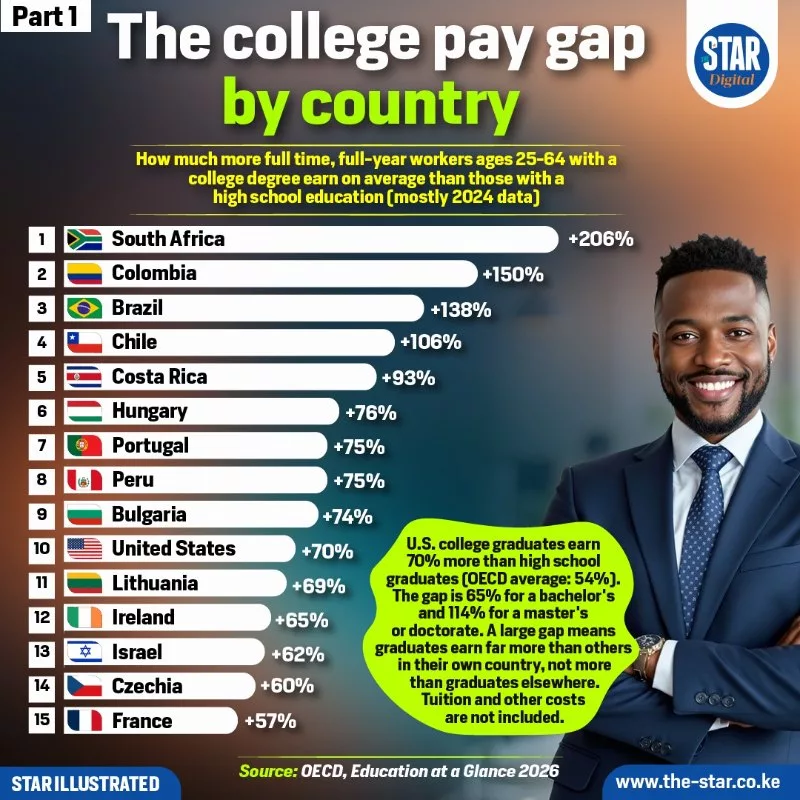
OECD data comparing full-time, full-year workers aged 25 to 64 shows how much more those with tertiary qualifications earn than workers with only upper-secondary education.
South Africa records the largest earnings premium, with degree holders earning 206 per cent more.
Colombia follows at 150 per cent, Brazil at 138 per cent and Chile at 106 per cent, highlighting the substantial financial advantages associated with higher education in these countries.
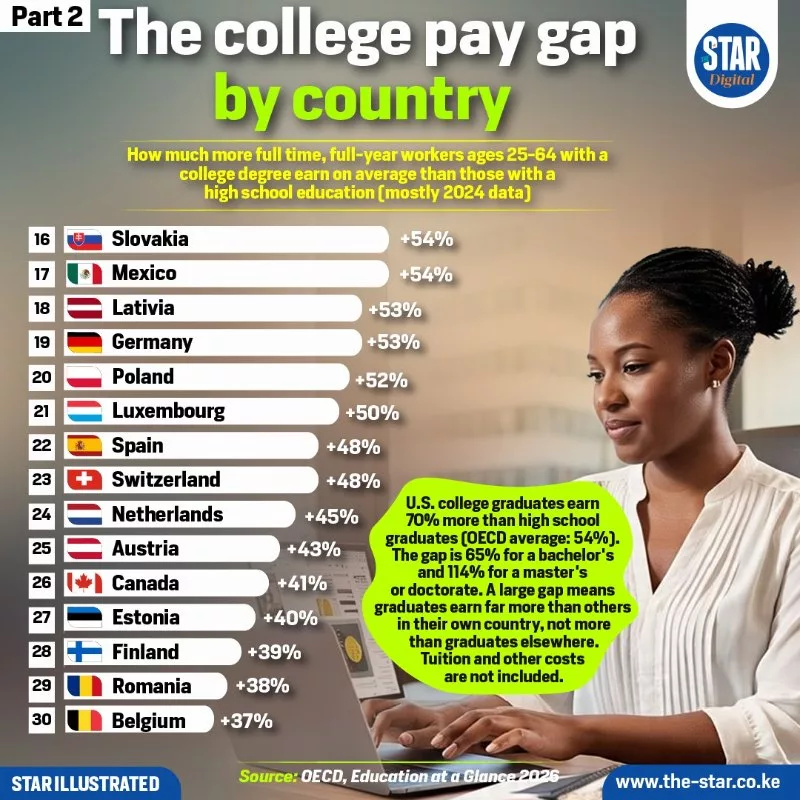
In the United States, workers with tertiary qualifications earn 70 per cent more than those with only a high school education, exceeding the OECD average of 54 per cent.
The premium rises to 65 per cent for those with a bachelor’s degree and 114 per cent for holders of advanced qualifications, such as master’s degrees and doctorates.
Elsewhere, the earnings gap is narrower, with Canada, Finland and Belgium recording premiums ranging from 41 to 37 per cent.
The figures underscore higher education’s potential to improve lifetime earnings, while showing that its financial returns depend heavily on the country.