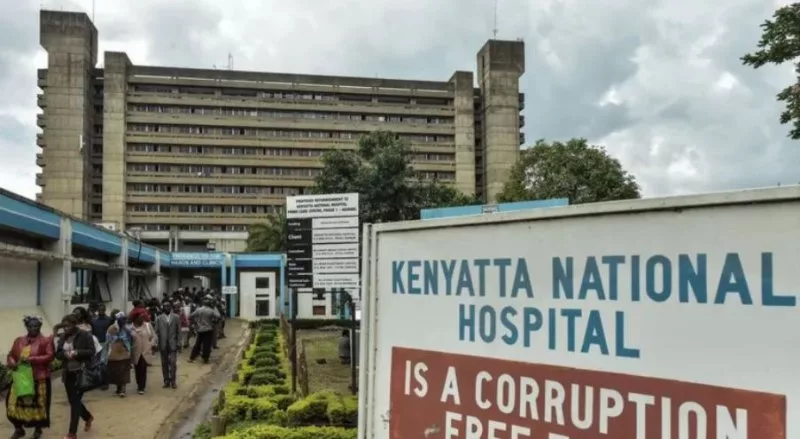
Kenyatta National Hospital, the country’s largest referral facility, is facing significant shortages of critical medical equipment in its Accident and Emergency Department, raising questions about its ability to handle mass casualties.
A review by Auditor General Nancy Gathungu for the financial year ended June 2025 found deficits in life-saving equipment, emergency response tools and critical-care facilities needed to stabilise patients during medical emergencies.
The shortages ranged from 20 per cent to 100 per cent of the department’s operational requirements, leaving gaps in equipment used to manage critically injured patients and those requiring urgent interventions.
“The department is significantly under-equipped relative to its operational requirements,” Gathungu said in the report tabled in Parliament.
The findings point to a hospital struggling to match its equipment capacity with the demands of emergency care, including situations involving large numbers of casualties who need immediate treatment.
The audit identified shortages of 16 ventilators, 15 cardiac monitors and 16 suction machines, equipment essential for supporting breathing, monitoring heart function and clearing patients’ airways.
The department also had a deficit of 12 advanced intensive care unit beds, 20 procedure trolleys and three advanced point-of-care ultrasound machines.
Other shortages included four video laryngoscopes, 10 crash carts and 12 wall-mounted suction units. One tourniquet machine was faulty.
These gaps could complicate the hospital’s ability to provide simultaneous emergency interventions when several critically injured patients arrive at the facility.
Crash carts carry equipment and supplies used during medical emergencies, while procedure trolleys help medical teams organise and deliver urgent interventions.
Ventilators support patients who cannot breathe adequately on their own, while cardiac monitors help clinicians detect potentially fatal changes in heart rhythm and other vital signs.
The audit also found deficits in diagnostic equipment used to guide emergency treatment, including 10 glucometers, 12 capnography monitors, one blood gas analyser and one coagulometer.
Such equipment help medical teams assess patients’ conditions and monitor their response to treatment, particularly when dealing with severely injured or critically ill patients.
The report raised concerns about the condition of existing equipment, noting that automated defibrillators and cardiac monitors were outdated or had exceeded their expected useful life.
Defibrillators are used to deliver controlled electric shocks to restore an effective heart rhythm in certain life-threatening cardiac emergencies.
The condition of such equipment is particularly important in emergency departments, where delays or failures during resuscitation can have serious consequences for patients.
The shortages extend to equipment used to administer medication and fluids during treatment.
The hospital had a deficit of 10 infusion pumps and 30 syringe pumps, which help medical staff deliver fluids and medication at controlled rates.
The audit noted that eight infusion pumps were functional but could not be used because the hospital lacked the required giving sets.
This means that even where equipment is available and operational, shortages of essential accessories can prevent it from being deployed in patient care.
The report also identified shortages of 50 ergonomic chairs, four air-warming blankets, eight patient cabinets and five X-ray viewers.
Although some of these items are not directly involved in life-saving procedures, they support the organisation and delivery of emergency care, particularly when departments are under pressure.
The findings raise concerns about the hospital’s capacity to respond effectively when an accident, disaster or other emergency sends large numbers of injured people to the facility at the same time.
In a mass-casualty incident, hospitals must rapidly assess patients, prioritise those requiring immediate intervention and deploy available staff, beds and equipment to prevent avoidable deaths.
Shortages of ventilators, monitors, suction machines and critical-care beds could constrain that response, particularly when several patients require advanced support simultaneously.
The audit did not establish whether the hospital had failed to respond to a specific mass-casualty incident.
However, the equipment deficits point to weaknesses in the resources available for emergency preparedness.
The findings also raise questions about equipment planning, maintenance and the availability of consumables needed to keep medical devices operational.
The hospital’s statement of financial position showed its property, plant and equipment are valued at Sh12.72 billion.
KNH chief executive officer Dr Richard Lesiyampe, however, painted a stark contrast of the situation, saying the hospital is the second largest in Africa after South Africa’s Chris Hani.
He cited 32 fully equipped theatres, up from 12 that existed four years ago, as part of the statement of that capacity. “We have reduced waiting time for surgeries,” he said, indicating that emergency surgeries are done in under 24 hours.
Lesiyampe further cited the two CT scans at the facility as well as advanced cancer management equipment.
“We have a machine that manages 150 to 200 patients daily,” the CEO said, adding that a new link machine was on the way.
However, the audit found that the Accident and Emergency Department remained significantly under-equipped relative to its operational requirements.