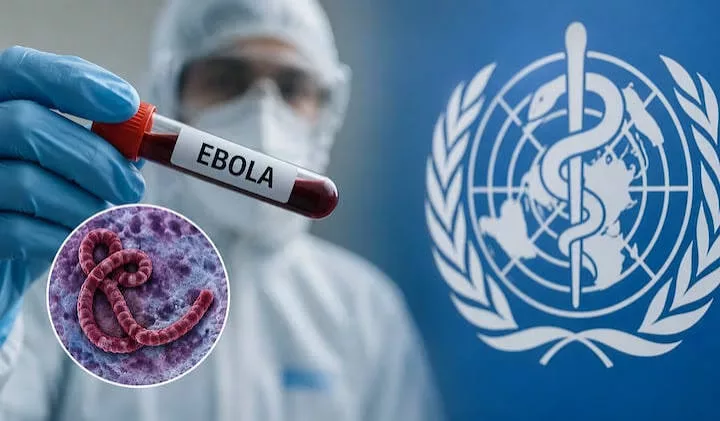
Kenya has confirmed another Ebola case, raising the total to nine, as the Ministry of Health reports improvement among patients and prepares to release the first group of contacts from quarantine this weekend.
Health Director General Patrick Amoth said the latest patient, a 24-year-old man and close family member of the first case, tested positive on October 19 after developing symptoms while already in quarantine.
He was isolated at the first sign of illness and immediately started treatment following confirmation of the infection.
All nine cases, including the index patient who died, belong to one known cluster, with the ministry reporting no evidence of transmission beyond the group.
“Our patients are improving and responding well to treatment,” Amoth said in a statement issued on Tuesday.
He said all eight surviving patients were receiving supportive care and had improved markedly, with their conditions stable under close observation and treatment.
The ministry has also received 500 doses of medicines to support the treatment of confirmed cases, with Amoth expressing gratitude to partners for their assistance in the response.
Contact tracing has expanded as authorities identify people who may have interacted with newly confirmed patients.
By Tuesday, 134 of 135 contacts had been traced and quarantined, representing 99.3 per cent of the identified contacts.
“As each new case is confirmed, their contacts are added to the tracing list, and this explains the growing number of contacts,” Amoth said.
He credited national and county surveillance teams, cooperation from families and communities, and support from development partners for the progress made in tracking contacts.
The ministry said it had distributed protective equipment and other response supplies to 12 very high-risk and 16 high-risk counties to strengthen preparedness and early detection.
The supplies include protective gowns, gloves, face shields, boots, sample collection and transport kits, diagnostic kits and thermometers.
A dedicated laboratory has also been established at the Kenyatta National Hospital Infectious Disease Unit to handle routine tests for patients receiving Ebola care, reducing the risk of disrupting other laboratory services.
Amoth said infection prevention and control measures were being monitored continuously at quarantine and treatment centres to protect health workers and prevent further spread.
“There has been no spread of infection within quarantine facilities, and every health worker caring for patients is fully protected,” he said.
The government maintained that Kenya had imposed no restrictions on travel, trade or public gatherings, urging citizens to continue following public health guidance.
People experiencing symptoms such as fever, unusual tiredness, muscle or joint pain, sore throat, vomiting, diarrhoea or unexplained bleeding were advised to seek immediate medical attention or call the toll-free number 719.
The ministry said the first group of contacts, who entered quarantine on October 6, would complete their mandatory 21-day monitoring period and begin returning home from October 25, provided they remained symptom-free.
Amoth appealed to communities to welcome those completing quarantine and avoid stigmatising them.
“Having completed 21 days without symptoms, they pose no risk of infection to anyone,” he said.
The ministry expressed optimism that the outbreak could be contained, urging Kenyans to cooperate with response teams as surveillance and contact tracing continue.