

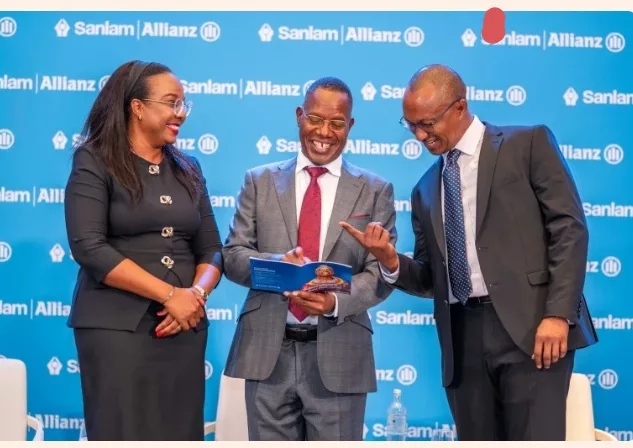
Sanlam Allianz Holdings (Kenya) Plc is planning to absorb its wholly owned life insurance subsidiary in a restructuring that will bring Sh38.5 billion in assets under the listed parent.
The move is aimed at simplifying its corporate structure and consolidating its insurance operations.
The proposed reorganisation will transfer the subsidiary’s insurance portfolio, liabilities and fund administration operations directly to the Nairobi Securities Exchange-listed company, eliminating an additional corporate layer and making the parent the direct life insurance operator in Kenya.
The move comes as insurers face pressure to improve operational efficiency, strengthen distribution and manage costs in a highly competitive market.
According to the Insurance Regulatory Authority’s June 2026 industry statistics, Sanlam Allianz Life Insurance controlled 2.91 per cent of Kenya’s long-term insurance market, ranking 11th among insurers, with gross premium income of Sh4.3 billion in the first half of the year.
Investors responded cautiously to the restructuring announcement, with Sanlam Allianz shares shedding 0.5 per cent to close at Sh10.35.
The counter has, however, gained 22.1 per cent since January, reflecting its broader performance this year.
The announcement came against a weaker trading backdrop at the Nairobi bourse.
For the week ending October 15, the Nairobi All Share Index (NASI), NSE 25 and NSE 20 declined by 2.57 per cent, 2.52 per cent and 1.97 per cent respectively.
The volume of shares traded fell by 25.91 per cent, although equity turnover rose by 33.42 per cent, indicating that lower trading volumes coincided with higher total transaction values.
Financial stocks featured prominently among the week’s gainers, with KCB Group and Kenya Re among the best performers, highlighting divergent fortunes across listed companies.
Government securities continued to attract strong demand despite mixed movements in yields.
Treasury bills received bids worth Sh68.5 billion against an advertised Sh28 billion on October 15, representing a subscription rate of 244.6 per cent.
A reopened 30-year Treasury bond attracted Sh83.8 billion in bids against Sh50 billion offered, equivalent to 167.7 per cent subscription.
The strong appetite for government debt suggests investors remain keen on fixed-income returns even as equities face short-term selling pressure.



