

President William Ruto has described Kenya's affordable housing programme a sign that the country is already making progress towards his vision of transforming it into a modern, industrialised economy comparable to Singapore.
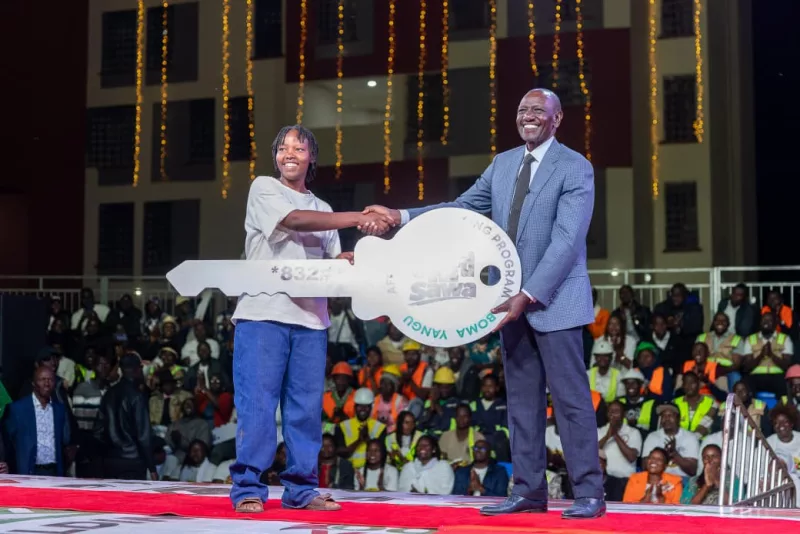
Speaking on Sunday night during the handover ceremony for the Sh5.37 billion Pioneer Affordable Housing Project in Eldoret, Uasin Gishu county, Ruto said the development demonstrated the world-class living standards his administration wanted Kenyans to enjoy.
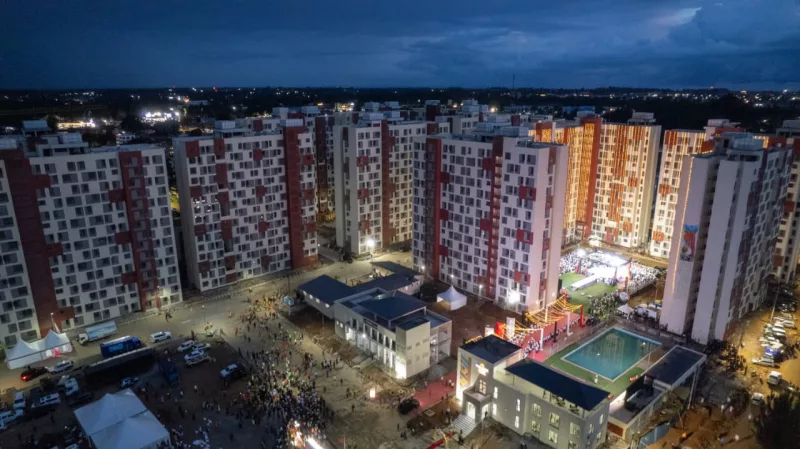
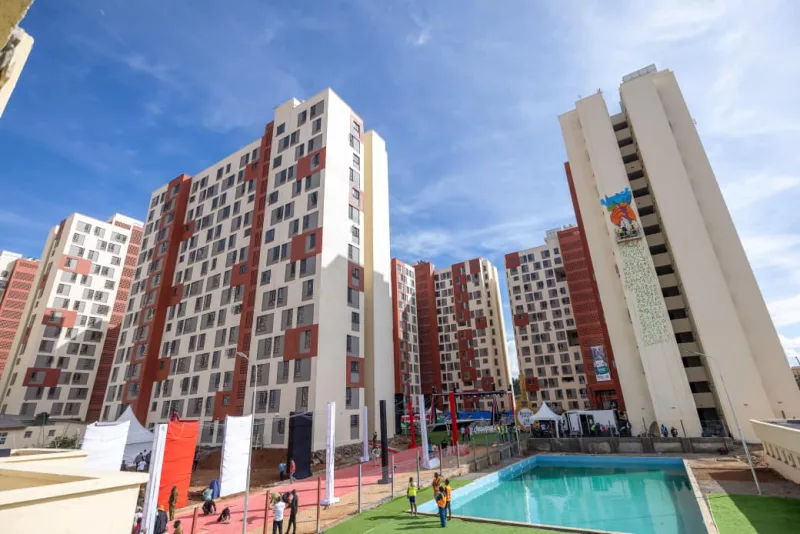
The project comprises 15 blocks, each with 14 floors served by lifts. Its amenities include a kindergarten, clubhouse, swimming pool, basketball and football courts, a gym, clinic, supermarket, green open spaces and walkways.
The development has 2,157 residential units and 104 shops, with homes ranging from bedsitters and one-bedroom apartments to two- and three-bedroom units.
The houses are categorised into social, affordable and market segments and are available through a rent-to-buy arrangement requiring an initial deposit of five per cent of the purchase price.
Addressing new homeowners and residents of Kapsaret who attended the ceremony, Ruto said the development had brought his ambition of elevating Kenya from a low-income nation to an industrialised, high-income economy closer to reality.
Ruto has repeatedly cited Singapore as a model for Kenya's transformation, pointing to the Asian country's shift from slum housing to high-rise public apartments as an example of what deliberate development planning can achieve.
“This is what Kenya wants, this is what Kenya deserves. I thought we were going to Singapore, but I see we have already arrived before we start,” he said.
Ruto challenged those present to identify what distinguished the Eldoret development from the standards associated with Singapore, citing the amenities and infrastructure incorporated into the project.
“I mean, what's the difference here?” he asked, pointing to the internet connectivity, piped cooking gas and facilities that allow residents to walk and exercise within the development.
“Isn't this Singapore? This is it,” he added.
Beyond housing, Ruto's Singapore vision centres on transforming Kenya from a consumption-driven economy into one that produces more of the goods it uses and exports.
His administration has promoted special economic zones, industrial parks and manufacturing hubs intended to process raw materials locally rather than rely on imports of finished products.
The President has presented Singapore's economic transformation as a model template Kenya can copy, arguing that the country must change its approach to production, investment and economic development to attain higher living standards.
However, critics question whether the Kenya Kwanza administration's policies can deliver that transformation.
They argue that Singapore's rise was underpinned by consistent long-term planning, a strong manufacturing base and predictable economic policies, while Kenya continues to grapple with high taxation and costly production that pressures businesses.
They also point to public debt and weak management of public funds as obstacles to the institutional discipline and economic competitiveness that helped drive Singapore's development.
Ruto has dismissed such criticism, accusing his opponents of lacking the vision to transform the country and of wanting Kenyans to remain trapped in cycles of poverty and undignified living conditions.



