Health Cabinet Secretary Aden Duale has hit back at Nairobi Senator Edwin Sifuna over claims that President William Ruto borrowed his ‘Usawa’ slogan, insisting the government’s equity agenda is rooted in addressing decades of historical marginalisation.
Duale challenged Sifuna to explain how the opposition would translate its criticism into practical policies to tackle regional inequalities, arguing that the debate should focus on solutions rather than ownership of political slogans.
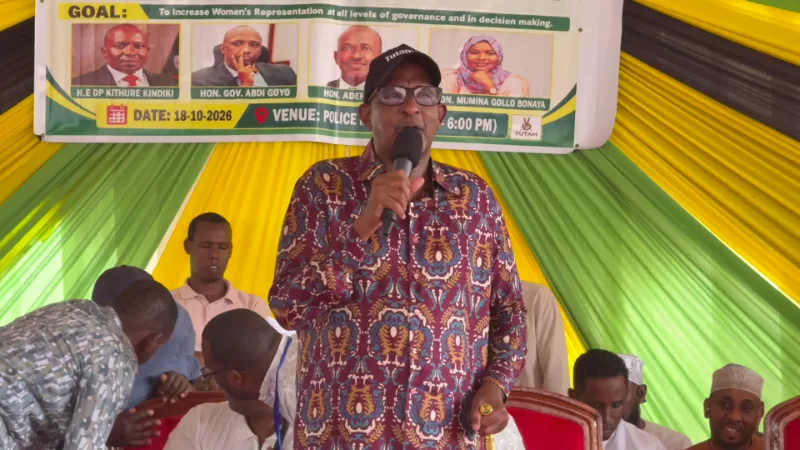
Speaking in Isiolo County on Sunday, Duale defended Ruto’s Usawa ni Sawa message, saying it reflected the administration’s commitment to addressing historical injustices that have disadvantaged sections of the country.
“I saw Sifuna last night saying that Ruto has copied him. What kind of equity can you even implement?” Duale posed.
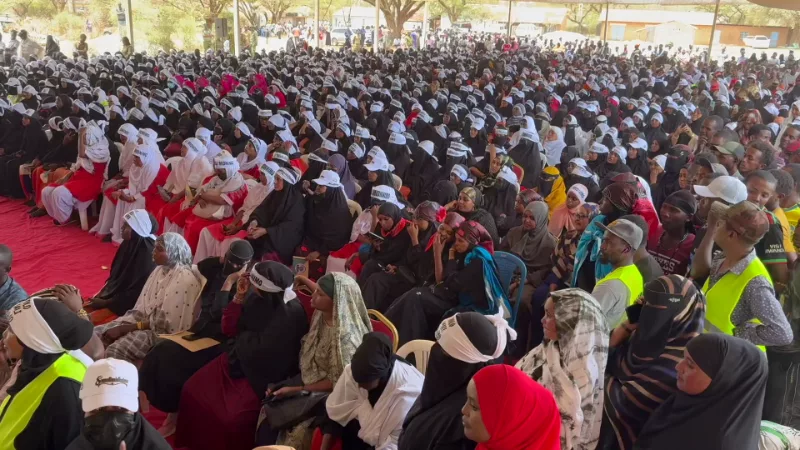
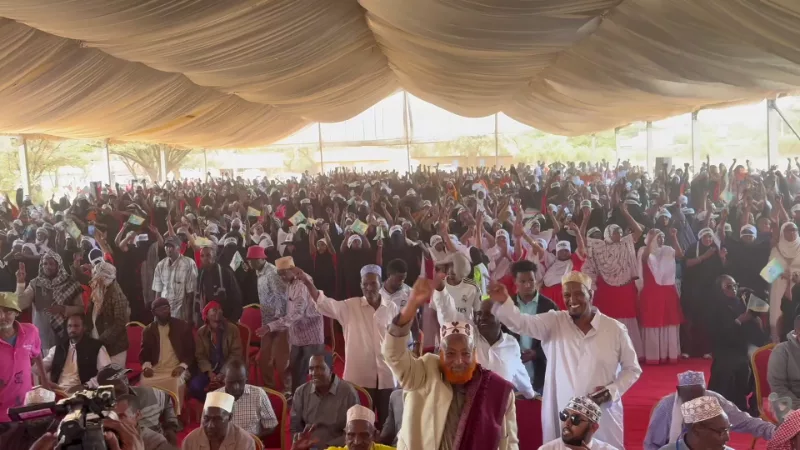
The CS spoke during a resource mobilisation drive organised by the Somali Midnimo Community-Based Organisation (CBO), an umbrella body representing women’s groups drawn from 11 Somali clans in Isiolo County.
The initiative seeks to empower women while promoting unity, peace and development.
Duale argued that the government’s equity agenda was aimed at communities he said had been marginalised by historical government policies, including those in Nyanza, Western Kenya, pastoralist regions and Muslim communities.
“The equity William Ruto is talking about is about addressing historical government policies that marginalised and discriminated against three-quarters of our country, particularly Nyanza, Western, the pastoralist communities and the Muslim community,” he said.
He maintained that Ruto was already taking steps to address the legacy of unequal development, adding that the administration should be judged by its policy decisions and delivery rather than claims over political messaging.
“William Ruto is going to rewrite, and is already rewriting, the history of marginalisation,” Duale said.
The CS cited Sessional Paper No. 10 of 1965, a policy document that has faced criticism over its role in shaping regional development, as part of the historical context behind the government’s equity agenda.
“Mr President, you have become the first president in Kenya’s history to address historical government policies, including Sessional Paper No. 10 of 1965 and many others that discriminated against a large section of our country’s citizens,” he said.
“So we are saying you are on the right track and we will continue supporting you,” he added.
Duale said the 2027 General Election would ultimately hinge on the administration’s performance and the benefits Kenyans derive from its policies, rather than the popularity of campaign slogans.
He also turned his criticism towards former President Uhuru Kenyatta over his role in opposition coalition-building efforts ahead of the next election.
Duale recalled the formation of the Azimio la Umoja coalition before the 2022 General Election, saying it had brought together prominent political figures but failed to stop Ruto from winning the presidency.
“In 2022, you assembled a political vehicle called Azimio. It was a very strong vehicle because Baba, Raila Odinga, was part of that coalition. May his soul rest in peace,” Duale said.
He dismissed the opposition’s emerging coalition efforts ahead of 2027, claiming they would not pose a serious challenge to Ruto.
“In 2027, the coalition you are assembling cannot even compete in the Kenya Premier League against President William Ruto,” he added.
Ruto and his allies have increasingly promoted the Usawa ni Sawa message ahead of the 2027 elections, presenting it as a commitment to fairness, inclusion and addressing longstanding regional inequalities.
Duale’s remarks add to the political debate over the meaning of equity, the government’s development record and the opposition’s preparations for the next election.