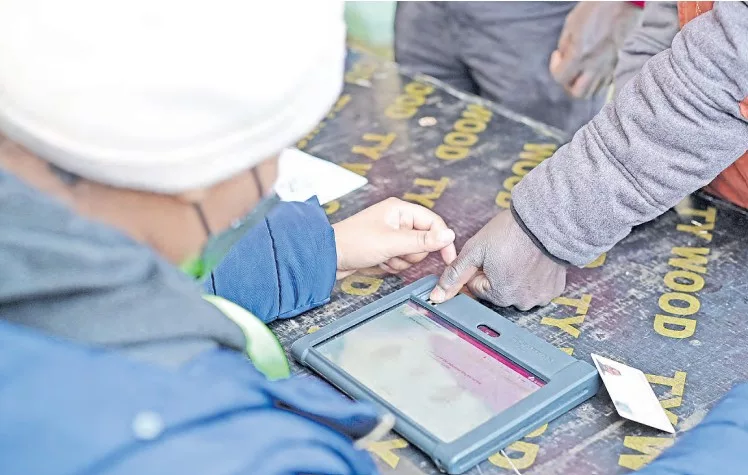
The Independent Electoral and Boundaries Commission has set October 19 as the new deadline for bids for the supply of election management technology.
The commission has restarted the procurement process that is deemed critical for the success of the 2027 elections after a review board dismissed a challenge to the tender.
The commission has directed prospective suppliers to submit their bids by 11am on October 19, clearing the way for the procurement of the Integrated Electoral Management System (IEMS), hardware equipment and accessories.
IEBC’s decision followed a ruling by the Public Procurement Administrative Review Board, which dismissed a request for review that had halted the tender proceedings.
The commission had suspended the procurement under an earlier notice after a request for review was filed on September 30, leaving the process on hold pending the board’s determination.
The board has now directed the IEBC accounting officer to proceed with the tender to its lawful and logical conclusion.
“The Request for Review dated September 29, 2026, and filed on September 30, 2026, be and is hereby dismissed,” the board ordered, according to the commission’s notice.
The IEBC subsequently set October 19 as both the deadline for submission of bids and the date for opening them, with the exercise scheduled for 11am Kenyan time.
The move came as the electoral agency races against time to acquire and prepare the technology required to manage the 2027 general election.
The tender covers the supply, delivery, installation, testing, commissioning, support and maintenance of the IEMS, together with the necessary hardware and accessories.
The technology procurement is central to preparations for the next general election and its delay has been a cause of concern for stakeholders in the electoral process.
IEBC seeks to use Kiems to identify voters, manage election-day processes and transmit results under tight statutory timelines.
The commission is under pressure, especially from the opposition, to complete procurement, installation and testing well before polling day.
Elections are less than 300 days away and IEBC needs both election-management technology and printed materials to conduct voting and declare results.
IEBC has, in the notice was signed by Obadiah Keitany, on behalf of the commission secretary and chief executive officer, not announced any change to the other terms and conditions of the tender.
The commission said the clarifications and amendments contained in the latest addendum form part of the bidding documents and apply to all prospective suppliers.
Bidders who had already downloaded the tender documents have also been required to acknowledge receipt of the amendments.
The Monday deadline leaves prospective bidders with limited time to finalise and submit their proposals following the lifting of the suspension.
The procurement process will now have to move through the remaining stages, including evaluation and the eventual award, before the winning supplier can undertake the required delivery and installation work.
The commission will also need to allow time for testing and commissioning to establish that the equipment and systems can function reliably under election conditions.
Any further delays could compress the time available for deployment, testing and preparation ahead of the 2027 polls.
The procurement dispute is part of the challenges facing the commission as it seeks to put in place the technology and logistics required for a nationwide election.
A prolonged period without a fully constituted commission had hampered IEBC preparatory activities, a situation that affected voter registration and procurement of election technology.
The commission has also faced scrutiny over the cost and specifications of election-related procurements.
IEBC is replacing ageing Kiems equipment bought for the 2017 election.
The agency told Parliament that 45,353 of the kits are due for replacement while 14,000 kits acquired in 2022 are expected to be reused.
IEBC has indicated it requires 59,352 kits for the election, comprising 55,393 kits for polling stations and another 3,959 for training.
The technology procurement, approximated to cost about Sh9 billion, is arguably one of the largest components of the commission’s election-preparation budget.
IEBC’s next hurdle is to secure budgets for the equipment, with only Sh4.7 billion provided so far against the requirement for Sh9.4 billion.
The commission has also been pursuing other technology-related procurements, including radio frequency identification technology for Kiems kits and a telecommunications network to support the equipment.
Poll experts hold that the delays could boil down to lack of preparedness on the part of the elections management agency.
“Delays in procuring the kits basically leads to delays in preparations. We need time to monitor the procurement process, test the kits and perhaps even pilot before the elections. If this dilly dallying goes on we will miss out on the necessary steps," Elections Observation Group (ELOG) national coordinator Mule Musau said.
“The other major risk is that we might end up single sourcing because of limited time. That will bring concerns about the value for money for the venture and possible canvassing in the identification of the vendor,” Musau explained.