

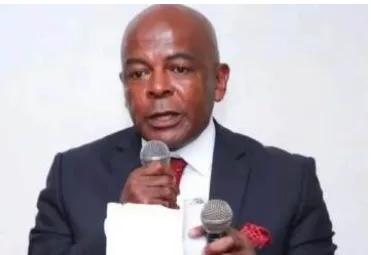
The Matatu Owners Association has warned that commuters will bear the cost of the latest fuel price increases, saying operators can no longer absorb rising costs.
Association president Albert Karakacha condemned the increases, accusing President William Ruto of breaking a promise made to transport sector stakeholders in Mombasa that diesel prices would not rise.
On Wednesday, the Energy and Petroleum Regulatory Authority (EPRA) announced increases of Sh12.93 per litre for super petrol, Sh9.90 for diesel and Sh28.49 for kerosene.
The new prices took effect on October 15 and will remain in force until November 14, 2026.
In Nairobi, super petrol will retail at a maximum of Sh226.96 per litre, diesel at Sh227.76 and kerosene at Sh219.87. In Mombasa, the respective prices are Sh223.81, Sh224.61 and Sh216.71.
Karakacha said the diesel price increase contradicted assurances given by Ruto during a meeting with transport sector stakeholders in Mombasa.
“He assured us that diesel, which is the backbone of public transport, would be protected from arbitrary increases. Today, diesel is up by Sh9.90 per litre. That promise has been broken. What are we supposed to tell our members?” he said.
He urged the President to withdraw the diesel price increase, warning that failure to honour the commitment would erode trust between the government and transport investors.
According to Karakacha, diesel powers more than 90 per cent of matatus, buses and long-distance vehicles, making price increases a direct threat to fares and the cost of transporting goods.
“We are businessmen, we will pass it on to the consumer. We cannot be the ones cushioning the expenses while making losses,” he said, adding that operators had been pushed to the wall.
The increase comes as schools close, putting additional pressure on parents who had already budgeted for transport.
Karakacha said families that had set aside Sh5,000 for school transport could now require as much as Sh7,000. He cited parents in Kitengela, Rongai, Thika and Mombasa.
“This increase has caught parents off-guard. It is unfair to students and parents,” he said.
He said operators were already struggling with rising vehicle maintenance costs, insurance premiums and spare parts before the latest fuel price increases.
A tyre that previously cost Sh25,000 now sells for between Sh38,000 and Sh45,000, while comprehensive insurance cover has risen from Sh180,000 to Sh250,000, he said.
According to Karakacha, insurance premiums have increased by more than 30 per cent.
The association president also faulted the government for failing to implement other measures he said had been promised to cushion the sector, particularly tax relief on electric vehicles, batteries and charging infrastructure.
“We were told that duty on electric vehicles, batteries and charging infrastructure would be removed to encourage transition and reduce dependence on fossil fuels. Nothing has happened,” he said.
Karakacha warned that higher fuel prices could reduce passenger numbers, weaken businesses and make it harder for vehicle owners to repay bank loans, potentially exposing them to repossession.
He said the association had proposed measures to protect operators and commuters from fuel price volatility, including reintroducing a fuel subsidy or establishing a stabilisation fund.
The association will convene an urgent meeting to agree on its response to the increases.
“We are sorry to Kenyans, but we are also victims. We cannot absorb this increase,” Karakacha said.



