

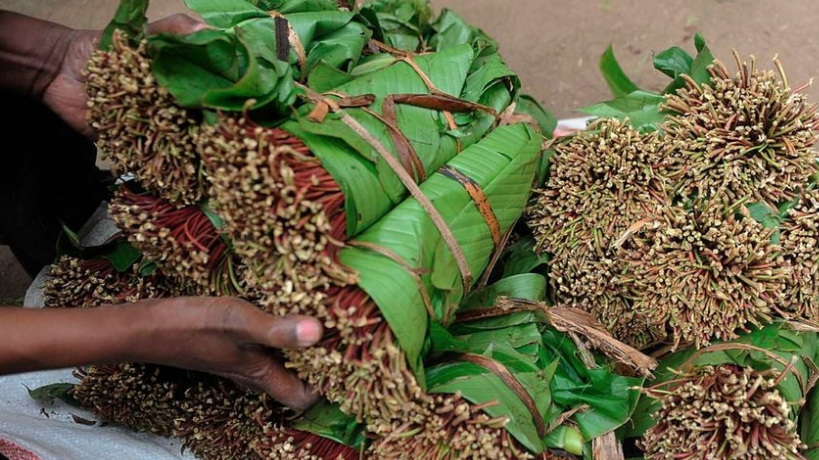
 Miraa for sale at a market /FILE
The Kenya Bureau of Standards has warned manufacturers and traders against displaying its Standardization Mark of quality on khat-infused beverages, saying the products are not covered by its certification.
In a notice dated October 16, Kebs said it has established that some manufacturers certified to produce fruit juices and fruit drinks were using permits issued for those products to market beverages infused with khat.
The regulator said the practice misrepresented the certification status of the beverages and could attract enforcement action under the Standards Act, Cap 496.
“Kebs wishes to clarify that certification permits are valid only for the products covered by the approved scope of certification and do not extend to khat-infused beverages or any other products outside that scope,” the notice stated.
The bureau emphasised that certification for fruit juices and fruit drinks did not automatically authorise manufacturers to use the same permits for products containing khat.
“Kebs has therefore not issued Standardization Mark permits for any khat-infused beverages,” the statement added.
The notice was issued under the authority of Kebs director general Esther Ngari, who said the bureau had taken action against identified cases of non-compliance and would continue monitoring the market.
“Kebs has revoked certification permits in identified cases of non-compliance and will continue to undertake market surveillance and take appropriate action against manufacturers and traders found misusing the Standardization Mark,” the statement said.
Khat, popularly known as miraa, muguka or jaba, is a recognised cash crop legally grown, traded and consumed in Kenya.
However, its stimulant properties cathinone and cathine have also placed it under public health scrutiny, particularly over concerns about dependence and substance use disorders.
The National Authority for the Campaign Against Alcohol and Drug Abuse (Nacada) classifies khat alongside alcohol and tobacco as a substance that can contribute to dependence and substance use disorders.
Kebs explained that the presence of the naturally occurring stimulant compounds in the plant is central to concerns about its effects on users.
“Manufacturers and traders are therefore cautioned against displaying the KEBS Standardization Mark or making claims of KEBS certification on khat-infused beverages,” the notice stated.
Consumers were also warned that any representation that such beverages had been certified by Kebs was misleading.
The bureau urged members of the public to verify the certification status of products through its official channels, including SMS 20023, and report suspected misuse of the Standardization Mark through its toll-free number, 1545.
Kebs said the measures were intended to protect consumers, preserve the integrity of its certification system and ensure compliance with applicable Kenya Standards and regulatory requirements.