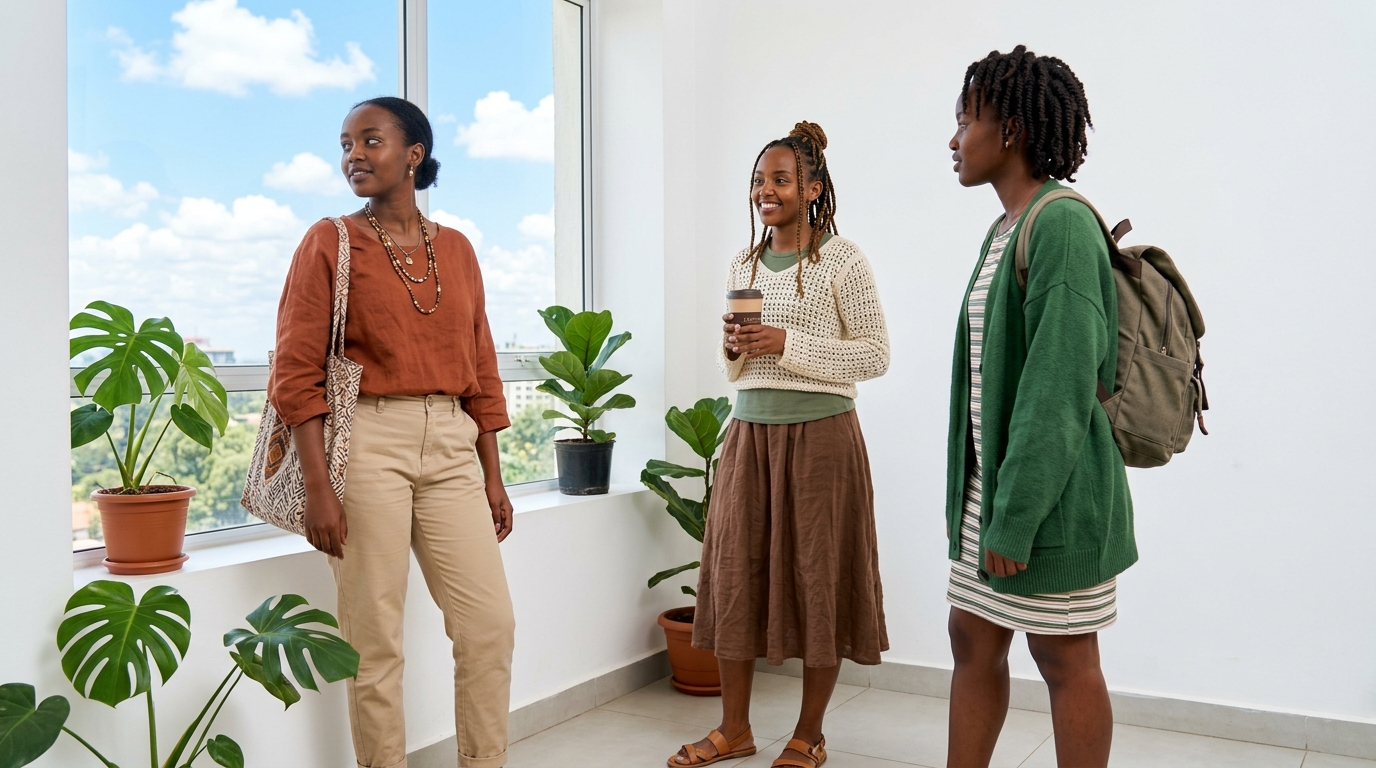
The first time I tried earth girl fashion, I genuinely thought I looked like the main character in a coming-of-age film. I had carefully assembled a flowy brown skirt, a loose cream blouse and enough beaded jewellery to start my own Maasai market stall.
I stared into the mirror, expecting woodland nymph. What stared back was an old mama who looked ready to remind strangers to carry sweaters because “the weather can change suddenly”.
My younger cousin saw me and delivered the final blow. “You look like the weird grandma back at our village who scares the kids,” she said. Not just any grandmother. The weird one.
Yet somehow, despite my repeated fashion disasters, I remain fascinated by earth girl fashion. Everywhere I look, Gen Z women are pulling it off effortlessly. At Java in Kilimani, on university campuses in Nairobi, at art markets in Karen and even at weekend events in Naivasha, they glide around looking like they have just emerged from a magical forest, where everybody drinks herbal tea and journals about self-discovery. I, meanwhile, look like I have emerged from a church women's committee meeting.
For those unfamiliar with the trend, earth girl fashion is an aesthetic inspired by nature. Think earthy colours like brown, green, beige and rust. Think oversized cardigans, flowy skirts, loose linen trousers, crochet tops, vintage clothing, layered jewellery, tote bags and an overall appearance that suggests you spend your free time identifying indigenous plants.
The style gained popularity through social media platforms such as TikTok and Pinterest, where young people increasingly embraced fashion that felt softer, slower and more connected to nature.
At first glance, it may seem like just another internet trend. But I think its popularity reveals something deeper about Gen Z. After all, this is a generation that grew up amid climate anxiety, economic uncertainty and relentless digital overload. Many young people spend hours scrolling through feeds packed with bad news, political arguments and impossible beauty standards. Earth girl fashion offers something different. It is a visual rebellion against hyper-perfection. It says, "I would rather look like I forage mushrooms than compete with your luxury lifestyle." That message resonates.
I noticed this most clearly last year while walking through a weekend artisan market in Nairobi. A group of university students stood browsing handmade jewellery. Their outfits looked like they had been assembled from thrift shops, family wardrobes and pure creativity. Nothing appeared expensive. Yet they looked striking.
Meanwhile, a few metres away, several people were dressed in head-to-toe designer labels. Ironically, the earth girls attracted far more attention. That contrast captures an important cultural shift. For many Gen Zs, authenticity has become a form of status.
Twenty-two-year-old university student Amanda Wanjiku told me, “I like earth girl fashion because it doesn’t feel fake. It looks relaxed, but it also feels personal. You’re not trying to impress anyone.”
Her point reflects a growing rejection of consumer culture among some young people. Instead of chasing every new fashion drop, many earth girl enthusiasts embrace thrifting, upcycling and sustainable shopping practices.
Of course, not everyone is convinced. “I think some people romanticise poverty with this aesthetic,” says Kayla Mwikali, 24. “Some outfits look like people deliberately dressed badly and called it fashion.”
Her criticism is not entirely unfair. Like many internet aesthetics, earth girl fashion can sometimes become performative. There is an irony in spending hours curating an outfit designed to look effortlessly natural. There is also something amusing about influencers buying expensive ‘sustainable’ clothing to achieve a look inspired by people who simply wore what they had.
Still, reducing the trend to hypocrisy misses the bigger picture. In Kenya, where second-hand clothing markets remain central to everyday fashion, earth girl aesthetics often intersect naturally with existing thrift culture. Places like Gikomba have long supplied creative wardrobes before sustainability became a social media buzzword. What some Gen Zs are doing now is reframing practices that already existed.
That is what makes the trend interesting. Earth girl fashion is not really about clothes. It is about identity. It is about signalling values in a world where identity increasingly feels like a public performance. The flowy skirt, the tote bag and the vintage cardigan become symbols of environmental consciousness, creativity and individuality. Whether those values always match reality is another conversation.
And yet, despite all my observations, I remain personally defeated by the aesthetic. Every few months, I convince myself that this time will be different. This time I will unlock my inner earth girl. I will finally become the effortlessly stylish woman strolling through Nairobi Arboretum looking like she writes poetry and knows how to grow herbs. Every few months, I fail. The skirt is too long. The cardigan is too large. The colours somehow transform me into a retired geography teacher.
But perhaps that is part of why I remain intrigued. Earth girl fashion fascinates me because it represents something many Gen Zs seem to crave: a slower, softer and more grounded way of moving through an increasingly chaotic world. Beneath the crochet tops and oversized sweaters lies a quiet protest against speed, excess and artificiality. Even if I never manage to look like a forest fairy, I can still appreciate the message. And honestly, there are worse things to look like than someone’s grandma.