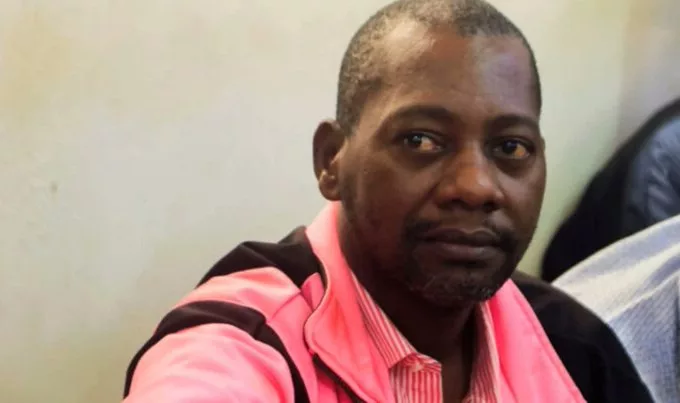
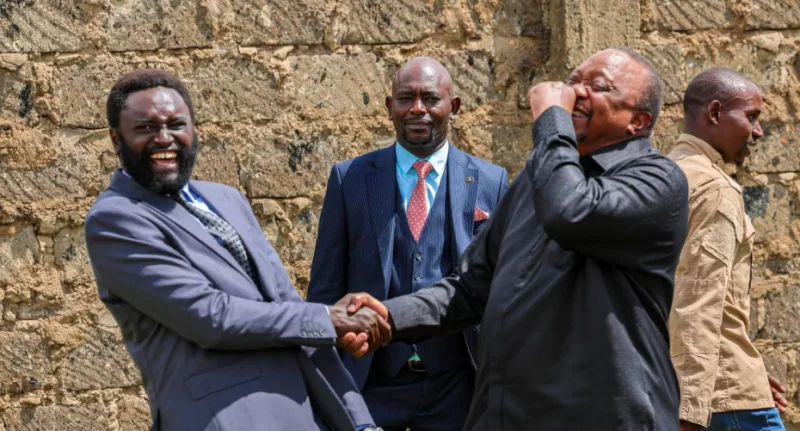
 Nyandarua Senator John Methu, former President Uhuru during the burial of People’s Liberation Party leader Martha Karua’s father, Mwalimu Jackson Karua, in Kirinyaga on Saturday, October 3, 2026/X
Former President Uhuru Kenyatta’s behind-the-scenes role in rallying the opposition against President William Ruto’s 2027 re-election bid is at the heart of their latest political confrontation.
Despite quitting as Jubilee Party leader and Azimio Council chairman, sources say Uhuru has remained the glue bringing together the anti-Ruto brigade.
The former head of state has also reportedly declined to play any “consultative or advisory role” to the state as contemplated in the Presidential Retirement Benefits Act 2003.
“A retired president may be requested by the government to perform specific official functions and shall be paid a reasonable allowance in respect of such official functions,” the act states.
There are also ongoing accusations that the former head of state—believed to have a huge financial war chest—is also bankrolling opposition activities.
On Monday, Ruto tore into his successor, describing him as the most deceitful and ungrateful person he has met.
“You are the most ungrateful person I have met. You are the most deceitful character I have met. How can you dare oppose me when the people of Kenya have elected me,” an angry Ruto said.
“My friend, please retire, stop being deceitful…You left the economy in a ditch; you left the economy suffocating in debt. I have revived the economy, please Mr Kenyatta, give us a break.”
The two leaders are expected to come face-to-face at Migwena Cultural Grounds in Bondo, for Raila Odinga’s first anniversary.
The latest row was triggered by Uhuru’s remarks at two functions, including a Jubilee Party handover meeting where he claimed Raila won the 2022 elections.
At a burial in Kirinyaga, the former President also said Mt Kenya voters made a mistake by electing Ruto, reopening wounds from the region’s dramatic political shift in 2022.
Ruto and his allies have since intensified their attacks, with the President accusing Uhuru during his North Rift tour of reneging on their succession agreement and sponsoring attacks against his administration.
The confrontation has spilt into political rallies, social media and Parliament, where government allies have portrayed Uhuru as the force behind efforts to undermine the administration.
Ruto’s allies have linked the attacks to Uhuru’s refusal to accept Ruto’s leadership and his alleged involvement in mobilising the opposition.
Hesbon Omollo, a state operative and Ruto ally, said in a televised interview that Uhuru had been meddling in the affairs of the Kenya Kwanza administration.
“He has time and again appeared to be the hand that is holding the opposition together; perhaps that is why the President has been picking on him,” Omollo said, citing Jubilee’s revamp and former cabinet secretary Fred Matiang’i’s return to the political arena.
“Politics across the globe runs on the fuel of resources and money. The most moneyed person opposing the President of the country is the former President,” he said.
Ruto and Uhuru were allies in the 2013 and 2017 elections before their relationship deteriorated following Uhuru’s rapprochement with Raila in 2018.
Their differences deepened in the 2022 succession contest, when Uhuru backed Raila against Ruto, who eventually won the presidency.
The latest outburst suggests the dispute over their political understanding remains unresolved.
Ruto’s allies believe Uhuru is attempting to influence the next election, a claim Rigathi Gachagua recently appeared to reinforce.
“We will run to him if we can’t agree. He is our tiebreaker,” the DCP leader said.
Business interests have also featured prominently in the attacks.
National Assembly Majority Leader Kimani Ichung’wah accused unnamed political figures of using public rallies to interfere with major investments, including the proposed Dangote Lamu oil refinery.
He alleged that one family had previously used state influence to frustrate Dangote’s cement investment unless it received a 50 per cent shareholding.
“Mr Sponyo should not use the puppets he is sponsoring to demand shares from Dangote,” Ichung’wah told Parliament on October 8.
Some Ruto allies have suggested that jealousy over the President’s record is driving Uhuru’s criticism.
Former Uasin Gishu Governor Jackson Mandago said Ruto’s achievements had exposed the shortcomings of Uhuru’s administration.
“We should have dealt with him in 2017. We’d be in Singapore by now. Where was the money for development going to?” Mandago said.
Suna East MP Junet Mohamed also attacked Uhuru’s record, arguing that the former President should allow the current administration to govern.
“You have wasted 10 valuable years of this country,” Junet said during the parliamentary debate.
Nyando MP Jared Okello questioned why Uhuru continued to intervene in politics after leaving office, contrasting his conduct with that of retired presidents Daniel arap Moi and Mwai Kibaki.
Okello also offered a different perspective this morning, saying the exchange of attacks reflected how well the two leaders understood each other.
“When one fire salvos to another, it is from the premise of knowing one another very well and they do understand the damage that each and every salvo fired can bring to the character of a person,” he said.
Matiang’i, however, questioned the focus on Uhuru, arguing that the attacks distract from the government’s own shortcomings.
“He is using Uhuru as a scapegoat for the challenges his administration has failed to address,” Matiang’i said.
Saboti MP Caleb Amisi has dismissed the existence of a genuine conflict, arguing that the public confrontation could be a political game designed to hoodwink those opposed to Ruto’s re-election.
Amisi challenged Ruto to dismiss Cabinet appointees associated with Uhuru if the President genuinely considers his predecessor an enemy.
“Uhuru is allegedly the sponyo of some #Wantam leaders; so, Bwana Ruto, unless Uhuru is your secret buddy, fire Uhuru appointees that are in your cabinet,” he said.
He cited William Kabogo, Lee Kinyanjui and Mutahi Kagwe as Uhuru-linked appointees in the broad-based government, contrasting them with officials associated with Raila’s ODM.
Amisi argued that their continued presence in government undermined claims of a serious confrontation.
“Otherwise hii ni mchezo wa town,” he said.
He accused Ruto and Uhuru of repeating what he described as political deception, warning that their actions risk misleading opposition supporters and young people seeking change.
“In 2022, the two of you played Baba together by false pretence, you are now playing the same trick on the Wantam brigade and the youth of this country seeking genuine change,” he said.
“You can never fool all the people all of the time," Amisi said, but did not provide evidence that the two leaders were secretly coordinating their attacks.
INSTANT ANALYSIS
The renewed war of words is becoming part of the contest over who will shape the country’s political alliances ahead of 2027. Whether the confrontation reflects a genuine political rupture or a calculated performance remains unclear, but Uhuru’s influence over opposition unity has made him a central figure in the emerging succession battle.