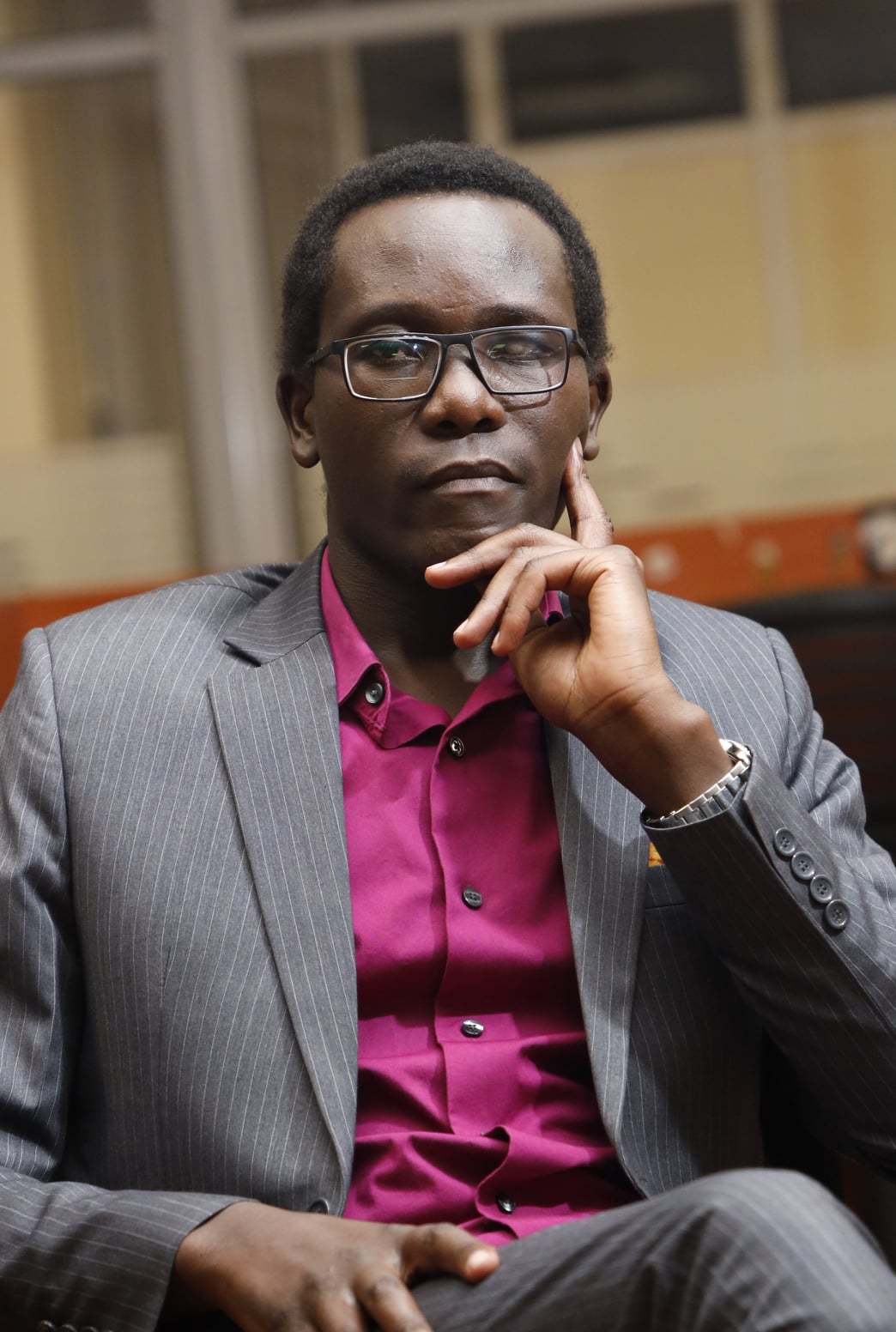
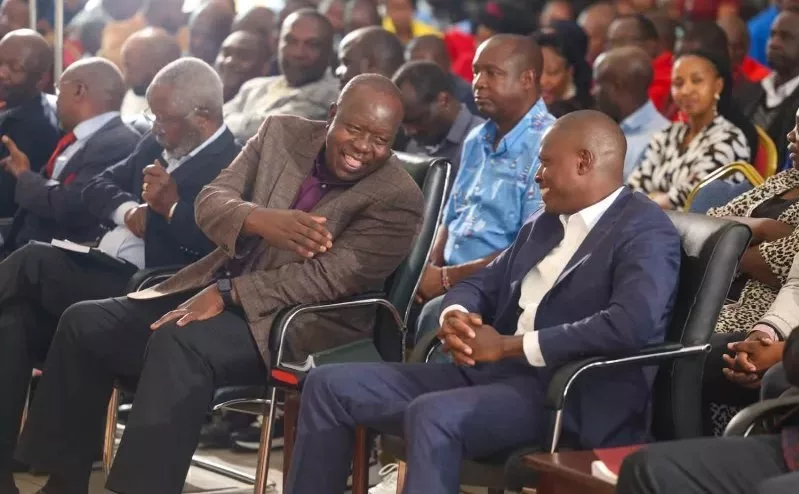
 Jubilee deputy Party leader Fred Matiang'i with PPK leader Ndindi Nyoro at Seventh-day Adventist church in Kangema town, Murang'a, on September 12, 2026/ ALICE WAITHERA
The growing political partnership between Jubilee Party leader Fred Matiang’i and Kiharu MP Ndindi Nyoro is exposing tensions within the opposition as leaders position themselves ahead of the election.
The two held joint rallies yesterday in Loitoktok and Kinama in Kajiado, intensifying their political engagement as allies of former DP Rigathi Gachagua, and prompting questions about their loyalty to the opposition.
Speaking during the rallies, Nyoro said his People’s Party of Kenya and Jubilee were working with other opposition parties, urging leaders to stop attacking one another and focus on defeating President William Ruto.
“Our enemy is William Ruto. So let’s stop with the drama and circus in the opposition camp and abusing people on TV,” he said.
Referring to DCP secretary general-designate John Methu’s claim he had been offered Sh30 million, Nyoro challenged opposition leaders to clarify their dealings with the President rather than accuse others of being government moles.
He also criticised leaders accusing opposition principals of being government projects, alleging one of those making the accusations had benefited from Ruto.
“We are in the opposition not at the invitation of anyone but to join hands with other Kenyans and send Ruto home,” he said.
Matiang’i backed Nyoro’s call for unity, saying opposition parties should focus on bringing political change rather than engaging in public disputes.
“Let’s unite in the opposition. Our job now is to ensure there is change in our country. We don’t have time for infighting. That’s not being smart,” he said.
“Those in Jubilee, PPK and all the opposition parties, we are in one family. Let’s not waste time fighting each other. Let’s engage people quietly because it is them who will decide.”
The remarks came amid criticism from Gachagua’s allies, including Methu, deputy party leader Cleophas Malala and Kirinyaga Senator Kamau Murango, who have questioned the relationship between Matiang’i and Nyoro. They have suggested the two could be working against the opposition’s interests.
Speaking on Citizen TV on Sunday, Methu said he was surprised Nyoro had formed a party, claiming the MP had previously suggested parties formed outside established political formations were creations of Ruto.
“When I heard him say he has a party, I couldn't believe my ears because it is he who told me that another party is a creation of William Ruto. If I was to name moles, then I think the name Ndindi Nyoro will feature prominently,” Methu said.
He cited the close relationship between the two leaders, arguing their frequent joint appearances raised questions about Matiang’i’s position within the opposition.
“I cannot speak about Matiang’i because I thought I knew him very well. These days, I don't think I know him. If I say Ndindi Nyoro is a mole, what can I say about Matiang’i, and they are friends?” he posed.
Methu, however, expressed confidence in Wiper leader Kalonzo Musyoka, saying he had stood with Gachagua when doing so offered no immediate political advantage.
“I can trust Kalonzo any minute. Gachagua's own people did not stand with Gachagua. It was very unfashionable to stand with us, but Kalonzo did,” he said.
Murango has also criticised Matiang’i, accusing him of failing to intervene when his supporters attacked Gachagua.
Murango claimed Kirinyaga Woman Representative Njeri Maina had alerted Matiang’i to the attacks but he failed to act and instead blocked her calls.
He further claimed Matiang’i’s political camp had weakened, with leaders such as Onyonka and Kibagendi campaigning for Nairobi Senator Edwin Sifuna.
He questioned why Matiang’i was holding many political meetings in Mt Kenya rather than consolidating support in his own backyard.
“If you can’t manage to rear a chicken, how will you manage a cow?” Murango posed, accusing Matiang’i of appearing to expect the presidency to be handed to him on a silver platter.
The public exchanges point to the mistrust challenge facing opposition leaders as they seek to agree on a joint presidential candidate.
Matiang’i has cautioned that coalition negotiations will take time, saying the parties must agree on a common agenda and establish a working relationship capable of sustaining a coalition government.
He cited the Jubilee coalition, formed ahead of the 2013 election, and the subsequent fallout between Ruto and Gachagua as examples of partnerships that developed serious internal tensions.
“We also don't want to have an alliance that may end up causing instability,” he said, warning opposition parties against repeating the mistakes of previous coalitions.
The sharing of elective seats could prove equally contentious.
Matiang’i said each party should retain the right to field candidates for parliamentary and county positions, although he cited Meru as an area where Jubilee has agreed to back former governor Peter Munya.
Munya will be vying against DCP's Mithika Linturi.
In Kajiado, Jubilee and PPK are also signalling cooperation ahead of the governor race.
Dickson ole Sitei, who is seeking the governorship, said the two parties would work together to win the seat.
“The alliance of Jubilee and PPK will secure the seat of governor in Kajiado county so that we can fix business in this county for farmers, wildlife people and traders,” Sitei said.
The joint candidate would face DCP’s Senator Kanar Seki in the race for governor.
The Matiang’i-Nyoro partnership could offer another centre of political mobilisation, potentially complicating Gachagua’s efforts to consolidate support in Mt Kenya and establish himself as the kingpin.
INSTANT ANALYSIS
The growing Matiang’i-Nyoro partnership is exposing divisions within the opposition, with Rigathi Gachagua’s allies questioning their loyalty. The two leaders have urged unity behind the campaign to defeat President William Ruto. Their cooperation could reshape Mt Kenya politics and complicate negotiations over the opposition’s 2027 presidential ticket and electoral seat-sharing arrangements.