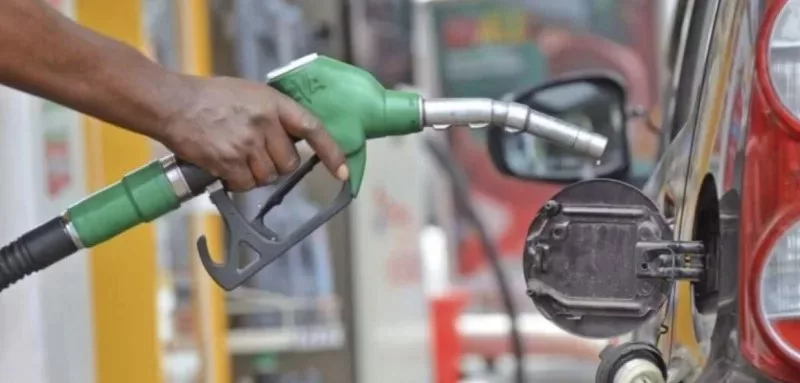
 Fuel pump/FILE
Motorists across Kenya’s major towns will pay more for fuel from midnight after the Energy and Petroleum Regulatory Authority (EPRA) raised pump prices for super petrol, diesel and kerosene in its latest monthly review.
In Nairobi, a litre of super petrol will retail at a maximum of Sh226.96, diesel at Sh227.76 and kerosene at Sh219.87, reflecting increases of Sh12.93, Sh9.90 and Sh28.49, respectively.
In Mombasa, motorists will pay Sh223.81 per litre for super petrol, Sh224.61 for diesel and Sh216.71 for kerosene.
Kisumu will record maximum pump prices of Sh226.51 for super petrol, Sh227.71 for diesel and Sh219.83 for kerosene.
Meanwhile, in Nakuru, super petrol will retail at Sh225.73 per litre, diesel at Sh226.93 and kerosene at Sh219.06.
Motorists in Eldoret will pay Sh226.51 per litre for super petrol, Sh227.71 for diesel and Sh219.83 for kerosene.
The new prices will apply from October 15 to November 14, 2026, setting the maximum amounts that fuel dealers can charge consumers during the period.
Nairobi will record the highest petrol price among the five cities listed, while Mombasa will have the lowest prices for all three petroleum products.
The differences in pump prices across the towns reflect transportation costs and other components used by the regulator to calculate maximum retail prices.
The increase comes against the backdrop of government efforts to cushion consumers from rising international petroleum costs through pump price stabilisation measures and interventions in the fuel supply chain.
The government says it spent Sh29.4 billion on pump price stabilisation in the 2025/26 financial year, with Sh24.3 billion of the amount applied between April and June 2026.
EPRA Director General Eng. Edward M. Kinyua said stabilising pump prices remained central to the administration’s efforts to protect consumers from increases in the landed cost of petroleum products.
“Stabilisation of pump prices remains central to this administration as a primary cushion to the citizens against spikes in the landed cost of petroleum products,” Kinyua said.
He said the government would continue strengthening the Petroleum Development Levy Fund to support price stabilisation, even as international petroleum prices reached unprecedented levels amid the Middle East conflict.
According to Kinyua, the measures were intended to maintain competitive fuel prices in the region while shielding consumers from sharp fluctuations in global oil markets.
The latest increase means motorists and households will face higher costs for petroleum products during the October 15 to November 14 pricing cycle.
The government is also exploring alternatives to strengthen the country’s energy security and reduce its exposure to volatility in international petroleum markets.
Kinyua cited investments in the petroleum sector, including the recently commissioned Dangote East Africa Oil Refinery, as part of efforts to improve energy security.
“I am confident that such measures will guard the country against the high price volatilities that have been witnessed in recent times,” he said.