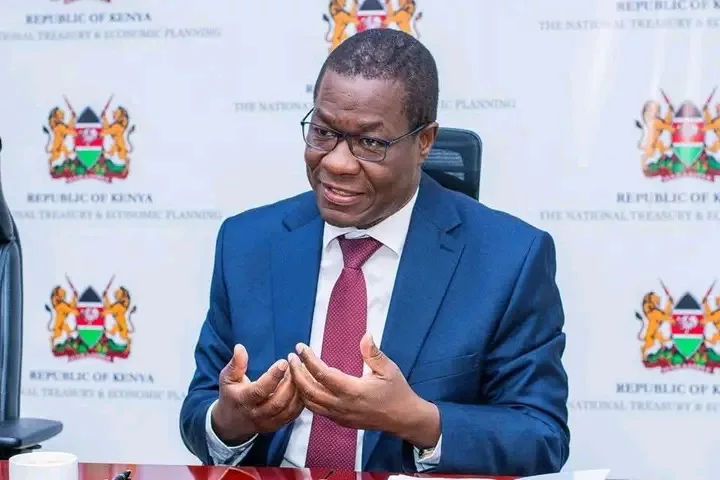
 Energy and Petroleum Cabinet Secretary Opiyo Wandayi / FILE
Energy Cabinet Secretary Opiyo Wandayi has said Kenya’s petroleum supply remains secure despite disruptions in the global oil market linked to the conflict in the Middle East.
In a statement issued on Tuesday, Wandayi said fuel stocks were adequate, cargoes were arriving and being offloaded on schedule, and petroleum products remained available at petrol stations across all counties.
He said Kenya had not experienced a fuel supply interruption despite attacks on oil tankers and strikes targeting pipelines and loading facilities in the Middle East.
“Through all of this, Kenya's fuel supply has remained uninterrupted,” Wandayi said.
The CS attributed the situation partly to the Government-to-Government (G-to-G) fuel procurement arrangement, which he said had enabled international oil companies supplying Kenya to load cargoes from alternative ports and regions when usual Gulf loading points faced disruptions.
He said the arrangement had helped maintain deliveries despite disruptions affecting major shipping routes and oil infrastructure.
Wandayi, however, cautioned that the global crisis was increasing the cost of petroleum products, putting further pressure on pump prices in the coming weeks.
According to the statement, the disruptions had reduced the volume of fuel reaching the market while increasing transportation costs through higher freight and insurance charges, tightening global supply.
The landed cost of Super Petrol at the port of Mombasa rose from about USD 1,199 (Sh155,378) per tonne in August to USD 1,385 (Sh179,516) in September, according to the statement.
The cost of diesel also increased from approximately USD 1,200 (Sh155,508) per tonne to USD 1,313 (Sh170,167) over the same period.
Wandayi said the increases continued a trend that began after landed fuel costs reached a low in June, with petrol recording its highest level this year.
Under Kenya's M1 fuel pricing rule, cargoes are priced using benchmarks from the preceding month, meaning changes in international costs are reflected at the pump in subsequent pricing cycles.
The CS said the G-to-G arrangement offered some protection against rising costs, particularly freight charges and premiums.
He noted that while other markets faced increases in open-market freight rates and premiums, Kenya continued to pay the fixed charges agreed upon before the current crisis began.
“That fixed cost, held steady while the rest of the market moves against it, is a direct and measurable saving for every Kenyan at the pump,” he said.
Wandayi acknowledged that the global market could remain under strain for some time, adding that no government could control international oil prices.
He said the government would take measures to cushion consumers against global oil market shocks.
The CS also pointed to a Bill before the National Assembly seeking to extend the application period of the eight per cent value added tax on petroleum products by a further 90 days from October 15, 2026.
He pledged that the government would continue providing updates as the situation develops.