Until very recently, many Kenyans had not heard of Bundibugyo and those who had probably never paid much attention to it until Health Cabinet Secretary Aden Duale announced on October 5 that Kenya had confirmed its first-ever Ebola case.
Many know Ebola, as the name has been around for decades, but Bundibugyo has become a trending topic, with online discussions seeking to understand why it is attracting so much attention.
According to the World Health Organization (WHO), Bundibugyo is a rare Ebola virus strain with reported outbreaks across East and Central Africa.
The outbreak originally began in May 2026 in Ituri province, a northeastern region of the Democratic Republic of the Congo (DRC).
It has since exploded into the largest Bundibugyo Ebola outbreak ever recorded, topping 8,700 confirmed cases and more than 4,200 deaths.
Kenya became the fourth country in the region to deal with cases, triggering neighbouring nations such as Uganda, which was declared Ebola-free in August, to put their health systems on high alert.
Kenya's lone case was a citizen who had been living in the DRC for seven years and had travelled by land through Uganda before boarding a domestic commercial flight to Nairobi on the night of October 3.
Duale said the patient had been infected a month earlier and received treatment in the DRC before travelling, but tragically died days later while receiving treatment at Nairobi Hospital.
WHO says Bundibugyo is a severe and often fatal form of Ebola virus disease, with fruit bats suspected to be its natural reservoirs.
"Human infection occurs through broken skin or eyes, nose, mouth when handling infected animals, monkeys or bushmeat," WHO said.
The disease is not airborne and spreads from person to person through direct contact with the bodily fluids of symptomatic individuals.
It takes between two and 21 days for symptoms to appear, and people are not contagious until they actually feel sick.
Early signs resemble those of common flu, including fever, fatigue, body aches, headache and sore throat, making the disease difficult to diagnose early.
"Later signs worsen to stomach issues, organ failure and sometimes internal and external bleeding," WHO says.
The organisation says the disease can only be confirmed through laboratory tests, such as PCR or antibody tests, because its symptoms resemble those of malaria and other tropical diseases.
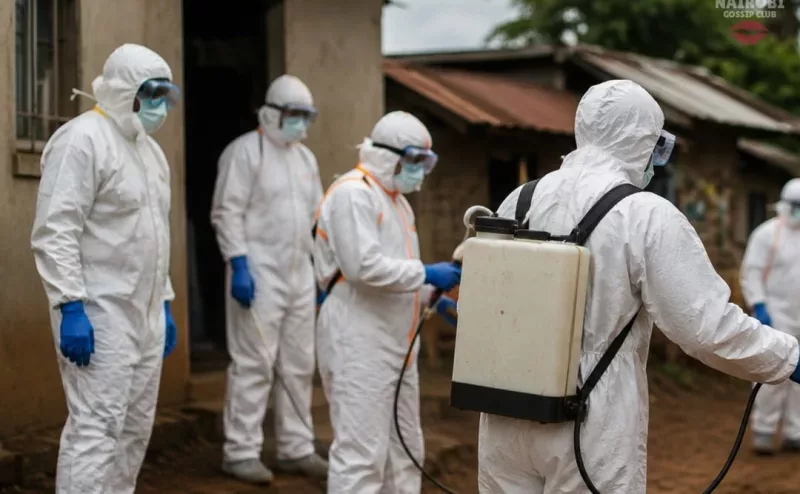
WHO says stopping the spread of the virus requires quick action, including rapid isolation, contact tracing and safe burials.
The organisation has advised the public to wash their hands often with soap and water, avoid touching anyone who is sick or their bodily fluids, and seek medical care early at a health facility if unwell.
People handling deceased bodies, including healthcare workers without protective gear, are at the greatest risk of infection.
"Once identified, protective measures including proper PPE, disinfection and isolation are highly effective," WHO said.
The Bundibugyo Ebola virus is particularly concerning because, unlike the more common Zaire strain, there is currently no approved vaccine or virus-specific treatment.
Medical teams are relying entirely on intensive supportive care and emergency, early-stage clinical drug trials.
Although the current outbreak was reported in the DRC, the virus strain was first discovered in 2007 in the Bundibugyo District of western Uganda.
Public anxiety is elevated as health authorities in Kenya and Uganda aggressively trace dozens of high-risk contacts.
These include medical staff who treated the deceased patient, family members and the 23 passengers and four crew members who shared the Jambojet flight from Kampala to Nairobi.
On Wednesday, Duale said 57 people linked to the deceased patient had been identified and were being managed in accordance with established health protocols.