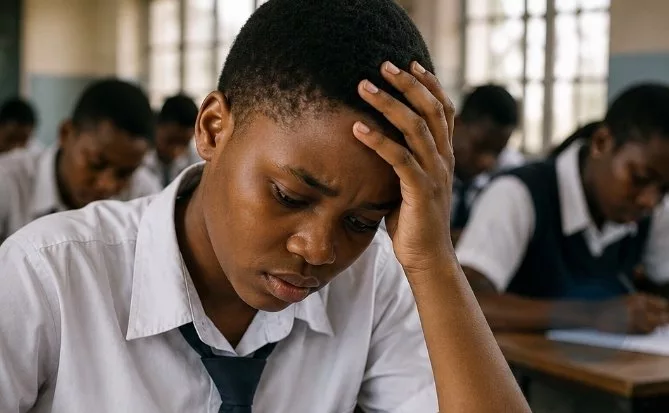
 Students writing an exam. /AI ILLUSTRATION
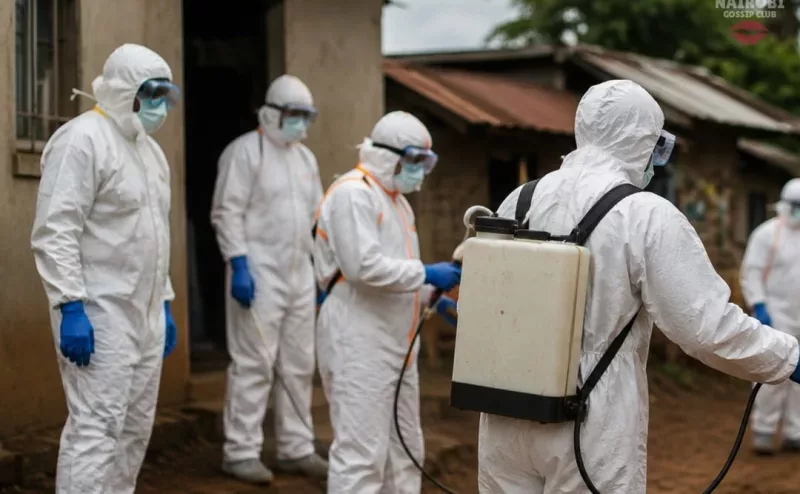
Concern is mounting over the fate of schools, particularly candidates preparing to sit national examinations and assessments, following confirmation of Kenya’s first-ever Ebola case on Tuesday.
Although the government has urged Kenyans not to panic, saying the single imported case involving a man who died days after arriving in the country does not, on its own, indicate widespread transmission, an Ebola outbreak could severely disrupt learning if it escalates and forces schools to close.
During the 2013–2016 West Africa Ebola epidemic, schools in Guinea, Liberia and Sierra Leone were closed for seven to nine months, disrupting learning for an estimated five million children.
Kenya experienced a similar disruption during the Covid-19 pandemic, when schools were closed nationwide from March 15, 2020, just two days after the country confirmed its first case.
The experiences have heightened concern over the possible impact of the Ebola case, particularly with national examinations and assessments scheduled to begin on October 23.
The concern is compounded by the confirmation of the Bundibugyo strain of the Ebola virus, for which there is currently no vaccine or specific treatment.
Basic Education Principal Secretary John Ololtuaa was on Wednesday asked about measures the Ministry of Education would take if the Ebola situation escalated.
He said preparations for the national tests were progressing well but added that the relevant authorities would issue appropriate measures should the health situation deteriorate.
"All systems have been put in place to ensure that the exams are done well without any problem. If there are any issues that relate to health, the Ministry of Health is totally in charge to ensure that any issues that are reported that may need close monitoring will obviously be done through the Ministry of Health," he said.
Ololtuaa was speaking at the Kenya Institute of Special Education (KISE) in Kasarani, Nairobi, during the launch of the KISE Disability Inclusion Conference 2026.
He discouraged the public from speculation and urged parents and teachers to continue preparing learners for the national examinations and assessments.
He said Ministry of Education officials would begin subcounty visits on Thursday to brief field officers contracted to manage the tests and assess their preparedness.
"I want to call upon the children as they prepare for the assessments and national exams, let them revise, let them be ready and I'm very sure they will do very well," he said.
Kenya's Ebola case was a citizen who had lived in the Democratic Republic of Congo for seven years and had travelled home about a month after getting infected.
He arrived in the country on October 3 through Uganda and died on the night of Monday, October 5.
Health Cabinet Secretary Aden Duale said on Thursday that 57 contacts linked to the deceased had been traced and are under appropriate monitoring.
"Our focus remains clear: detect early, isolate safely, test rapidly, trace comprehensively and respond decisively," Duale said.
Amid the assurance, the prospect of school closures is particularly concerning given the experience of the Covid-19 pandemic, when prolonged disruption left about 17 million learners without effective access to education.
Although the government introduced remote learning through radio, television and the internet, many learners, particularly those from rural and low-income households, lacked electricity, internet access, smartphones and computers.
During that period, teenage pregnancy, child labour, early marriage and domestic violence surged, while the school calendar took nearly three years to return to its regular structure.
With Ebola primarily transmitted through contact with the blood and other body fluids of an infected person, any escalation of transmission could leave Kenya with limited containment options, including school closures.