Rabies is a vaccine-preventable viral disease that affects the central nervous system and is almost always fatal once clinical symptoms appear.
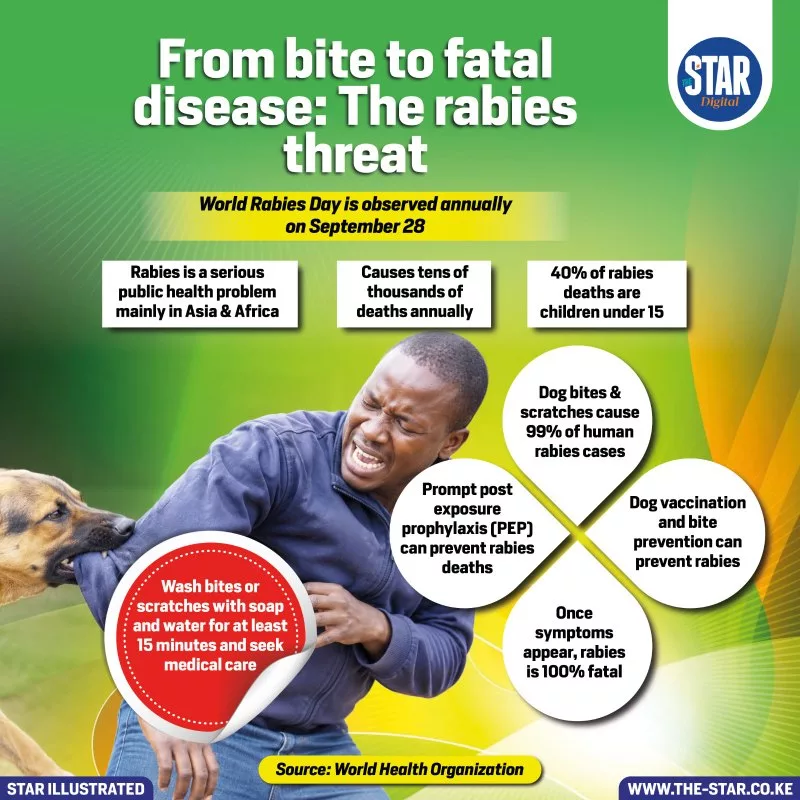
The World Health Organization (WHO) estimates that rabies causes about 59,000 human deaths each year in more than 150 countries, with about 95% of deaths occurring in Africa and Asia. Children account for approximately 40% of human rabies deaths.
Dogs are responsible for up to 99% of human rabies cases, with the virus transmitted mainly through bites and scratches from infected animals.
Early symptoms can include fever, pain and unusual tingling or burning at the wound site.
As the disease progresses, it can cause severe inflammation of the brain and spinal cord.
Rabies deaths are preventable through mass vaccination of dogs and timely post-exposure prophylaxis.
People bitten or scratched by a potentially infected animal should immediately wash the wound thoroughly with soap and water for at least 15 minutes and seek medical care.