Tensions, distrust and strategic rivalry define the war in the Middle East, a conflict whose fault lines run far deeper than crossing missiles and exploding skies.
Decades of tension and proxy wars escalated into direct conflict on February 28, when US President Donald Trump and Israeli Prime Minister Benjamin Netanyahu launched attacks on Iran, killing its Supreme Leader Ali Khamenei. Iran and its allies retaliated with attacks on Israel and US military bases in the Gulf, as well as on shipping through the Strait of Hormuz, through which a fifth of global oil and gas passed before the war.
The US countered with a blockade on Iranian ports, and a temporary cease-fire in April faltered and eventually collapsed in July.
The impasse has hiked fuel prices, disrupted trade and raised economic uncertainty worldwide.On Tuesday, oil prices stood above $100 (Sh12,970) a barrel, with Brent crude trading above $106 (Sh13,748) as Middle East supply concerns continued. The price was $72 (Sh9,339) before the war.
Seven months into the war, between 9,000 and 18,000 people have died across all sides, mostly in Iran and Lebanon.
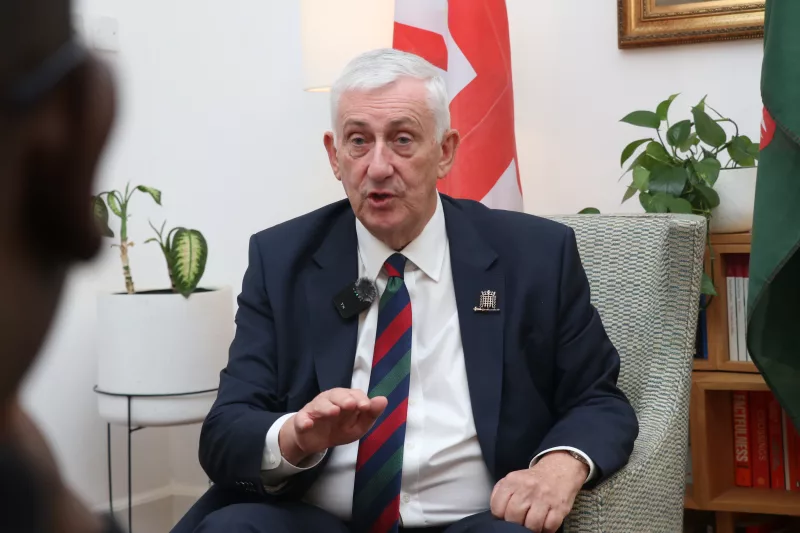
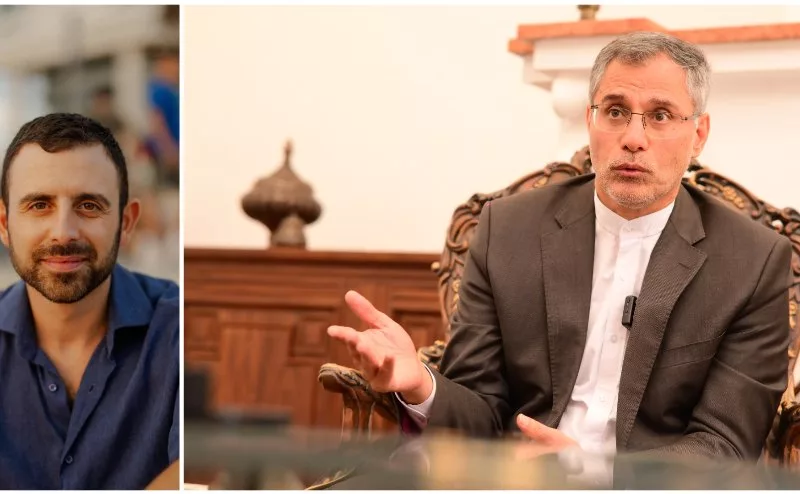
Amid on-and-off diplomacy, I spoke to Dr Ali Gholampour, Iran's Ambassador to Kenya, and Eylon Levy, former spokesperson to Israeli Prime Minister Benjamin Netanyahu, to shed light on the root of the conflict.
Their contrasting views provide a window into a strategic contestation where national interests, security doctrines and historical grievances collide.
For Gholampour, the issue is fundamentally one of sovereignty, resisting Israeli expansionism and defending Iran's right to maintain a peaceful nuclear programme.
He said there are many reasons behind the enmity and hostility that has led to the “rounds of aggressions” against Iran by the Israeli regime.
“Iran has always been standing by the oppressed people of Palestine," Gholampour said.
He accused Israel of an expansionist policy aimed at maintaining Middle Eastern dominance alongside the United States.On the other hand, Levy sees the confrontation through national security and deterrence.
"The United States and the Iranian regime are locked in a game of chicken. Both of them believe that economic pressure will force the other to surrender first," he said.
Levy backed President Donald Trump’s belief that economic pressure has placed Tehran's leadership under severe strain.
"I think President Trump is right. He has the cards. The Iranian regime has its back against the wall," he said.
He said Iran should permanently end its nuclear and ballistic missile programmes and stop supporting regional armed groups in exchange for sanctions relief.
‘TRIPLE THREAT’
Levy said Iran poses significant challenges to Israel’s national security.
"The Iranian regime has three major threats: the nuclear programme, the ballistic missile programme and the proxy armies," he said.
He warned that Iran's missiles could overwhelm defence systems, adding that Israel cannot wait for Tehran to rebuild capabilities that threaten its survival.Gholampour rejected the assertion that Iran's nuclear activities are to blame for the military campaign.
"Nuclear weapons is not on the defence doctrine or military doctrine of Iran," he said.
He emphasised that Iran is a Non-Proliferation Treaty member with obligations and rights.
"It's our right and each and every other country’s like Kenya to have its own peaceful nuclear activities, for medicine, agriculture, research and energy,” he said.
Pointing to International Atomic Energy Agency inspections, he argued that no nuclear weapons diversion was established, and that the issue merely masks Israeli military aggression.
"That's the reason why we believe that Israel is the main source of insecurity in the region," Gholampour said.Thus, the same security dilemma is interpreted in opposite ways: Israel sees an existential threat requiring military preparedness, while Iran views American and Israeli pressure as an assault on its sovereignty.The disagreement extends to the Israeli-Palestinian conflict. Gholampour highlighted decades of Palestinian occupation, describing Gaza as "the largest open prison in the world".
Regarding Israel's military campaign following the October 7, 2023 Hamas attack, which killed about 1,200 people in Israel and saw hundreds taken hostage, Gholampour said, "The response to that event is absolutely not acceptable." He argued international law prohibits destroying an entire society or targeting civilians.For Levy, October 7 is the defining security event behind Israel's actions to ensure such an attack never recurs. Pointing out that Hamas embedded infrastructure in civilian areas, Levy proposed a solution based on the "three Ds": disarmament of Hamas, demilitarisation of Gaza and deradicalisation of Palestinian society.
"If Hamas refuses to disarm, there is no future for the people who deserve reconstruction," Levy said, arguing reconstruction requires addressing Israel's security.Gholampour frames the issue around Palestinian rights and occupation; Levy frames it around Israel's right to defend its citizens.
IN DIRE STRAITS
In the Strait of Hormuz, the global stakes become acute. The waterway is an economic artery carrying massive volumes of oil. Disruption spikes shipping, energy and insurance costs worldwide.Importing nations like Kenya face immediate transport, production and household cost pressures, showing how Middle Eastern strategic contests quickly become East African economic crises.
Gholampour said Iran historically allowed commercial shipping but restricted access after military operations were launched against it through the Gulf. "Commercial is open. The only thing is that it should be non-belligerent," he said, adding that vessels must coordinate with Iranian authorities.Levy countered that Iran uses the strait for asymmetric warfare because it cannot defeat US and Israeli forces conventionally.
Gholampour accused Israel and the US of violating UN Charter Article 2(4) by using force against Iranian territory. He maintained Iran's military responses following attacks in 2025 and 2026 were legitimate self-defence.
"What Iran did after the aggressions ... was in accordance with that exception, self-defence," he said.Levy appealed to self-defence from Israel's standpoint, arguing Israel responded to Iran's missile attacks, nuclear ambitions and its regional "ring of fire", comprising Hamas, Hezbollah and the Houthis.
At the United Nations General Assembly, Israeli Prime Minister Benjamin Netanyahu defended Israel's military campaign and predicted the eventual fall of Iran's government.
Gholampour rejected this claim. "The United Nations General Assembly has been used by genocidal regimes like Israel," he said, adding that Israel seeks regional dominance.Levy, however, said Israel desires stability and a significantly reduced Iranian threat.
"We would like nothing more than peace with Iran," Levy said, recalling warm pre-1979 diplomatic relations.
At UNGA, Iranian President Masoud Pezeshkian reiterated that Tehran does not seek nuclear weapons. While open to diplomacy, he accused Trump of a "bullying mentality" and highlighted a fundamental lack of trust due to past collapsed agreements.
This aligns with Gholampour's stance that Tehran requires guarantees that future agreements will be respected.Neither he nor Levy closed the door to diplomacy. Gholampour said Iranian leadership engages international actors to resolve disputes peacefully.
"We do believe that we can resolve and get to an acceptable result through peaceful means,” he said, adding, however, that, "Our government and military forces are ready for both scenarios."
Iran's conditions for peace include stopping military attacks, lifting sanctions, unfreezing assets and halting Israeli military action. "If there is a genuine will, they can end it soon."Levy's conditions require Iran to permanently end its nuclear and ballistic missile programmes and cease proxy support before receiving sanctions relief.Despite stark differences, diplomatic channels remain active.
On Sunday, US and Iranian officials held indirect talks. Iran proposed a seven-day framework involving a cessation of hostilities, sanctions relief, asset unfreezing and reopening Hormuz.
While Washington rejected the proposal in its present form, further discussions remain possible.
A REGION AT CROSSROADS
Levy argued Iran's proxy network has weakened, pointing to damage sustained by Hamas and Hezbollah. He suggested Middle Eastern nations can build a new security architecture by expanding the "circle of peace" alongside Abraham Accords partners like the UAE and Bahrain.Gholampour countered that Iran is successfully defending its sovereignty against a campaign aimed at eroding its regional standing, remaining open to negotiations without surrendering core national interests.For African economies grappling with inflation, the conflict's outcome directly impacts daily survival.Levy said Israel seeks stronger African partnerships focused on technology, agriculture, water management and desalination.
Gholampour urged affected nations to question why commercial traffic in Hormuz became restricted in the first place.
The two envoys offer no shared narrative. Levy sees Israel confronting an unavoidable threat; Gholampour sees Iran resisting unlawful aggression. Yet both acknowledge a path to negotiation."Let's keep an open mind," Levy said.
Gholampour likewise observed, "We are not aggrieved with military operations or aggressions. But again, we are ready."Their positions leave the war suspended between deterrence and diplomacy. Beyond their debate lies a confrontation impacting global energy, maritime trade, non-proliferation and international institutions.
The conflict is ultimately a struggle over regional order, sovereignty and who determines the rules.
As diplomatic efforts resume, whether Tehran, Washington and Tel Aviv can bridge these entrenched positions remains unanswered.