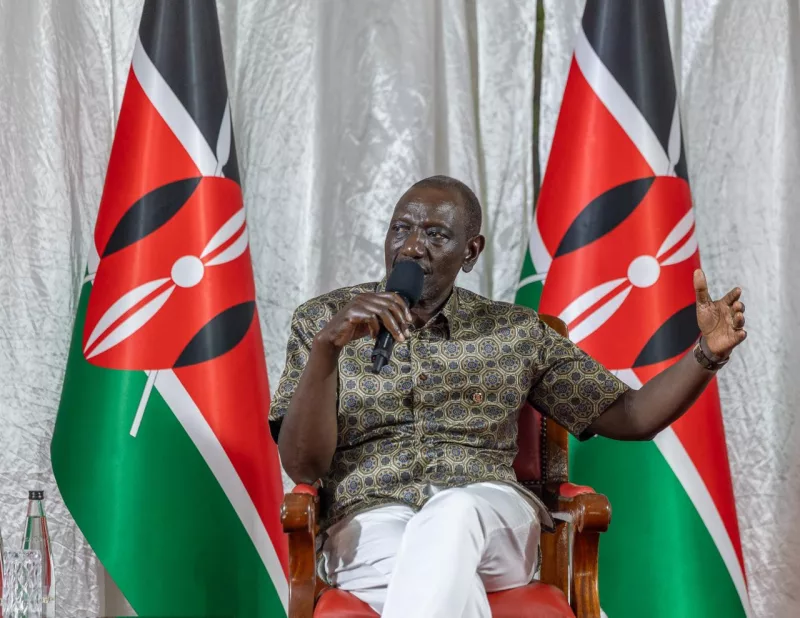
President William Ruto has explained how the planned Lamu refinery will source the crude oil needed to operate the facility, saying Kenya's production will be supplemented by supplies from other countries.
Ruto said the government had agreed with Nigerian businessman Aliko Dangote to invest in a crude oil pipeline connecting Turkana to Lamu, which will allow Kenya to transport locally produced oil to the refinery.
“We have agreed with Dangote that he will help us, as Kenya, to build a pipeline that will connect Lamu and Turkana so that we can bring the oil from Turkana to Lamu,” Ruto said.
The President said Kenya expects to begin extracting crude oil from Turkana before December, paving the way for its transportation to Lamu.
He said discussions were also ongoing with neighbouring countries, including Sudan, on sourcing crude for the refinery.
Ruto explained that the refinery would not depend solely on Kenyan crude, noting that refineries require different types of crude oil to produce petroleum products.
“A refinery cannot use one type of crude oil. I have been told you need different types of crude oil to refine petroleum products,” he said.
Ruto said even if Kenya supplied its own crude from Turkana, additional oil would still be required from other sources.
He cited Dangote's refinery in Lekki, Lagos, which sources crude from different parts of the world depending on availability and price.
“Wherever you get crude at a cheaper price, you source it from there and bring it to the refinery,” he said.
Ruto said the same approach would be adopted at the Lamu refinery, with crude expected to come from different parts of the world as well as from East African producers.
He said some of the petroleum products refined in Kenya would be sold locally, while others, including jet fuel, could be exported to international markets depending on demand.
The comments come after the groundbreaking of the planned East African Oil Refinery in Lamu, a Sh2 trillion project with a planned processing capacity of 700,000 barrels of crude oil per day.
The facility is expected to serve markets across East Africa and is scheduled for completion by 2030.
Kenya's domestic crude production will initially account for only a fraction of the refinery's planned capacity, making access to international and regional supplies an important part of its sourcing strategy.