 Coffee sector will also be a beneficiary.
Kenya has pledged Sh390 million to the International Fund for Agricultural Development (IFAD) for its next three-year funding cycle, up from Sh259.4 million ($2 million) in the previous cycle.
This represents a 50 per cent increase in Kenya's contribution.
Ruto said the additional funding was an investment in rural communities, particularly young farmers.
“Kenya's 50 per cent increase in its pledge to IFAD is an investment in our rural communities, and especially our young farmers who represent one of Africa's greatest opportunities for growth and transformation,” Ruto said.
“I join my fellow African leaders in calling on other donors and development partners to match our momentum by increasing their contributions to IFAD14 to drive rural prosperity, strengthen food security and build resilience in Africa and beyond.”
The pledge was announced during high-level meetings of the 81st United Nations General Assembly in New York, where 10 African countries announced increased contributions.
IFAD is a United Nations fund that helps poor people in rural areas get the money, knowledge, equipment and market opportunities they need to improve farming and earn a better living.
It mainly works through governments and other partners by giving loans and grants for agricultural and rural development projects rather than handing cash directly to farmers.
In Kenya, it has supported farmers in areas including dairy, livestock, cereals, horticulture and fish farming. It has also supported rural financial services.
One Kenyan project, the Kenya Livestock Commercialisation Project, has IFAD financing of about Sh14.20 billion ($109.5 million) to help small-scale farmers increase production, reach markets and become more resilient to economic and climate shocks.
Another IFAD-backed programme supports aquaculture producers in 15 counties and is expected to reach 35,500 households, including women, young people and landless people.
IFAD says it has invested about Sh59 billion in 20 programmes and projects in Kenya since 1979, with the total cost of those projects reaching about Sh127.1 billion when other financing is included.
Kenya’s Sh390 million pledge will not go directly to Kenyan farmers. Rather, it will go into the pool from which the fund draws to support projects across the world.
IFAD said its financial model can turn every $1 of core contributions into about $6 of investment in rural economies.
That means Kenya's contribution could help mobilise substantially more money for projects benefiting rural communities, although the eventual amount and where it is invested will depend on IFAD's financing and country programmes.
The new commitment is part of IFAD’s 14th replenishment, known as IFAD14, covering the period 2028 to 2030.
The fund is seeking more money at a time when farmers are facing several pressures, including changing weather, high production costs, conflicts and disruptions to food systems.
IFAD President Alvaro Lario said African countries understood that investment in rural areas was important for food production, jobs and economic growth.
“African leaders recognise IFAD14 as a critical platform for strengthening the continent's agrifood systems,” Lario said.
“With nearly 60 per cent of Ifad’s portfolio invested in Africa and the Fund's focus on the ‘first mile’ of food systems, IFAD is uniquely positioned to both channel and catalyse investment to rural areas where the greatest opportunities exist to create jobs, build resilience and accelerate inclusive growth.”
Other African leaders also called for greater investment in agriculture.
Ethiopian President Taye Atske Selassie said his country's commitment reflected the link between food security, economic growth and young people.
“Ethiopia’s commitment to IFAD14 reflects a fundamental conviction: food security, economic prosperity, and the future of our youth are inseparable from the success of our smallholders,” he said.
Sierra Leone President Julius Maada Bio said agriculture was central to food security and livelihoods.
“Agriculture is the foundation of food security, our livelihood, and our future. If we want to transform food systems and create jobs, we must invest in people who produce our food,” Bio said.
Somali President Hassan Sheikh Mohamud said investment was needed to help farmers, pastoralists and rural businesses withstand climate shocks and strengthen their livelihoods.
The increased African contributions come as Ifad reports measurable improvements among people reached by its projects.
An assessment of projects under Ifad's previous replenishment cycle found that participating rural people's incomes increased by an average of 34 per cent, while their productive capacity rose by 35 per cent and access to markets by 34 per cent.
The fund also says its investments have helped rural people gain access to financial services, productive assets, infrastructure and markets.
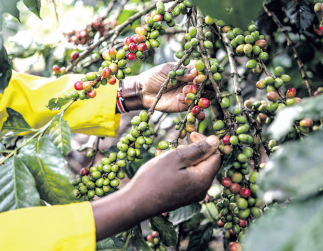
Ifad says agriculture employs 71 per cent of Kenya's rural population and that the sector accounts for about 69.7 per cent of export earnings.