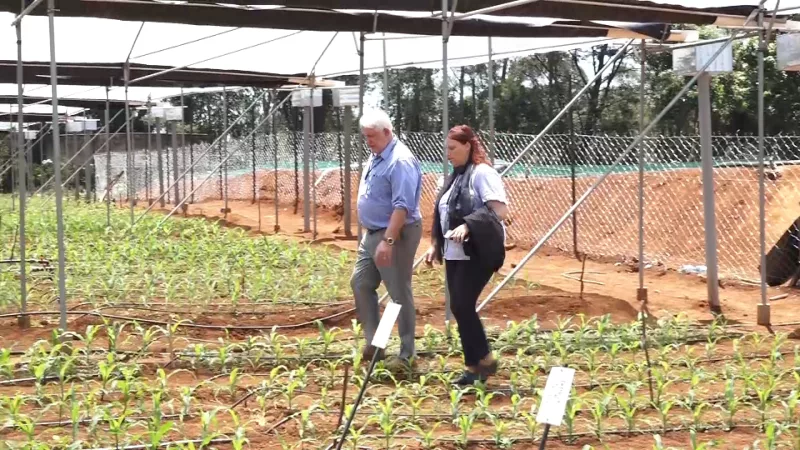
 Irrigation Principal Secretary Ephantus Kimotho
The government has identified 10 irrigation schemes for a pilot programme aimed at increasing agricultural production, improving market access and expanding opportunities for farmers.
The schemes, covering about 14,819 acres and 52,115 farmers, will focus on crops including rice, maize, horticultural produce, vegetables, pulses, potatoes, onions and avocado.
Irrigation Principal Secretary Ephantus Kimotho chaired a multi-agency meeting on Tuesday to discuss measures to unlock production and market opportunities within the schemes and accelerate the development of high-value agricultural value chains.
The meeting brought together government agencies and other stakeholders to assess challenges limiting the full use of irrigation schemes and identify interventions to improve production, market access, value addition and private-sector participation.
The government identified post-harvest losses, weak market links, inadequate financing, fragmented production, limited extension services and low adoption of modern agricultural technologies among the challenges facing farmers.
The meeting proposed strengthening farmer aggregation and cooperatives, improving access to quality farm inputs and technical support, and linking farmers directly with processors, exporters and other buyers.
It also called for increased access to production finance and appropriate agricultural technologies.
The State Department for Irrigation will work with county governments, government agencies, development partners, financial institutions, private-sector players and farmer organisations to strengthen the value chain from production and aggregation to storage, processing, financing and market access.
The initiative seeks to turn the selected irrigation schemes into commercially viable production hubs by combining reliable water supply with financing, technology, organised farmers, value addition and markets.
The government said the programme is expected to increase productivity, improve farmers' incomes, create employment and contribute to food security.