With heavy El Niño rains expected between October and December 2026, the Ministry of Health has issued vital food-safety and hygiene guidelines to protect public health during the downpours
Severe weather conditions often heighten the risk of waterborne diseases and food spoilage, making proactive precautionary measures necessary across households and commercial establishments
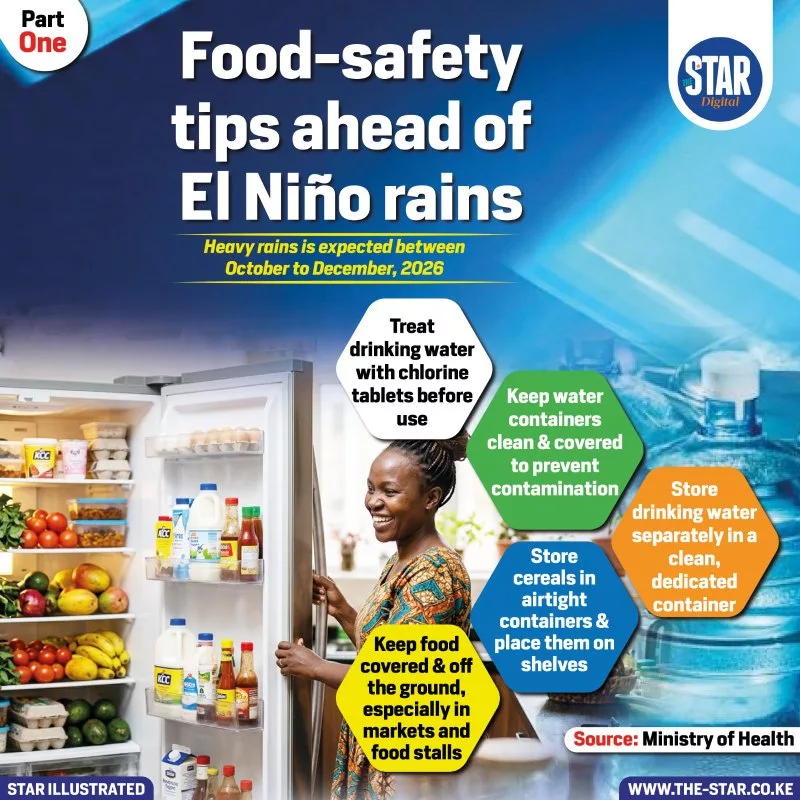
Ensuring water safety remains a primary priority
Additionally, treating drinking water with chlorine tablets before use, keeping water containers clean and covered to prevent contamination, and storing drinking water separately in clean, dedicated containers are crucial steps to secure safe supplies
Food handling and storage require enhanced diligence to prevent foodborne illness
Cereals should be stored in airtight containers placed securely on shelves
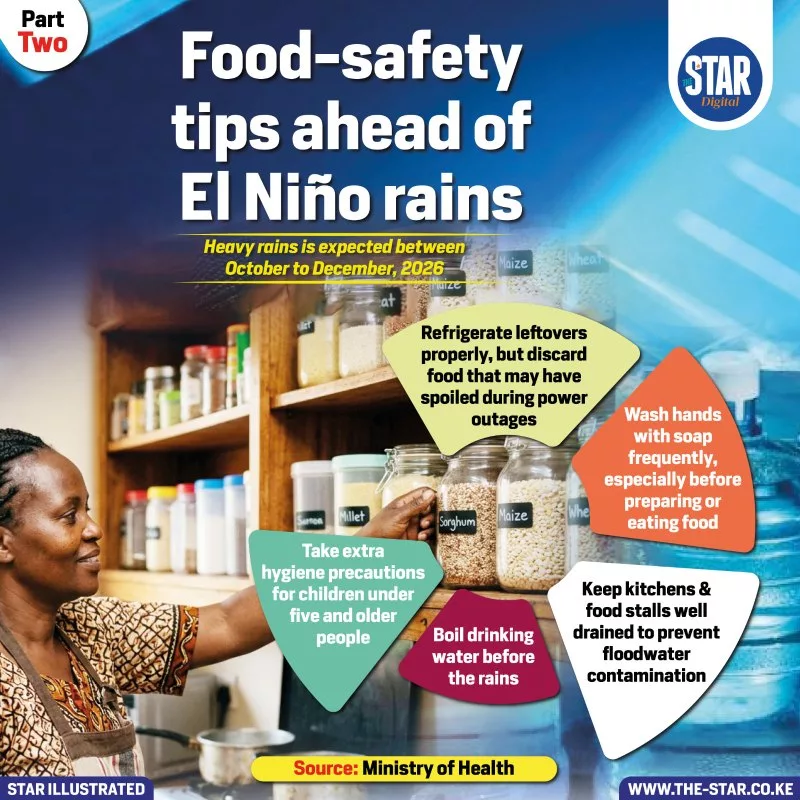
Maintaining rigorous personal and structural hygiene is essential throughout the rainy season
Extra hygiene precautions are urged for vulnerable groups, including children under five and older people
Furthermore, keeping kitchens and food stalls well-drained prevents floodwater contamination and protects food preparation spaces from environmental hazards