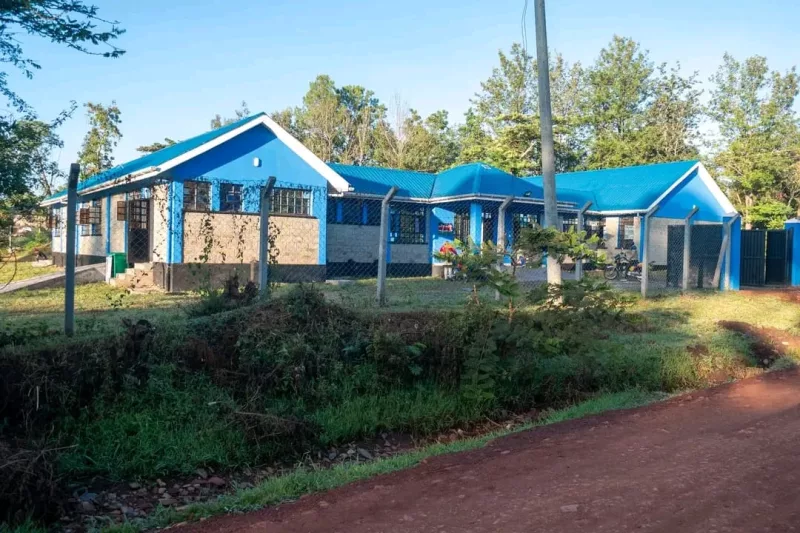
 Shofco safe house in Ndhiwa, Homa Bay County./HANDOUT
Shining Hope for Communities (Shofco) has helped 20 sexual and gender-based violence (SGBV) survivors in Homa Bay County secure convictions against their perpetrators since the beginning of 2026, with nine of them arising directly from cases involving survivors accommodated at its safe house in Ndhiwa.
The organisation said it had also handled more than 300 SGBV cases in Homa Bay through its case management system since the beginning of 2026, most of which are still under police investigation and some have been withdrawn through alternative dispute resolution or due to lack of or interference of evidence.
“My granddaughter was defiled by her stepfather. Shofco rescued her and took her to the safe house in Ndhiwa, where she received protection and support. She has since returned to school, and Shofco is paying her school fees. We are grateful that she has been given another chance to continue with her education,” Hellen Anyongo, a resident of Rachuonyo, said.
The perpetrator was sentenced to 60 years in prison by Oyugi’s law court.
The 2022 Kenya Demographic and Health Survey (KDHS) data showed 54 per cent of women aged 15–49 have experienced sexual violence in Homa Bay county, compared with 34 per cent nationally.
The safe house, established by Shofco in partnership with the Homa Bay County Government, provides survivors with temporary shelter and links them to critical services.
Margaret Ouko, Shofco's gender programme officer in Homa Bay, said the progress in securing convictions was a result of collaboration among actors at different levels of the justice chain.
“The success is not coming from us alone. It is the result of village elders identifying and encouraging survivors to report, chiefs linking communities to services, gender champions creating awareness, police investigating and arresting suspects, prosecutors building cases and magistrates ensuring matters before them are handled through the justice system,” Ouko said.
Henry Okunga, Gender and Social Development Officer in Ndhiwa Sub-County, said increased awareness around the facility had encouraged more survivors to report cases that previously went unreported.
“People are now beginning to understand that there is somewhere they can go when violence happens. The safe house has given survivors confidence to report, because they know they will not be left to face the perpetrator or the justice process alone,” Okunga said.
According to Okunga, Ndhiwa is currently recording the highest number of reported SGBV cases in the county because survivors now have a space to run to as the justice process begins.
“The nursing unit in our safe house is critical because evidence can easily be lost when a survivor does not receive timely medical attention. We are now able to connect survivors to the right services quickly, preserve evidence and work with the police before suspects disappear,” Okunga said.
Thirty survivors currently being housed at the facility have active cases at Mbita Oyugis Law Courts, Kendu, and Ndhiwa law courts. Lydia Kipyego, a prosecution counsel with the Office of the Director of Public Prosecutions (ODPP) in Oyugis, the volume of cases demonstrates the importance of rapid intervention.
“We receive SGBV cases almost every day. Preservation of evidence is therefore not a small matter. It is at the centre of successful prosecution. When evidence is available and properly documented, the chances of taking a case through the justice process are strengthened,” Kipyego said.
She said Shofco had helped remove some of the practical barriers that survivors face after reporting.
“Shofco has come in handy in several ways. Survivors are transported to medical facilities when they need care, those facing immediate danger can be accommodated in the safe house, and there is coordination with police to ensure perpetrators do not get an opportunity to disappear before investigations are completed. This has made the justice process smoother for survivors,” she said.
Achieng Leon, Secretary General of the Homa Bay Civil Society Organisation Network, said the organisation had helped bridge a longstanding gap between survivors and the formal justice system.
“For a long time, justice for SGBV survivors in this county was almost out of reach. Shofco has helped change that by establishing a safe house and equipping gender desks in several police stations. These interventions have strengthened the response system and given survivors a real pathway to report violence, access support and pursue justice,” she said.
At Homa Bay Police Station, the gender unit has also received equipment from Shofco to strengthen the handling and preservation of evidence involving SGBV and child abuse cases.
“An SGBV case can be lost long before it reaches the courtroom if evidence is not properly collected and preserved. The support we have received has strengthened our gender unit and enabled officers to handle evidence more carefully before a case proceeds to court,” Mutuma Ikunyua, officer commanding station at Homa Bay Police Station, said.
He said the police were also working with other actors to respond to the factors driving violence in the region.
“Poverty, the sex-for-fish economy in some fishing communities and economic activities such as gold mining in Sindo and parts of Suba create environments where women and girls can become particularly vulnerable to exploitation and abuse. Addressing SGBV therefore requires both enforcement and action on the conditions that expose people to violence,” he said.