At a breakfast meeting last week, speaker after speaker arrived to deliver some rather broken news: that Kenya is no longer considered "too important to fail."
The world will no longer babysit us if we choose to self-destruct.
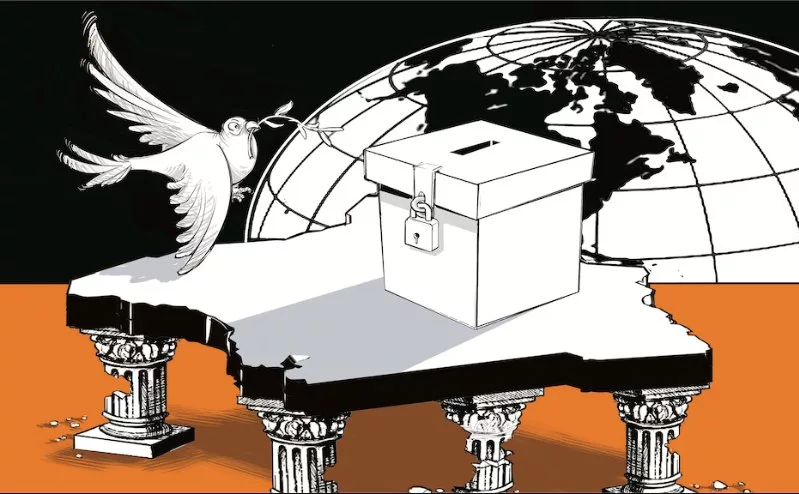
Hosted by Article 10 – a self-assembled coalition of concerned clergy, business leaders, professionals and politicians – the gathering felt less like a casual morning tea and more like a historic intervention. The agenda? Extracting a firm, unshakeable commitment to peace ahead of the 2027 general election.
The mood was perfectly captured by Mucai Kunyia, the Comesa Business Council first vice president. He rubbed the truth in with unmistakable style. “Nobody is coming to help us. We are on our own! The days when we used to say that the West is not going to allow us to collapse are long gone,” he warned, his eyes glistening.
Then, for proper dramatic emphasis, he added, “They are long gone.”
Before him, the room’s elder statesman, National Muslim Leaders Forum (NAMLEF) chair Sheikh Abdullahi Abdi, had said as much. After him, the chair of the National Council of Churches of Kenya (NCCK), Rev Dr Elias Agola, painted an equally sobering picture.
They were all spot on. The global landscape has shifted catastrophically since 2007, when Kenya was dragged back from the edge of the precipice by the collective goodwill of our neighbours and the heavy-handed diplomacy of Western powers.
Kofi Annan is not coming. The international community has checked out.
The geopolitical shifts of the last few years have shaken the very foundations of the rules-based world order. Multilateralism is on life support. According to the Global State of Democracy reports, the very idea of democratic governance has recorded a net decline for over a decade.
Nations are aggressively looking inward, frantically battling their own threats to peace, disrupted supply chains, restive domestic politics and the relentless march of populism.
Who would have thought a full-scale conventional war would break out in the middle of Europe in this day and age, and drag on indefinitely? Who would have imagined the sheer audacity of global geopolitical assassinations, or the reality of tech-driven proxy wars?
On top of that, we are dealing with massive technological disruptions. There are credible, terrifying fears that Artificial Intelligence might just overtake its creators and wipe us all out.
In the midst of all this, who has the time to babysit Kenya through another self-inflicted post-election crisis?
This rapidly changing world places a massive, unavoidable responsibility squarely on our shoulders: the basic duty of self-preservation.
Kenyan elections, especially those where an incumbent is involved, have historically morphed into toxic, do-or-die contests where the very soul of the nation is put on trial.
We scraped through the doomsday scenarios of 2007 and 2017 by a whisker.
Despite the best intentions of the 2010 constitution to disperse and devolve power, the imperial centre in Kenya still holds a dangerous, magnetic allure. And despite numerous reforms designed to ring-fence political power against skullduggery and malevolence, political bad actors still break through the defences in swarms.
Our democratic institutions are holding on, but they are visibly exhausted, swamped at every turn, and at constant risk of being overrun. Weak hearts are presiding over our most critical processes—from running political parties and managing elections to adjudicating disputes and securing our borders.
In these murky circumstances, the cavalry is not over the hill. We are the cavalry.
It is time for ordinary Kenyans to grow up, step up and secure their own peace. We must adopt a radical sense of personal responsibility and a fierce commitment to collective security.
If we are to survive the political high-stakes drama of next year, we cannot afford to be passive spectators.
Securing our peace means ordinary citizens must become the frontline defence against chaos. It means calling out hate speech, silencing disinformation and aggressively rejecting incitement to violence in all its ugly forms.
While we are at it, we must fiercely guard our own political process. That means protecting your neighbour, protecting the peace and ensuring that no politician is allowed to take shortcuts to power at the expense of Kenyan blood.
Peace is no longer a luxury we can outsource.
Advocate of the High Court and Senior Project Manager with the Friedrich Naumann Foundation. The views expressed are the writer’s own